
Ontario pushes Canadian drone suppliers as Chinese tech scrutiny grows

Subscribe to our free newsletter today to keep up to date with the latest manufacturing news.
Ontario’s decision to restrict Chinese-made drones from government operations marks one of Canada’s clearest signals yet that public sector technology procurement is becoming inseparable from geopolitics.
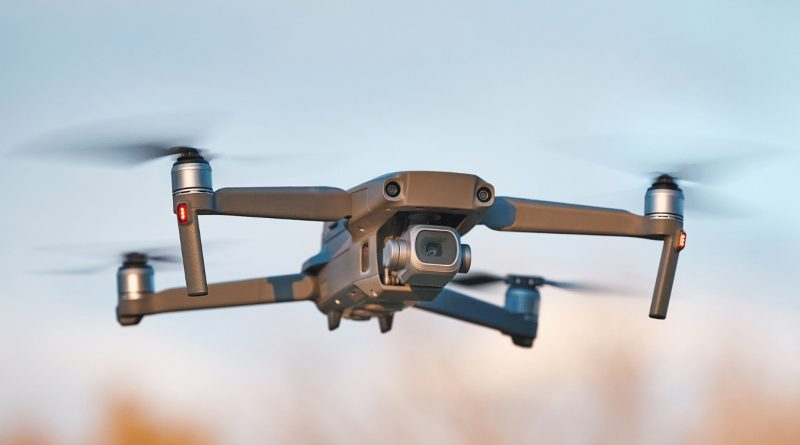
The province said it will immediately prohibit Chinese-made drones from sensitive Ontario Provincial Police operations while gradually phasing the technology out across ministries and agencies. The move places Ontario alongside a growing list of Western governments reassessing Chinese technology in infrastructure, surveillance and communications systems.
For years, drones were treated primarily as cost-saving operational tools. Police departments used them for search-and-rescue missions and accident reconstruction. Infrastructure agencies deployed them for bridge inspections and environmental monitoring. Emergency response teams relied on them during floods and wildfires.
Now, governments increasingly view drones as flying data collection platforms tied directly to cybersecurity and national security concerns.
Ontario’s restrictions reflect a broader shift in government technology policy
Ontario framed the policy around protecting sensitive data and reducing exposure to foreign interference risks. Officials pointed to longstanding concerns that Chinese national security laws could compel companies headquartered in China to provide access to data collected through connected devices and software platforms.
The announcement follows several years of scrutiny aimed at Chinese technology suppliers across Western governments. Canada previously banned Huawei and ZTE equipment from the country’s 5G telecommunications infrastructure. In the US, multiple federal agencies and state governments have restricted or prohibited the use of Chinese-made drones in government operations.
The concern is not simply about hardware manufacturing. Modern drone systems continuously collect location data, imagery, infrastructure mapping information and operational telemetry. Much of that information flows through cloud-connected software ecosystems used for flight management, storage and analytics.
That shift has transformed drones from aviation equipment into highly networked surveillance systems.
Ontario’s policy also reflects a broader evolution in procurement strategy. Governments increasingly categorize technologies such as drones, telecommunications systems and cloud infrastructure as strategic assets rather than ordinary commercial purchases.
The Ontario Provincial Police will reportedly face immediate operational restrictions under the new rules, while the wider provincial government fleet will be phased out over time to reduce disruption to public services.
That gradual approach highlights one of the central tensions facing governments. Chinese drone manufacturers became dominant because they offered sophisticated technology at significantly lower prices than many Western competitors.
Cheap and dominant Chinese drones created dependence across North America
Chinese drone manufacturer DJI controls a substantial share of the global commercial and consumer drone market. Its products became deeply embedded across police forces, infrastructure agencies and emergency response departments throughout North America because they combined advanced imaging systems, stable flight performance and relatively low acquisition costs.
For many public agencies, especially municipal departments with limited budgets, Chinese-made drones became the default choice.
That widespread adoption created operational dependence that governments are now struggling to unwind.
Canadian law enforcement agencies have already confronted the scale of the issue. Internal RCMP records previously identified hundreds of Chinese-made drones within its fleet that were categorized as presenting elevated security risks. Replacing existing equipment across multiple agencies could cost tens of millions of dollars.
The economics remain difficult for policymakers.
North American and European drone manufacturers often operate at smaller production scales with higher manufacturing costs. Some government agencies also argue that alternative products still lag behind Chinese competitors in battery performance, software integration and ease of deployment.
Those tradeoffs explain why many governments have moved cautiously despite rising political pressure.
Ontario’s phased approach appears designed to balance operational continuity with political and security objectives. A sudden blanket prohibition could disrupt policing, emergency response operations and infrastructure monitoring programs that now rely heavily on drone technology.
At the same time, delaying action further could expose governments to accusations that they ignored cybersecurity warnings already raised by intelligence agencies and allied governments.
Security concerns are now colliding with industrial policy ambitions
Ontario’s announcement also carries economic implications beyond security policy.
Restricting Chinese-made drones could create new openings for Canadian and allied manufacturers attempting to expand in a market long dominated by low-cost Chinese suppliers. Governments across North America increasingly view procurement policy as a way to stimulate domestic technology ecosystems while reducing reliance on foreign strategic competitors.
That industrial policy angle is becoming more visible across multiple sectors, including semiconductors, electric vehicles, telecommunications equipment and artificial intelligence infrastructure.
Drone manufacturing could become part of the same trend.
For Canadian suppliers, however, the opportunity comes with pressure to scale quickly and compete on both price and performance. Government buyers accustomed to relatively inexpensive drone fleets may face substantially higher procurement costs during the transition away from Chinese suppliers.
Municipal governments could also encounter difficult budget decisions if provincial or federal guidance tightens further in coming years.
Private sector operators may eventually feel indirect effects as well. Infrastructure firms, utilities, construction companies and logistics operators often mirror procurement standards adopted by public agencies, particularly when handling sensitive facilities or government contracts.
Ontario’s move may therefore represent more than a provincial procurement adjustment. It could become an early indicator of how governments across Canada approach strategic technology sourcing over the next decade.
The broader challenge for policymakers will be balancing three competing priorities: operational effectiveness, affordability and national security.
For years, governments optimized primarily for cost and capability. Ontario’s new policy suggests that security considerations are beginning to outweigh both.
Source
