
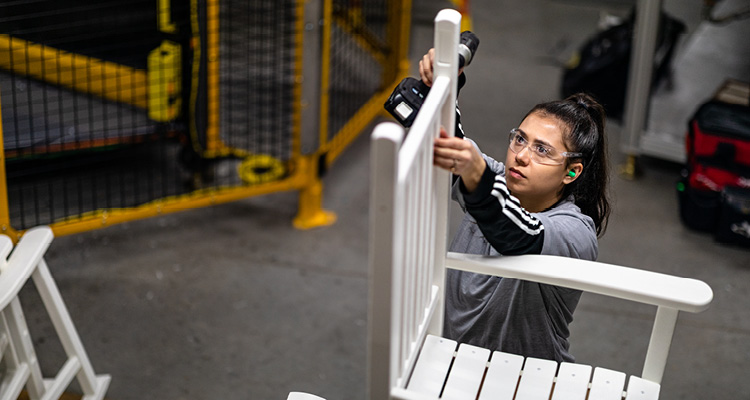
POLYWOOD blends material innovation and sustainable manufacturing to create worry-free outdoor living designs


As the first company to create outdoor furniture from recycled plastics, POLYWOOD is a true innovator at heart. In 1990, as government-mandated recycling programs gained popularity in the US, two high school friends identified that high-density polyethylene (HDPE) could be used to make outdoor furniture due to its extreme durability and weather resistance. Today, POLYWOOD has grown into a leading provider of out-door furniture in the US and continues to champion a circular, 99-percent waste-free process.
“POLYWOOD is a classic American innovation startup story,” opens COO Brady Maller. “Doug Rassi found-ed POLYWOOD in 1990 with an industry-disrupting product that would revolutionize outdoor living forever. True to entrepreneurship, we stayed on the cutting edge of technology and were early adopters of e-commerce during its emergence in the 2000s. We put our energies into building a vertically integrated JIT manufacturing platform that could produce and deliver many thousands of options in real time without compromising exactly what our customers wanted.
“Fast forward to today, we have a proprietary technology operating system that seamlessly ties all of this together,” he adds. “We go from order in to out the door in a few days, and all the coordination is driven with a scalable system allowing us to do what we love to do; putting our energy into making worry-free products that will be enjoyed for years to come.”
In terms of ownership, POLYWOOD has recently changed hands from Mayfair Capital Partners to Arsenal Capital Partners (Arsenal) and Baypine. “With deep expertise in manufacturing, Arsenal is a very collaborative partner, pushing the boundaries of strategy and supporting the management team with the resources needed to move our growth initiatives forward,” Brady explains. “Since this partnership, we’ve launched several major projects and initiatives, such as moving our website platform to Shopify. We’ve also recently launched POLYWOOD Select™ lumber, a game-changing product that opens the doors to a higher level of design excellence and aesthetic capabilities.”
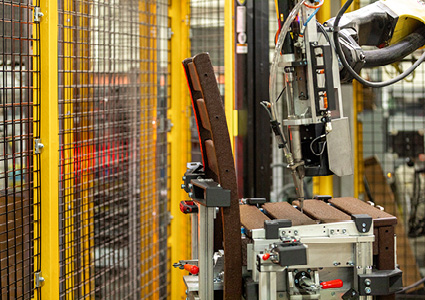
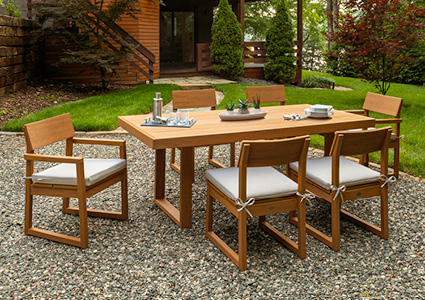
Turning to the company’s range of products, Ben Spiegel, Chief Digital Officer, elaborates on how the portfolio continuously evolves. “While most consumers know us because of outdoor furniture, we view ourselves as an outdoor living brand,” he states. “Our portfolio spans Adirondack chairs, deep seating, dining and bar collections, rockers, chaises, fire tables, and outdoor accessories, and our focus is on helping consumers unlock the full potential of their outdoor spaces. We aim to inspire consumers and help them create enjoyable outdoor spaces, far beyond simply buying a few pieces of furniture.
“What differentiates us isn’t just that the products are weather-resistant, but every product is engineered for decades of low-maintenance ownership, using proprietary materials that resist moisture, fading, cracking, and splintering without the need for painting, staining, or seasonal storage,” Ben explains. “Through our vertically integrated, made-to-order model, we offer thousands of styles and color combinations, al-lowing consumers to create spaces that fit their needs, taste, and style, all with real-time availability and quick delivery. This combination of material science, design leadership, and frictionless fulfillment allows us to deliver an outdoor experience that is truly effortless.”
Commenting on the company’s capabilities, Brady adds: “One of the best challenges we could be given is something that ‘can’t be done’ as we thrive on doing what others say isn’t possible. Our JIT manufacturing can respond in real time to any demand, but in reality, our process consists of several micro innovations that all work together to deliver a market advantage and value. I genuinely believe the biggest innovations are yet to come, and that’s what makes POLYWOOD an exciting place to be.”
POLYWOOD is also embracing technological advancements to enhance its manufacturing processes. “While outdoor living is not traditionally seen as a tech-heavy category, AI and advanced data analytics have be-come important building blocks for us to drive competitive advantages in the market,” Ben says. “These technologies are helping us to optimize production, improve forecasting, enhance the customer journey, and maximize the value of our consumer data. This unique blend of manufacturing excellence, brand focus, and modern technology creates meaningful development opportunities for our people and allows us to continue reinventing the outdoor living category for our customers.”
Considering the company’s innovative roots in identifying a use for otherwise wasted HDPE, sustainability is at the heart of POLYWOOD. “Sustainability is foundational to how we operate; it’s not just an add-on initiative or marketing ploy,” Ben states. “Our products are made using recycled and reusable materials, and we operate a closed-loop manufacturing process that reintroduces scrap material back into production, leading to zero waste.
“Our products are designed to last for decades without maintenance, therefore reducing the replacement cycle that often drives waste in the outdoor furniture category. Our vertically integrated, US-based supply chain also reduces unnecessary transportation complexity and provides better control over environmental standards. Beyond materials, our just-in-time manufacturing model minimizes overproduction and excess inventory. Ultimately, sustainability for us means building durable outdoor living solutions that perform over time while operating a disciplined, efficient manufacturing platform behind the scenes.”
Aside from sustainability benefits, POLYWOOD’s marketing and growth strategy also includes retail collab-orations and brand partnerships. “Our recent collaboration with Martha Stewart, for instance, reinforces our aspiration to become the brand of choice in outdoor living,” Ben shares. “Martha brings an iconic de-sign authority and a deep understanding of how people gather, host, and create meaningful spaces for themselves and their families. When paired with our material innovation and manufacturing approach, it allows us to elevate the category beyond basic furniture into curated outdoor environments.
“Partnerships like this challenge us to push aesthetics and comfort, while maintaining the durability and performance that define POLYWOOD. They also expand our reach to new consumers who may initially connect through design inspiration but stay with our brand because of the lasting value and ease of ownership. It is a strategic way to expand the outdoor category while reinforcing our leadership in material in-novation and product design.”
With a deep-rooted commitment to sustainability, an ever-evolving product portfolio, and a for-ward-thinking approach to current innovation developments, POLYWOOD will continue to refine what outdoor living means for its customers. As our conversation comes to a close, Brady shares his thoughts on the company’s future. “We’re a growth-minded company, and we thrive on the challenge and thrill of continued growth,” Brady concludes. “We’ll continue to inspire and enrich the lives of our customers with products they don’t have to worry about, enabling them to spend time living, enjoying, and creating memories in their own outdoor spaces.”
