
Precision Micro Puts Metal Shaping on a Data‑Driven Footing

Precision Micro has sharpened the debate over how metal components are made, arguing that the choice between cutting, stamping, laser, and chemical etch should be driven by data, not familiarity. The UK precision-etching firm now positions surface integrity, residual stress and microstructure as measurable process outcomes, not just quality‑control footnotes, putting materials analytics at the heart of high‑precision manufacturing decisions.
Process Selection as a Data Problem
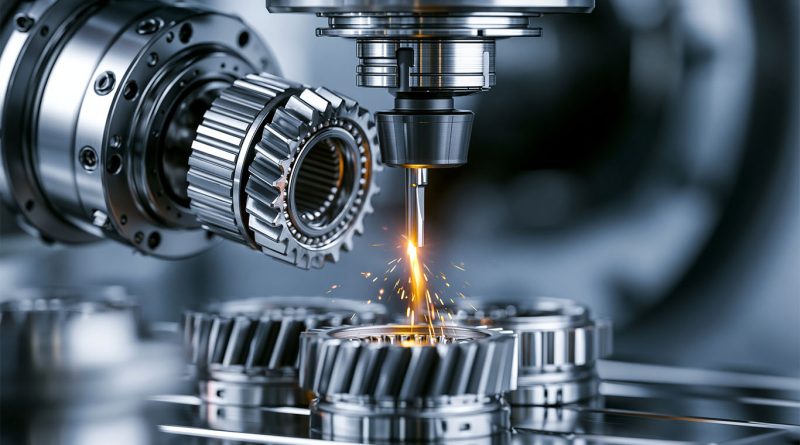
Ben Kitson, head of business development, leads the company’s technical review and reframes metal shaping as a quantitative decision. Mechanical methods such as stamping, punching, and CNC machining remain cost effective at scale. However, they introduce plastic deformation, burrs, and internal stress that can erode fatigue life and dimensional stability. Thermal processes, including laser and EDM, avoid force based deformation but generate heat affected zones that can alter the microstructure and create recast layers. These layers often require additional finishing.
How the Three Approaches Differ
In practice, the distinction is between force-based removal, heat based removal, and chemical dissolution. Mechanical shaping relies on direct contact, which can plastically deform the surrounding region and create residual stress. Thermal methods avoid that physical load, but the local thermal cycle can change the near surface layer and reduce strength in some alloys.
Chemical etching, by contrast, uses a photoresist mask and an etchant to remove exposed metal without mechanical force or significant heat. This process leaves the base microstructure intact, avoids burrs and deformation, and preserves hardness, grain structure, and ductility. For manufacturers working with thin, complex, or high integrity parts, this method offers a technical and economic advantage.
Why it Matters for Manufacturing Data
From a data and technology perspective, the key shift is from treating process selection as a rule of thumb decision to treating it as a parameterized, model led one. Surface integrity metrics such as residual stress distribution, microstructure change, and edge condition are increasingly treated as inputs that teams can simulate, monitor, and optimize alongside geometry and throughput data.
This is especially relevant for electronics, automotive, aerospace, and medical device manufacturing, where tolerances are tight and failures are costly. By quantifying how different methods change the material, companies can better align process choice with reliability, service life, and compliance, rather than relying on legacy practices or lowest immediate cost assumptions.
Ecosystem and Partnership Context
The analysis draws on established research, including work from the UK National Physical Laboratory on residual stress and distortion, as well as broader studies on heat affected zones and surface integrity. This context positions chemical etching as a complementary, not niche, option in the precision manufacturing ecosystem.
From a technology platform standpoint, future manufacturing stacks will need to integrate process physics models with material property databases and digital twin environments. This evolution reinforces the role of partnerships among material suppliers, equipment providers, metrology specialists, and process houses such as Precision Micro.
Forward Looking Implications
Over the medium term, the most salient takeaway is that precision manufacturing is moving from descriptive to predictive process selection. As 2026 progresses, the ability to choose shaping method based on quantified surface integrity outcomes will matter at least as much as speed or unit cost.
For manufacturing data and technology professionals, this means building process selection frameworks that tie available shaping methods to material datasets, simulation outputs, and downstream reliability targets. Precision Micro’s review serves as a reminder that the geometry of a part is only half the story; the way it is made may ultimately define its performance.
Authored by: Stella Nolan is the Editor of American Healthcare Leader and Modern Counsel Magazine and a regular contributor to Manufacturing Today, all published by Finelight Media Group. With over a decade of experience in senior editorial roles, Stella creates commercially savvy, engaging content for global brands. Based in the UK, she brings sector expertise and compelling storytelling to topics like digital transformation, advanced manufacturing, EV infrastructure, and the impact of AI on industry. Stella’s focus includes DEI, AI, procurement, and telecoms, where she profiles industry leaders and curates essential features for in-house counsel and healthcare professionals.
Source:
https://www.precisionmicro.com/

*Please note that this list includes sponsored content. Some of the companies, products, or services featured have entered into commercial agreements for placement. Sponsored placements do not necessarily reflect an endorsement and should be considered alongside other options in the marketplace.