
RENK America is scaling production, people, and partnerships to meet increased defense demand

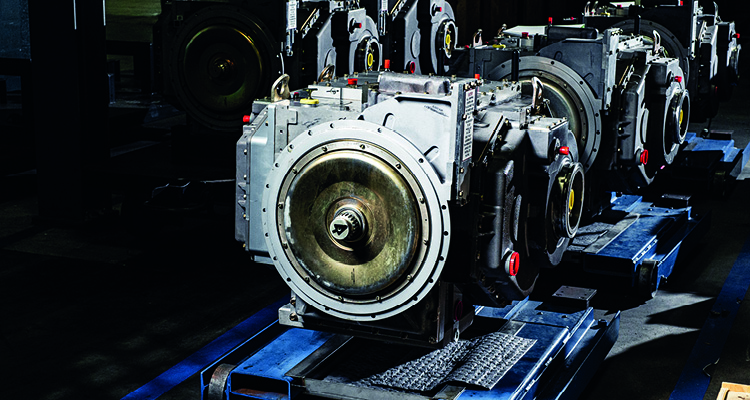
As one of the world’s leading producers of mission-critical drive solutions for a wide range of defense and civil markets, RENK America (RENK) develops and services a variety of applications, from gear boxes to hybrid propulsion systems. While the RENK name was adopted in 2021, the company’s legacy stretches back more than a century, having been designing, building, and supporting combat vehicle powertrains in Muskegon, Michigan since World War II.
“Today, we are proud to be the primary supplier of transmissions for the U.S. Army’s medium tracked vehicles and the engine supplier for the M88 Hercules, while supporting 26 vehicle types globally,” begins COO Skyler Vaughn. “Our history is built on craftsmanship, innovation, and a deep commitment to the men and women who rely on our systems.
“While our core strength is in high performance mobility systems for tracked vehicles, such as transmissions, hybrid ready driveline technologies, and advanced vehicle mobility components, what truly sets us apart is the lifecycle support wrapped around those products. We offer everything from original design and manufacturing to depot level sustainment, field support, training, and modernization packages. Wherever our products go in the world, we stay with them for the long haul.”
With increased demand across the defense sector, 2025 was a record-breaking year for RENK. “Nations are accelerating investment in both new armored platforms and modernization programs, which naturally pushed volumes higher for mobility systems like ours,” Skyler explains. “High demand only turns into high performance if the operation – and the supply chain behind it – can support the ramp. The real success came from the groundwork laid over the past several years: stabilizing processes, expanding capacity, strengthening our labor base, and significantly improving our supply chain resiliency. We worked closely with suppliers to increase capacity, reduce lead times, and build more predictable material flow. Those improvements gave us the ability to scale production without the disruptions that historically come with rapid growth.
“What we’re seeing now is a long-term shift in the defense market toward sustained higher volumes, tighter timelines, and deeper coordination across the OEM–supplier network. Defense manufacturing is becoming more dynamic, more integrated, and more dependent on supply chain agility than ever before. Because we invested early, both on the shop floor and throughout our supply base, we were ready for that shift and able to deliver at record levels.”
As Skyler explains, RENK has invested significantly in its systems and facilities to enhance efficiency and productivity. “Our Muskegon facility has undergone a transformation, with new machining centers, expanded assembly capacity, enhanced testing labs, and improved logistics flow,” he shares. “These up-grades have already increased throughput and improved quality consistency. The next phase focuses on digital integration, additional capacity for hybrid systems, and expanded test capabilities to support future modernization programs and emerging tracked platforms. It’s about staying ahead of what the Army and our partners will need next.”
RENK Production System (RPS)
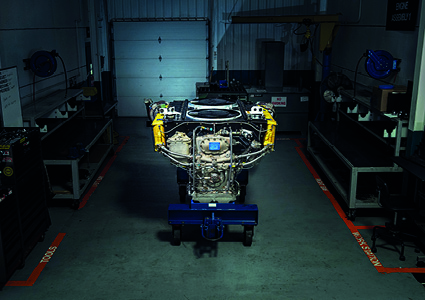
The backbone of RENK’s operations is the RENK Production System (RPS), an integrated operating model built on lean principles, modern digital tools, and a culture of continuous improvement. “Many of our newer operations leaders, me included, come from the automotive sector, and that background brings valuable experience with structured production systems and high volume, high precision manufacturing,” Skyler says. “We developed RPS to ensure we can meet rising demand while maintaining the highest standards of quality and repeatability. It helps our teams work smarter, reduce variability, and stay tightly connected across engineering, production, and customer requirements. It’s not just a system for us – it’s the way we operate every day.”
Sustainability is also important to RENK, with several initiatives in place to make both its products and operations more environmentally friendly. “Sustainability in defense is about keeping fleets efficient, reliable, and supportable over the long term,” Skyler states. “For us, that means designing mobility systems that reduce fuel consumption, extend component life, and simplify maintenance. Even small efficiency gains can have a big impact when you look across a fleet of vehicles operating for decades.
“Inside our programs, we’re focused on lowering lifecycle emissions through improved drivetrain efficiency, more durable materials, and future-ready hybridization options. We’re also working to reduce the sustainment burden, which means fewer part replacements, longer service intervals, and better health-monitoring capability. All of that contributes to a more sustainable fleet because it reduces fuel us-age, logistics demand, and waste in the long term.
“The defense mission will always come first, but sustainability and fleet readiness go hand-in-hand,” he adds. “A vehicle that runs cleaner, requires less maintenance, and uses less fuel is not only better for the environment, but it’s also better for the soldier and more efficient for the taxpayer. That’s the mindset guiding our approach.”
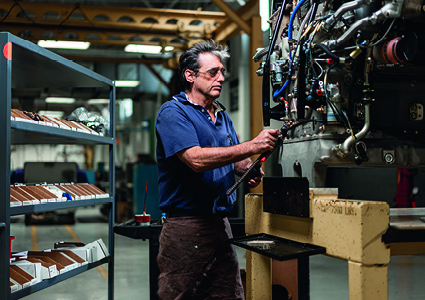
Reflecting on the company’s successes, Skyler is keen to highlight the talented and ambitious team behind RENK. “The skill, dedication, and patriotism of the people in our Muskegon facility are what make RENK exceptional,” he says. “Our culture is grounded in respect, teamwork, and pride in the mission. We focus on transparency, hands-on leadership, and giving employees the tools and autonomy to solve problems. There’s a strong sense of community in our plant; we celebrate wins, learn from setbacks, and work hard to create an environment where people feel supported and valued.
“Safety is also a non-negotiable commitment. We invest heavily in training, ergonomic improvements, and automation that reduces manual risk, and we also focus on proactive reporting to address issues before they become incidents. Our teams participate in daily safety conversations, and we encourage everyone to speak up. A safe workplace is built on consistent habits and shared responsibility, and our employees take that seriously.”
With record output last year and a clear vision in terms of sustainability and its people, RENK is firmly set on what comes next. “2026 is all about scaling, particularly production, our workforce, and the supply chain,” Skyler reveals. “We’re also strengthening partnerships with the U.S. Army and global OEMs as modernization programs accelerate. You’ll see continued facility enhancements and new technology demonstrations that highlight where tracked vehicle mobility is heading.
“In terms of products, we’re heavily engaged in supporting U.S. Army next generation platforms, as well as several international programs that demand advanced mobility solutions. We’re also expanding our after-market and sustainment footprint, including new service offerings that bring RENK expertise closer to our customers. As ever, our R&D teams are pushing forward on hybrid capabilities that will shape the future of armored mobility.
“Five years from now, we expect RENK America to be the premier mobility partner for next generation armored systems, not only in the US but globally,” Skyler concludes. “We aim to expand our hybrid ready product portfolio, continue building our workforce, and further modernize our Muskegon facility. Most importantly, we want to preserve the craftsmanship and engineering excellence our customers count on while growing our capacity to meet the demands of a rapidly changing defense landscape.”
