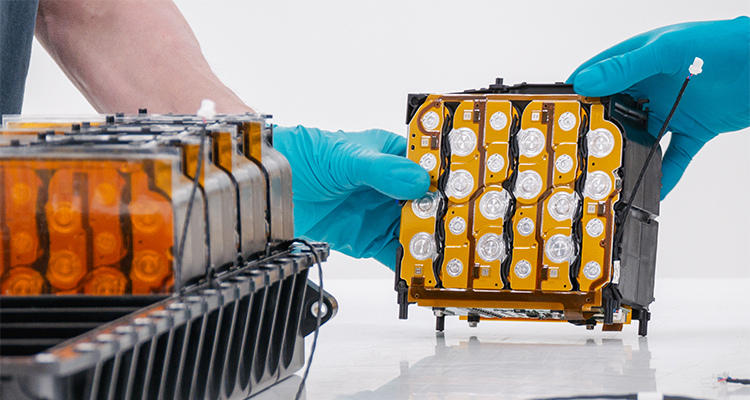
RML Group is building vehicle batteries that charge in under ten minutes, within its own facility

With a racing heritage that predates its formal inception in 1984, RML Group (RML) has always operated in the world of motorsport and high-performance engineering. Founded by Ray Mallock, the company built its reputation producing touring cars and made its comeback in touring car racing in 2026. Alongside building cars for CPRL, RML has completed a wide range of high-profile projects over the years, including the Nissan ZEOD RC, the NIO EP9 and various other high-performance applications. Vertically integrated, the company boasts an impressive degree of internal capability, including its own fabrication shop, machine shop, inspection facilities, battery welding and battery production. This capability set increasingly enables RML to move into new territory with confidence.
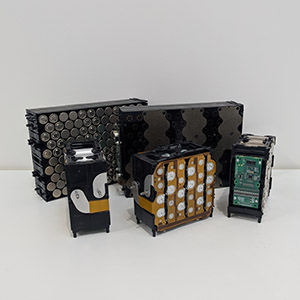
That vertical integration has proved particularly valuable as RML has evolved its VarEVolt battery range. Originally launched as an ultra-high-performance product designed specifically for motorsport and supercar applications, the range has since been significantly extended. “VarEVolt uses a cell with class-leading performance, but in a less common form factor,” begins Denis Gorman, Head of Powertrain. “What we wanted to explore was how we could take the core technology and concepts behind it, such as the scalability, the adaptability and the immersion cooling for improved thermal performance and apply that to other applications. Those applications invariably have different needs in terms of power, energy and cost, so to reach them we needed to move to a more common cell form factor. Therefore, we developed the VarEVolt concept to suit 21700 cells and ultimately produced two versions: one optimized for BEV and high-energy applications, and one built around HEV and ultra-high-power requirements.
“Across both, we can adjust voltage and capacity and swap in different cells to tune the power and energy profile, giving us a high degree of adaptability. What that means in practice is that when a customer comes to us needing a bespoke prototype battery for a specific application, we can reduce their lead time significantly by offering them something from the existing VarEVolt range to get them up and running quickly, while we develop their truly bespoke long-term solution in parallel. We also benefit from significant knowledge transfer across the range, since every time we learn something on one part of it, whether that is the nuances of different immersion fluids or the temperature differentials within the cells themselves, we can apply it across the rest. When you are operating at the cutting edge of performance, that kind of compounding knowledge becomes very useful.”
Through its deep expertise, RML was well-positioned to diversify into defense, a sector currently experiencing significant investment and a growing appetite for advanced engineering solutions. “When people talk about increasing the share of defense spending by just one percent of GDP, that represents tens of billions of pounds. At the same time, technology is evolving in a way that allows real cross-pollination between industries. For example, the power-dense HEV batteries we have developed for automotive applications are directly relevant to aerospace, eVTOL, defense, marine and even space, as they all need power-dense energy storage solutions. Similarly, the expertise we have built in control system engineering and electrical engineering has clear applications well beyond motorsport. The homework we have done in high-performance automotive is now opening doors in industries we were not in before. It makes it quite a cool time to be an engineer here,” Denis notes.
Being able to pursue those opportunities without first assembling a network of external partners is one of RML’s most significant structural advantages. When a project comes in, the team can begin work immediately, drawing on its in-house capability to prototype and test at speed. “When I want to test new battery cells, I can receive them, walk downstairs from my office to our production ship and weld them to tabs, walk across the yard to put them in a climatic chamber or a cycler, all in-house. It makes these projects so much easier and faster,” Denis adds.
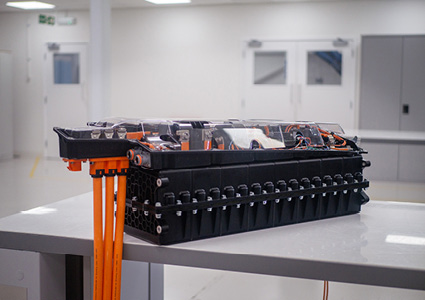
Far from treating that level of integration as a given, RML is expanding its in-house testing capabilities. “It is not accidental that we have this level of vertical integration; it is a deliberate choice, and one we continue to build on,” Denis explains. “On the battery side, we now have the ability to characterize cells in-house, which is something we have been doing a great deal of recently, alongside short circuit testing and thermal mapping of cells. These are fairly novel skills, and we have taken the same approach as always of trying to do as much as possible in-house. On our battery management system and controls projects, we have built the test rigs and testing capability in-house too, so that our engineers can physically work in the same room as the equipment they are developing for. This speeds up the development process significantly.”
Several current projects illustrate the breadth of what that capability can deliver. The GT hypercar is one that has reached the public eye, showcasing RML’s all-round ability across control systems, electrical engineering, vehicle dynamics, styling and build, making it a flagship project for the company.
Also recently made public is a collaboration with Shell on its Triple 10 Challenge concept vehicle, for which RML supplied a battery capable of being charged in under ten minutes. This innovation takes the company’s motorsport knowledge and ethos and applies it directly to one of the most pressing challenges in passenger vehicle electrification. The company is already exploring how to extend that work further across other markets that need high power. Behind the scenes, there are many more projects underway, including the continued evolution of RML’s own battery management system, and significant progress this year in cell-to-bus-bar welding techniques that allow the company to work with some of the newest cells available. Further projects in new industries will be made public in due course.
RML has spent over four decades refining what it means to engineer at the limits of performance, and those limits are now expanding into entirely new territory. The recent return to its roots in touring cars marks a clear shift in the company’s strategy, and its collaboration with Shell, expansion into defense and the evolution of the VarEVolt range point clearly to the company’s ambitious goals.