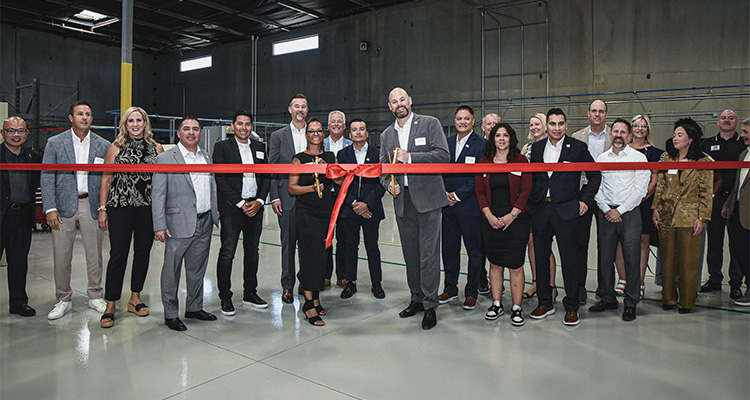
Roncelli Technologies is growing its capabilities, capacity, and reach as manufacturing requirements become more complex

Founded in an 800-square-foot machine shop serving the emerging computer industry, Roncelli Technologies (Roncelli) has spent nearly six decades adapting to successive waves of industrial change. What started as a precision plastics manufacturer in Monrovia, California, now operates across California, Nevada, and Malaysia, supporting customers in aerospace, defense, semiconductor capital equipment, space, and medical markets. As these sectors look for manufacturing partners who can support programs from concept through production, Chief Executive Officer Chris Cole is broadening both the company’s technical strengths and its role within customers’ supply chains.
Today, Chris leads strategy, operations, and growth across the company’s global presence. He joined Roncelli in 2007, moved through several leadership roles, and became CEO in 2022. Chris has overseen much of that transformation firsthand. Still, he sees a strong connection between the company’s beginnings and where it’s headed today.
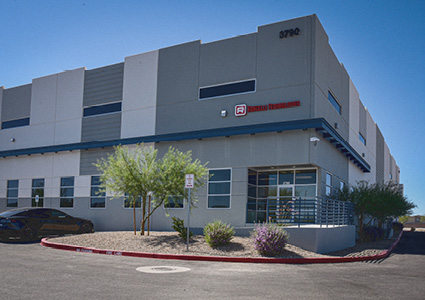
The biggest shift, Chris says, has been the changing nature of customer expectations. “For us, moving up the value chain means taking responsibility for more of the customer’s challenge. Instead of just receiving a drawing, machining a component, and shipping it, we want to participate earlier and stay involved longer. That might include material selection, design-for-manufacturability discussions, prototyping, complex multi-axis machining, specialized inspection, cleanroom work, secondary processes, assembly, and ultimately production at scale.”
This holistic approach reflects a broader trend in advanced manufacturing. Customers want partners who can support multiple stages of a program and draw on specialized knowledge from across the industry. For Roncelli, meeting that need has meant purposeful growth. Chris points out another major shift: realizing customers’ needs were becoming broader and more global. For much of Roncelli’s history, growth meant getting better at what it already did. In recent years, the company has focused more on building out where it operates and, on the problems it’s equipped to solve. That mindset led to the opening of Roncelli Malaysia, the extension of Roncelli Precision Sealing, and the launch of Roncelli Carbon Systems in Henderson, Nevada.
Instead of building a group of separate businesses, Roncelli is creating a connected platform around customer needs. “Those decisions weren’t about collecting facilities. Each one was made to solve a customer’s need or add a capability that makes the overall platform stronger. The goal is for each customer to experience one Roncelli, with specialized expertise available throughout the organization.”
As a result, the business looks very different from the one Chris joined in 2007. Over the past 15 years, Roncelli has doubled in size every five years, while scaling up its manufacturing expertise and geographic reach. “We’ve made a point to reinvest in the company: in people, equipment, technology, facilities, and new offerings. We also work hard to stay close to our customers. When we see their needs changing, we ask ourselves what Roncelli must do to keep supporting them five or ten years from now.” That focus is bringing the company into more programs where multiple manufacturing disciplines come together.
The launch of Roncelli Carbon Systems illustrates this trend. Aerospace, defense, and space customers are seeking solutions that combine performance requirements with material flexibility, creating opportunities for manufacturers capable of working across a wider range of technologies. “We’re seeing increasing demand in aerospace, defense, and space for components that need to be lightweight, dimensionally stable, and capable of performing in demanding environments. Programs increasingly draw on several materials at once. A system may incorporate engineered plastics, metals, elastomers, graphite, and composites, rather than fitting neatly within a single manufacturing discipline.”
The Henderson facility adds carbon, graphite, and composite manufacturing capabilities, as well as domestic production capacity. At the same time, Roncelli has kept growing on other fronts. The company recently relocated Roncelli Precision Sealing to Arcadia, California, and opened a second facility in Malaysia focused on thermoplastic welding and fluid delivery systems for semiconductor infrastructure applications.
The pattern becomes clearer when you zoom out. “These are different capabilities in different geographies, but the strategy behind them is the same: build specialized centers of expertise around where we see customer demand developing and make those capabilities more valuable by connecting them across the broader Roncelli organization.” As the network grows, maintaining consistency becomes more critical. The industries Roncelli serves demand traceability, documentation, and repeatability, placing pressure on companies to scale quality and culture with the same discipline they apply to production.
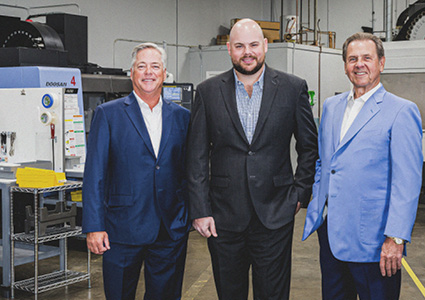
That discipline shapes Roncelli’s expansion strategy and guides its approach to quality and culture. “You must make those things scalable intentionally. They don’t scale simply because the business does. Our quality systems and certifications create structure, but quality ultimately comes down to behavior: how people approach a process, identify risk, communicate an issue, and continuously improve the work.”
The people-centric view extends beyond quality systems and into leadership itself. While Roncelli has expanded across multiple facilities and countries, Chris believes culture depends on actions rather than statements. “You can’t simply put your values on a wall in California and assume they exist in Nevada or Malaysia. Leadership must demonstrate them, reinforce them, and create systems that support them.”
The focus on people carries through the company’s history. When Gino Roncelli founded the business in 1969, manufacturers were navigating the rise of mainframe computing and confronting challenges that did not previously exist. Chris sees the same forces at play today, just in newer forms. “Today the technologies are different, but we’re still surrounded by that same type of change. Semiconductor technology, commercial space, advanced aerospace platforms, and automation are evolving very quickly. What has stayed constant is the value of skilled people, technical craftsmanship, and the willingness to solve difficult problems.”
The link between past and present remains central to how Roncelli differentiates itself. While Roncelli’s capabilities now span plastics, metals, sealing solutions, carbon, graphite, composites, assembly, and global production, its operating model is built around solving manufacturing challenges rather than supplying individual components.
Future investment will build on the same strategy that has shaped Roncelli’s evolution: surrounding increasingly complex customer programs with more capabilities and support.
Investments in automation, machining and inspection technologies, engineering support, assembly, digital systems, and carbon manufacturing are all intended to increase the scope of work the company can support while bringing its operations closer together. “I want Roncelli to be recognized as an advanced manufacturing partner capable of taking on increasingly complex, mission-critical programs from some of the most innovative companies in the world. Growth is important, but I don’t want growth simply for the sake of becoming larger. I want the next version of Roncelli to be more capable.”
As advanced manufacturing continues to evolve, Roncelli’s focus remains on building a business that adapts alongside it, staying flexible and closely connected to the problems that matter most to its customers.