
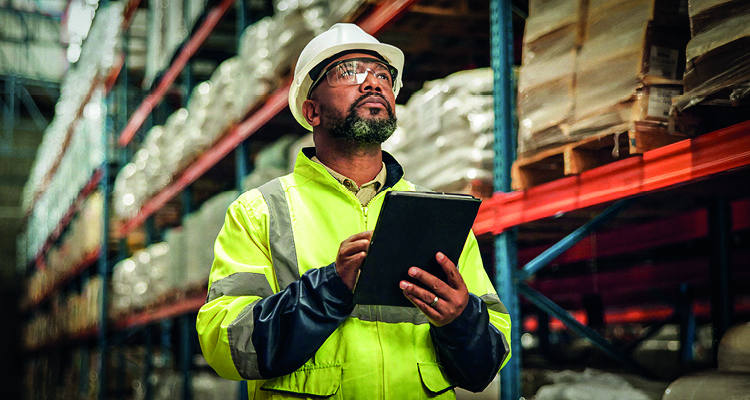
Safety is a productivity strategy – and the manufacturing workforce already knows it. By Tom Goodmanson

Safe workers are productive workers. That’s not just a safety poster quote. EcoOnline’s 2026 Workplace Safety Report, based on 1267 workers in the US and Canada, found that 92 percent believe a safer workplace would make them more productive, a figure matched in the manufacturing responses.
Manufacturing workers also connect safety to employer choice, with 76 percent saying physical safety is an important factor when choosing an employer, and the same share saying an unsafe work environment could lead them to leave.

The best manufacturers already know safety cannot be separated from performance, because it affects focus, confidence, and workers’ ability to do the job well.
Injuries cost US businesses over $1 billion per week, and business interruption consistently ranks as a top global business risk. But on the plant floor, the case is even more immediate: frontline teams are balancing output, quality, uptime, labor challenges, chemical handling, supply chain pressure, and a growing range of risks, from fire to cyber disruption. They cannot work at peak performance if they are worried, caught off guard, or missing the information they need.
Operational risk is broadening
As manufacturers look to protect their people and performance, risk is no longer confined to obvious safety hazards on the plant floor. Workers are recognizing risks throughout their day. Things like stress, chemicals, working alone create potential hazards and inhibitors to productivity.
In our survey, 53 percent of manufacturing workers affected by a workplace accident or illness said stress was involved. That is a reminder that operational risk is shaped not only by physical hazards, but also pressure, fatigue, unclear processes, and changing priorities, which lead to elements like stress which increase accidents.
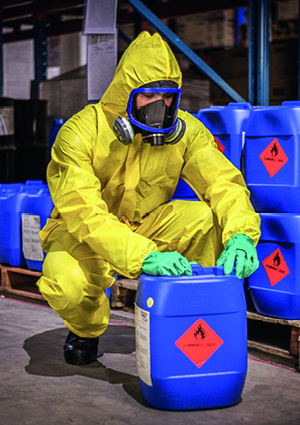
Chemicals are another nonobvious risk with 72 percent saying they handle chemicals at work. Chemical risk cannot sit in its own lane, separate from training, reporting, audits, corrective actions, and incident response. While approximately 70 percent say they can access information through chemical safety digital software, the remaining 30 percent are at risk when they are unaware of the chemicals they are surrounded by.
Lone work is another growing but often overlooked part of the manufacturing workforce. In the data, 35 percent of manufacturing respondents identify as lone workers, and 42 percent of those say they experienced an accident while working alone in 2025. That points to a group easily missed in safety planning, even though response speed and visibility matter more when no one is nearby. The time it takes to respond to lone workers in danger without tools to monitor can mean the difference between going home safe and a catastrophe.
With the increase in risk, a company’s crisis readiness becomes increasingly crucial. Manufacturing workers ranked supply chain disruption, serious workplace injury or medical emergency, fire or evacuation-related incidents, and cyberattacks among the greatest threats to operations and their safety. Yet only 35 percent say their company has a crisis plan and that they understand it well.
Visibility matters
Many manufacturers are not starting from scratch. Over three-quarters say employers assess their physical workplace hazards, and 71 percent say they educate employees about workplace incidents or near misses that require reporting. But strong foundations are not the same as full visibility. While 79 percent of manufacturing workers believe their workplace is safe, 55 percent have been affected by a workplace accident or illness.
That gap matters. It suggests manufacturers cannot rely on confidence alone, and need better visibility into what is being reported, what is recurring, where action is outstanding, and where risk is building before it turns into disruption.
That also means moving beyond siloed thinking. Incident data, training, chemical information, lone-worker signals, and corrective actions can and should inform each other. That is how manufacturers navigate the growing risk landscape, moving from compliance to connected visibility and a higher ability to predict when and where a problem may occur, potentially avoiding the event.
Digital tools should reduce friction, not add it
Digital support becomes critical here. Eighty percent of manufacturing workers say they would feel safer if their company used more digital safety software. Workers are not asking for complexity. They are asking for tools that make safe action easier.
Reporting is a good example. Sixty-four percent of workers say they can report incidents verbally to their manager, but only 42 percent can report through an incident-reporting system. When asked how they would prefer to report incidents, 57 percent choose a digital route, either via computer or a mobile device. The opportunity is not to create more admin for the frontline, but to make reporting easier and more actionable.
AI should be approached in the same spirit. In manufacturing, 43 percent believe AI could improve workplace safety, while a further 29 percent say it depends on how it is implemented. In safety-critical environments, the goal should be to support human judgement, not replace it.
Future-proofing productivity
The manufacturing workforce already understands the link between safety and performance. The organizations that respond best will be the ones that stop treating safety and operational risk as separate and start connecting data and insights, so they inform each other.
That is the opportunity: to use technology in a way that helps future-proof operations against growing risk, supporting productivity and protection in tandem.
Tom Goodmanson
Tom Goodmanson is CEO of EcoOnline. EcoOnline delivers uncomplicated environment, health and safety (EHS), chemical management and ESG/sustainability technology solutions to forward-thinking leaders. Safeguarding your entire workforce, from frontline employees to lone workers and contractors, EcoOnline’s always-on solutions support your organization through everyday operations and moments of emergency and crisis alike. Its connected suite of SaaS software enables over 11,000 businesses to protect their people and the planet by ensuring compliance, risk visibility and mitigation, operational predictability, and long-term resilience.
