SICO is marking its 75th anniversary by donating new cafeteria tables to a local school

From its headquarters in Minneapolis, Minnesota, SICO has established industry benchmarks by crafting high-quality mobile furniture and equipment that turn ordinary spaces into multifunctional environments. Designed for mobility, easy set-up and break down, SICO products allow facilities to transform their spaces to cater to varying event needs. As SICO celebrates its 75th anniversary, CEO Chris Wilson reflects on the company’s journey and latest endeavors.
“My grandfather, Kermit Wilson, was a gifted engineer. During World War II, back when he was building small ships on the Mississippi River, scaffolding was being tightened using nuts and bolts. He looked at it and believed he could design a better system to avoid this slow and labor-intensive process: a simple one piece gravity lock system dropped securely into place on top of another, without needing to tighten anything. To take it apart, you just lift and remove the piece, saving a significant amount of time. From that idea, Kermit co-founded a company called WACO, which stood for Wilson and Albrecht Company, and the business did well,” he begins.
“One day, my grandfather read an article about the surge of babies being born after soldiers came back from the war, and how there was not enough schools to accommodate this baby boom. He believed there had to be a smarter way to use existing schools more efficiently, and that belief led him to engineer a mobile folding cafeteria table with attached stools and benches. To get his new venture off the ground, he sold his half of WACO and founded SICO in 1951, just in time for that first wave of baby boomers reaching school age. In the early days, no one fully understood the concept, as nobody had ever seen a mobile folding cafeteria table with stools or benches before, and it took time and persistence at trade shows to finally develop interest. Kermit applied the same mobile folding philosophy across all the products he designed, such as ping pong tables, beds, ironing boards and more. By the 1960s, he had turned his attention to portable staging and dance floor panels, always driven by the same idea of helping people transform and maximize their spaces, making one room serve many purposes.”
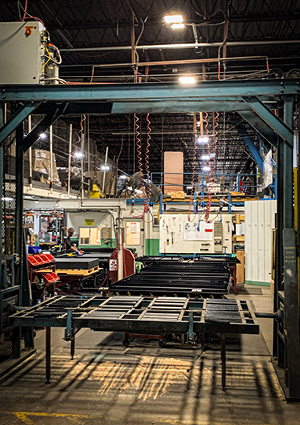
Sometime in the mid-1960s, Kermit began expanding the business globally through a licensing model. The very first license went to a Japanese company with a division dedicated to supplying cafeteria tables to schools. The second licensee was in England, where three people named Arthur Grunwald, John Merricks, and David Ford, formed SICO Europe. They started in London, moved to Kent and Ashford as the business grew, and eventually purchased land and built a facility at Lympne Industrial Park. Over time, SICO established licensees across many countries, some of which were successful while others failed, but this was all part of the process. Today, the company has moved to full ownership across its international operations, with offices in Australia, Singapore and Japan, a factory and office in England, and sales offices in Madrid and Dubai. In the US, SICO’s manufacturing operations are based in Minnesota and Wisconsin. The Wisconsin facility brings in laminate and medium density fiber core board, shapes components on CNC routers, armor-edges them, then packs and sends them to Minneapolis for final assembly.
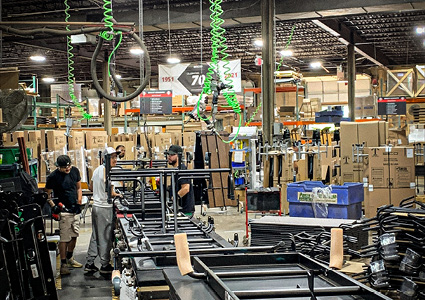
SICO has a long history of successfully navigating the peaks and valleys of the seasonal education market. Chris explains, “To better manage seasonality and strengthen our ability to reinvest in the business, we recognized the need for a more flexible and sustainable operating model. Our transformation has been implemented in three phases: machine shop, welding, and general plant operations. The first two phases are complete, and we are on track to complete the final phase by the end of 2026. The benefits are already evident. The new model has improved flexibility and efficiency while enabling SICO to reinvest in our facilities, equipment, and technology. As a result, we are a stronger, more agile company today, better positioned to support our customers, invest in our business, and build for the future.”
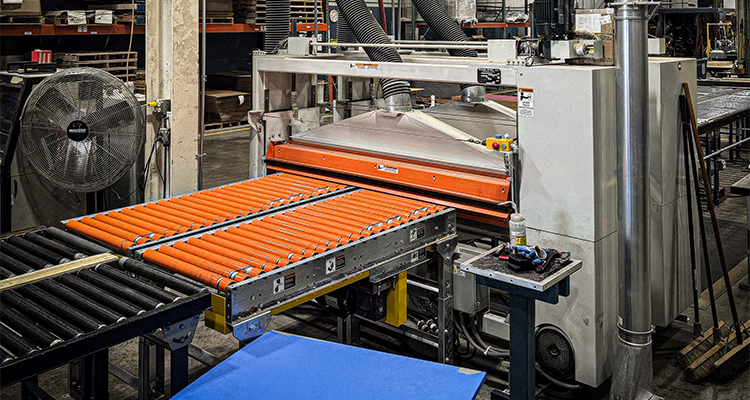
Alongside enhancing its own operations, SICO has been focused on giving back to the communities its products have served for more than seven decades. As such, the company set up a one-time grant to provide the recipient with a free cafeteria, an initiative Chris is keen to discuss in more detail. “To mark our 75th anniversary, we decided to donate $1000 for every year we have been in business, which comes to a total of $75,000 to be used to add to, replace or upgrade existing tables currently being used. We wanted to make sure that all of this was done properly, so we did some research and invited grant proposals from legitimate 501(c)(3) schools to ensure the donation was structured appropriately,” Chris informs. After reviewing applications from a wide range of schools, with a focus on public and unfunded private education, SICO eventually selected a local school called ISLA (International Spanish Language Academy), based in the Twin Cities.
“The school is incredibly appreciative and as excited about this grant as are we. They produced a wonderful video and put so much effort into it to be able to secure the grant, we could tell they took it very seriously and it truly mattered to them. Even the application they submitted was outstanding, they wrote thoughtful paragraphs rather than one-sentence answers. When we went to tour the school, it was immediately clear just how much they needed new tables, as there were broken tables, ones with holes in them and those that wobbled dangerously, and benches with sharp edges that children were sitting on every day at lunch. We are planning to deliver and install everything they need in October. It will be an exciting day and we are looking forward to being able to help them,” he concludes.
Following the path laid out by both his father and grandfather, Chris is honoring their legacy by remaining true to what made the company so successful in the first place. A culture that puts people first.