
SMP Group is strategically blending technology and craftsmanship to deliver quality production

Established in 1928, SMP Group (SMP) has built a strong foundation and deep understanding of out of home and retail marketing print, with a skilled in-house team to develop, manage, and execute advertising campaigns. From discovery and creative design to full advertising activation, SMP brings brands to life, striving to drive high impact engagement and maximize return on marketing investment delivered as an end-to-end solution supported with its complete planning, execution, and analytics platform.
With customers ranging from B&Q and WH Smith to Waitrose and Tesco, SMP’s operations fall into two specialist markets: out-of-home advertising and point of sale. In the out-of-home sector, the company produces a large proportion of the UK’s billboard advertising, working with media companies and specialists across roadside and transport formats. Point of sale, on the other hand, sees SMP produce in-store advertising for leading retailers across the UK and Europe, also working directly with brands on experiential events. Its product portfolio ranges from posters and displays to freestanding display units (FSDUs) and shippers, and its services run end-to-end, including concept, 3D construction, print manufacture, in-store execution, and even compliance management and reporting.
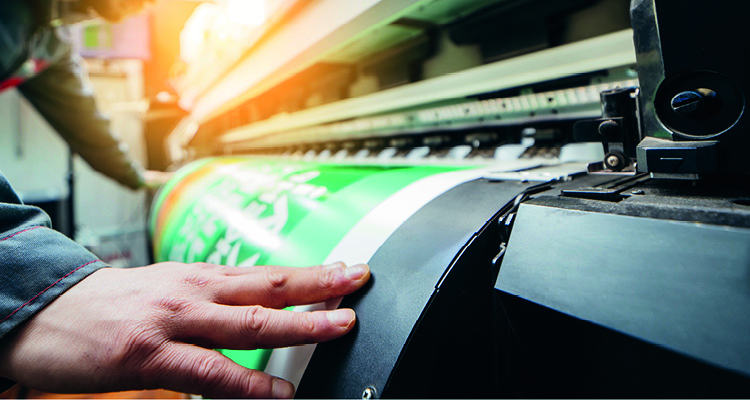
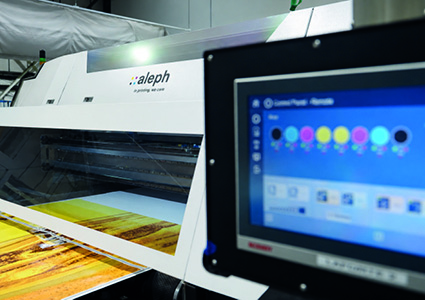
The variety of SMP’s offering has shaped its approach to manufacturing, which has evolved significantly in recent years. The company runs both litho and digital print, carefully selecting the production method based on the requirements of the end product. “We use different technology print processes across manufacturing to produce work without a production bias,” opens Bradley Slade, Managing Director. “We’re constantly analyzing efficiencies, quality, speed, reduction of waste, and how we deploy labor. In recent years, the balance has shifted towards digital; advances in technology have improved productivity and this technology gives us more flexibility, reduces waste, and improves quality.
“We’re exploring the options to automate our processes and workflows through software development and scheduling tools. In fact, tech development is our largest single annual project spend, and we’ve built our own in-house team to develop and deploy a wide range of technologies. However, given the variety of our products and the varied specifications, there is a limit to what capital equipment alone can automate. A lot of our process improvements are around planning, scheduling, and how we handle and manipulate data. We’re not looking to deploy more humans to the process, but we are looking to utilize them and get the maximum value from their skills while automating repetitive tasks.
“Everyone is talking about AI, and although we’re cautious around it, we must explore how best to utilize it. Rather than the chatbot-style personal AI models, we’re using multiple layers of AI tools, primarily to monitor and confirm our processes and functions are executed properly. We even use another AI tool to verify the checkers, so to speak.”
SMP’s layered AI tools run around the clock to streamline and improve its operations. While one tool ingests data supplied by clients, interprets it, and fits it to SMP’s production systems ahead of a job, another watches machinery and productivity, flagging in real time if output drops below a set KPI or if a machine is down. “Using integrated systems provides us with a defined list of actions, enabling us to make faster, better-informed decisions without trawling through data,” Bradley says.
“It’s important to note that it doesn’t detract from our people, as their technical knowledge is very valuable and I believe there are several aspects of our processes that require a human element. Although AI enables us to run leaner in terms of our workforce, it increases productivity and allows employees to focus on areas where a human touch is needed.”
As Bradley explains, although SMP is implementing AI tools, the company takes a pragmatic approach, blending the efficiencies of automation with the skills of its employees. That level of employee engagement is at the heart of SMP’s culture. “Over the years, we’ve transitioned from a traditional manufacturing base to a service-based delivery business, and our culture has evolved simultaneously,” Bradley shares. “We’re fortunate to have a very low staff turnover and we have some very knowledgeable people across the organization. Our people are not only skilled, but they’re incredibly passionate about what they do, and their engagement is key to enabling our continuous improvement ethos. For instance, we’ve recently hired for new roles, from system architects to data analysts, and they are seamlessly working alongside our more traditional roles.”
Continuing the theme of people and culture, Bradley is keen to highlight the company’s approach to sustainability. “We have a very strong view on sustainability, and many of these principles are embedded in our culture,” he states. “Sustainability, for us, is not just about the environment, but also about the social and economic impact of our business. Economically, we reinvest profits into our teams where possible, and we support our people through comprehensive training and development programs.
“There’s a lot of greenwashing happening around the world, but we talk about what we’ve done using evidence, not what we’re planning to do in the future. Our factories are powered by solar panels, with over 50 percent of our energy consumption delivered through solar. We hold ISO 14001 accreditation alongside the highest EcoVadis rating in our sector.”
Bradley’s approach to sustainability, proving progress rather than promising it, runs through the heart of everything SMP does. Under his leadership, this philosophy will continue to guide the business as it grows. “We don’t chase growth for growth’s sake, instead guiding ourselves using three long standing business principles: turnover is vanity, profit is sanity, and cash is reality,” he says. “We don’t want to be the biggest in our sector, but we do want to be the best, and we have a clear focus in terms of our future to ensure we continuously move towards this.”
Thinking about the future, Bradley concludes: “After five years of macroeconomic challenges, pandemic disruption, and commodity volatility, we’re aiming for sustainable, profitable growth with fewer peaks and troughs over the next five years. We’re renowned for our quality and service, and we’re committed to delivering value for our enviable customer list as we grow.”
