
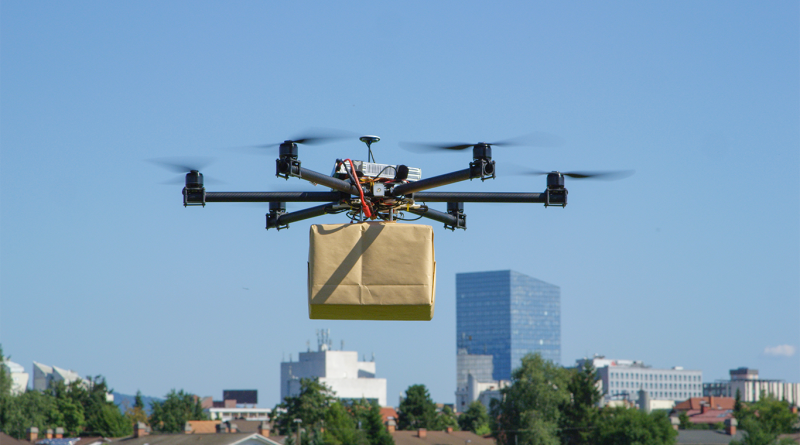
Startup Manna expands US manufacturing to scale autonomous drone delivery

Subscribe to our free newsletter today to keep up to date with the latest manufacturing news.
Autonomous drone delivery has spent years caught between promise and proof. Companies demonstrated the technology, regulators cautiously opened the door and retailers experimented with limited deployments. Commercial scale, however, remained elusive. Manna’s decision to establish a major US manufacturing and operations hub in Tulsa suggests the conversation is shifting from technology demonstrations to industrial investment.
The Irish startup plans to create approximately 1,000 jobs over several years while building a manufacturing facility capable of supporting a much larger North American presence. The company is also evaluating several additional US cities as it prepares for wider expansion. The announcement follows a $50 million Series B funding round, bringing total investment to $110 million.
For the logistics industry, the significance extends beyond another startup entering the market. It reflects growing confidence that autonomous drone delivery is approaching a point where infrastructure, manufacturing capacity and operational scale matter as much as software or aircraft design.
Manufacturing investment reflects confidence in long-term demand
Drone delivery companies have largely focused on proving their technology through pilot programs with retailers and restaurants. Manna’s strategy places manufacturing alongside service expansion, signaling confidence that demand will justify domestic production rather than imported aircraft.
The strategy follows a familiar pattern in emerging transportation technologies. Early development centers on engineering capability. Commercial success depends on production efficiency, operational consistency and resilient supply chains.
Manufacturing in the US also offers practical advantages. Producing aircraft closer to customers can shorten lead times, simplify maintenance support and reduce exposure to international supply chain disruptions. As governments and commercial partners place greater emphasis on supply chain resilience, domestic manufacturing could become a competitive differentiator.
Tulsa has positioned itself as a growing aerospace and advanced manufacturing hub, offering access to engineering talent, aviation expertise and established industrial infrastructure. Those advantages can reduce operational risk as companies move from limited deployments to commercial scale.
Regulation is becoming a catalyst for commercial growth
Technology has rarely been the biggest obstacle for drone delivery. Regulation has often determined how quickly companies can expand. Commercial operators require approval for Beyond Visual Line of Sight, or BVLOS, operations. These permissions allow drones to travel beyond an operator’s direct line of sight, making large-scale delivery networks commercially viable.
As the Federal Aviation Administration continues to develop policies that support broader BVLOS operations, operators gain greater certainty when investing in fleets, infrastructure and manufacturing capacity. Retailers can also make longer-term commitments knowing the regulatory environment is becoming more predictable.
A clearer regulatory framework creates opportunities across the wider ecosystem, including software developers, maintenance providers, fleet management platforms and airspace coordination services.
Competition is shifting from technology to execution
Manna joins an increasingly competitive market that includes Wing, Zipline and Amazon. While aircraft performance remains important, long-term success is likely to depend on building efficient commercial networks. Retail partnerships, restaurant integrations, warehouse connectivity and software interoperability will influence profitability as much as flight technology.
Network density will also shape commercial viability. Drone deliveries become more economical when operators serve concentrated customer bases over relatively short distances. Markets with supportive regulation, strong retailer partnerships and high delivery demand offer the greatest opportunity.
Companies capable of combining manufacturing scale with efficient operations are likely to reduce delivery costs while improving service reliability. The industry’s next milestone is demonstrating sustainable business performance rather than technical capability.
Payload limitations, weather conditions, battery technology and airspace management continue to influence operating costs. Public acceptance also remains important, particularly around safety, privacy and noise.
Several sectors already appear well suited to autonomous delivery. Restaurants, pharmacies, grocery retailers and convenience stores routinely handle lightweight, time-sensitive orders that align with current drone capabilities. Healthcare may also become an important growth market where rapid delivery of medical supplies offers measurable value.
The opportunity extends beyond aircraft production. Batteries, electric propulsion systems, navigation software, sensors and precision manufacturing all stand to benefit as autonomous aviation expands.
Manna’s investment illustrates how the industry is evolving from isolated pilot projects to commercial infrastructure. What appears increasingly clear is that manufacturing capacity, operational discipline and scalable logistics networks are becoming the factors that will determine which companies lead the next chapter of autonomous delivery.
Source:
TechCrunch
