Tesla and SpaceX Terafab: Inside their AI chip manufacturing strategy

Subscribe to our free newsletter today to keep up to date with the latest manufacturing news.
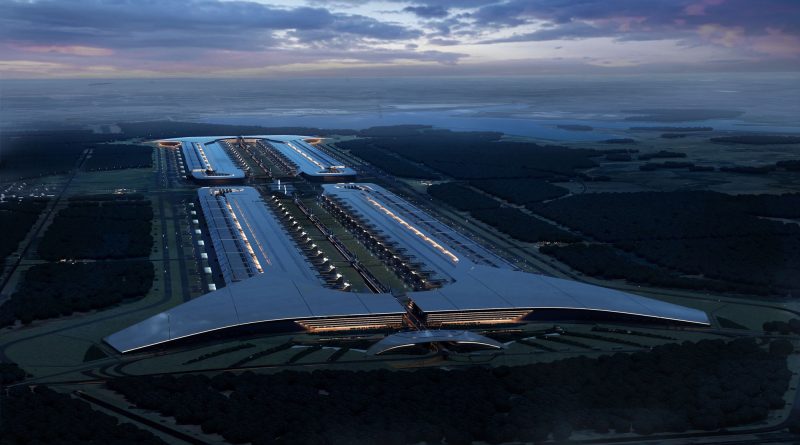
A 100-million-square-foot semiconductor plant in rural Texas sounds like another exercise in industrial scale. The more consequential part of SpaceX and Tesla’s Terafab project, however, is not how large the building could become. It is what the companies intend to put inside it.
SpaceX says Terafab will combine logic, memory and advanced packaging under one roof, bringing together parts of semiconductor manufacturing that are commonly distributed among specialist companies and locations. The first phase in Grimes County represents more than $16.8 billion in planned capital investment and 3000 jobs, according to the Texas governor’s office.
That makes Terafab less a conventional factory investment than an experiment in vertical integration at a time when artificial intelligence is turning semiconductor capacity into a strategic resource.
SpaceX and Tesla announced Terafab earlier in 2026. Tesla broke ground in April on a research fab at the North Campus of Giga Texas that SpaceX describes as a precursor to the larger project. SpaceX confirmed on Aug. 6 that the main Terafab complex would be built in Grimes County.
The idea is straightforward in theory: If companies expect their future products to consume extraordinary quantities of specialized silicon, relying entirely on outside suppliers leaves a critical production input beyond their direct control. Building semiconductor capacity internally could shorten design cycles and give engineers more influence over manufacturing priorities.
Making that theory work at semiconductor scale is considerably harder.
Bringing logic, memory and packaging together changes the manufacturing equation
Modern semiconductor production has become one of the world’s most specialized industrial systems. A company may design a processor but contract its fabrication to a foundry. Memory may come from another manufacturer. Packaging and testing can involve another network of suppliers.
Terafab proposes a different architecture.
The Grimes County plant is intended to consolidate the production chain in one 100-million-square-foot facility, according to the Texas governor’s office. SpaceX says the objective is to produce AI chips at scale for applications on Earth and in space.
The industrial logic is closely tied to iteration.
When chip design, process engineering and packaging are separated by corporate and geographic boundaries, changing a product can require coordination among several companies. A more integrated operation could, in principle, allow engineering teams to test designs against manufacturing constraints sooner and move experimental processes toward production without navigating as many organizational interfaces.
Intel’s involvement gives that strategy more technical weight. The company confirmed in its first-quarter 2026 earnings remarks that it is working with SpaceX, xAI and Tesla to support Terafab. Intel said the partners are examining unconventional approaches to semiconductor process technology and manufacturing efficiency. The company also said global semiconductor supply is struggling to keep pace with accelerating demand.
Intel is developing its 14A manufacturing process and said in April that it expected early design commitments to begin emerging in the second half of 2026 and expand into the first half of 2027. That timing matters because Terafab’s ambitions depend not only on factory construction but on access to competitive process technology, equipment, materials, engineering expertise and high-volume manufacturing discipline.
This creates a paradox at the center of the project.
Terafab is partly a response to dependence on outside chip suppliers, yet building a vertically integrated semiconductor operation still requires collaboration with companies that possess decades of specialized expertise. Intel’s role shows that vertical integration does not mean eliminating suppliers. It can instead mean moving more strategic control over production closer to the companies consuming the chips.
The economics are equally demanding.
Foundries such as TSMC spread their enormous capital costs across many customers. A captive manufacturing operation has a different calculation. It must create enough internal demand to justify fabs, equipment, research and process development that can cost billions of dollars before meaningful production volume is reached.
That calculation becomes more plausible if SpaceX, Tesla and xAI consume chips at the levels their AI strategies anticipate. It becomes far harder if demand grows more slowly, manufacturing yields disappoint or outside foundries keep advancing faster.
Texas offers scale, but Terafab still has to beat semiconductor reality
Terafab is landing in a state that has already spent years building a semiconductor manufacturing base.
Texas says more than 51,500 people work in its semiconductor industry and that the state has led the US in semiconductor and electronic-component exports for 15 consecutive years. The state created the Texas CHIPS Act in 2023 to support semiconductor research, design and manufacturing through investment and workforce programs.
SpaceX was already part of that policy before the Grimes County announcement. In March 2025, Texas awarded the company a $17.3 million Semiconductor Innovation Fund grant for an expansion of semiconductor research, development and advanced packaging operations in Bastrop. The project was expected to involve more than $280 million in investment and create more than 400 jobs.
The Grimes County incentives are larger. Texas has extended SpaceX a $30 million Texas Enterprise Fund grant for Terafab, while the project also qualifies under the state’s Jobs, Energy, Technology, and Innovation program.
Those incentives address only part of the manufacturing problem.
Semiconductor plants require highly controlled environments, specialized construction, large equipment installations and experienced technical workforces. The challenge gets harder when the objective is not simply to open another fab but to combine several stages of production in a new operating model.
That gap between ambition and execution is why Terafab’s headline capacity targets deserve caution.
The Wall Street Journal reported earlier this year that Musk had discussed initial production of 100,000 wafers a month before scaling toward one million. The publication noted that semiconductor plants typically take years to construct and ramp, and that Terafab also depends on technologies that are still developing.
The point is not that vertical integration cannot work. Intel itself spent decades operating as an integrated device manufacturer. The question is whether a new entrant can recreate the advantages of that structure without inheriting its weaknesses.
A tightly integrated manufacturing system can offer control, faster feedback between design and production and better alignment with internal demand. It can also concentrate risk. If a process falls behind competitors, the same integration that once offered independence can turn into technological lock-in.
That is what makes Terafab more significant than its proposed footprint.
SpaceX and Tesla are testing whether semiconductor capacity can become a proprietary manufacturing capability in much the same way that rockets, batteries and vehicle software have become core internal technologies. Success would give their AI businesses greater control over one of their most constrained physical inputs. Failure would demonstrate why the semiconductor industry became so specialized in the first place.
Terafab’s real measure, then, will not be the number of square feet built in Texas. It will be whether putting more of the chip supply chain inside one organization can produce silicon competitively enough, quickly enough and at sufficient scale to justify the enormous cost of control.
Source