

The packaging trends reshaping the industry. By Mike Jones

With 2026 well underway, upcoming regulatory changes and technology advances are compelling packaging producers to rethink how their goods are packaged, distributed and managed responsibly at end of life. As these forces converge, brands are placing sustainability at the heart of their manufacturing strategies.
Regulation as a driver for innovation
Regulations are increasingly becoming a driving force for innovation in sustainable packaging. The Europe-an Packaging and Packaging Waste Regulation (PPWR) – which will begin to apply from mid-2026 – is one such example of how a regulatory framework is shaping innovation in this space. By mandating all packaging to be made recyclable by 2030 and phasing out harmful Perfluoroalkoxy alkanes (PFA) – often referred to as ‘forever chemicals’ – the regulation encourages manufacturers to embed circular principles at the de-sign stage, rather than retrofitting at the end of a product’s life. Elsewhere, the extended producer responsibility (EPR) initiative – a scheme that holds the producer accountable for responsible packaging disposal – is gaining traction. For example, the German Packaging Act (VerpackG) is an EPR scheme that ensures compliance through a central digital registration platform that enforces fines on those who submit inaccurate information or fail to register. For manufacturers, regulations such as the EPR facilitate a revitalized packaging landscape where sustainable innovation is nurtured through clear requirements, guiding re-sponsible material choice from the outset.
In the United States, the EPR has moved from proposal to implementation across the country. To date, seven states – California, Colorado, Maine, Maryland, Minnesota, Oregon and Washington – have enacted comprehensive EPR laws focused on packaging. In each case, producers must join or establish a producer responsibility scheme (PRO) and pay fees to support the collection and recycling of covered paper and plastic packaging. Meanwhile, other states are taking steps toward adoption – including New York, Massachusetts, New Jersey, and Hawaii, which have all introduced EPR packaging bills.
These steady steps towards transitioning to a circular economy – from Europe to the United States – demonstrates how sustainable packaging production is increasingly a top priority around the world.
Digital tools facilitate smarter packaging choices
Alongside regulation, digitalization is transforming how packaging decisions are made. In the EU, the Digital Product Passport (DPP) – introduced under the Ecodesign for Sustainable Products Regulation – is emerging as a key tool for supply chain transparency. The DPP connects each product, providing comprehensive information on origin, materials, environmental impact, and disposal recommendations into a structured digital record. Companies are using this data to support regulation compliance, traceability of materials, and ultimately, circular business models.
In parallel, Life Cycle Assessment (LCA) tools are becoming more accessible and integrated into packaging development. Instead of commissioning one-off studies, engineers can now run comparative assessments in the design phase, testing different materials, thicknesses, formats and closure systems against metrics such as carbon footprint, energy use and recyclability.

LCAs enable firms to opt for materials that reduce emissions and improve recyclability, helping organizations meet sustainability goals and commitments. More and more companies are employing LCAs and switching material choice as a result, and realizing not only the environmental benefits but financial positives too.
Closing the loop on packaging systems
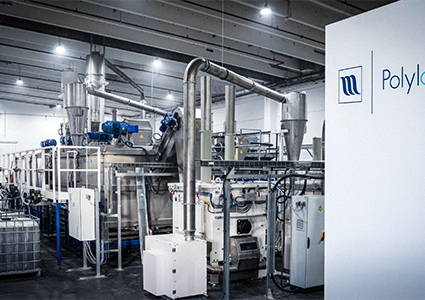
The shift toward circularity is increasingly evident in how packaging manufacturers are not only producing sustainable solutions but investing in recycling and reuse processes to ensure a circular supply chain. Mainetti, a sustainable packaging producer, launched its pioneering Polyloop initiative in 2021. This recycling process converts polyethylene into clear post-consumer recycled content – keeping plastics circulating within the supply chain and reducing industry reliance on virgin plastics.
Research organizations are also exploring technologies such as ‘debonding on demand’ for multi-material packaging. The DEBO‑Pack project integrates smart debonding solutions into existing recycling infrastructure so that individual layers in composite packaging can be separated more effectively. For manufacturers, this signals a future where multi-material formats – and their often-complicated disassembly processes – can be redesigned to fit more easily within circular material flows. Projects such as these – alongside the rise in mono-material packaging – demonstrate how complex recycling processes can be simplified, making materials easier to collect, sort and recycle at scale.
The packaging industry continues to be shaped by regulation and digitalization alike, and as consumer expectations for sustainable packaging continue to rise, investment in sustainable solutions is only set to grow. Those brands which are innovating now to push the boundaries of packaging development will not only ensure they stay ahead but help embed a more sustainable future for their operations and the planet.
Mike Jones
Mike Jones is Head of Innovation and General Manager of Intelligent Solutions at Mainetti. As a sustainable packaging producer committed to its Full Circle Initiative – which prioritizes circularity and decarbonization – Mainetti has partnered with leading retail and apparel brands for over 60 years. Originating in Italy, the company has expanded from labels and hangers to flexible packaging, boxes and bags, becoming a global retail solutions provider with 6,000 employees across 90 locations.
