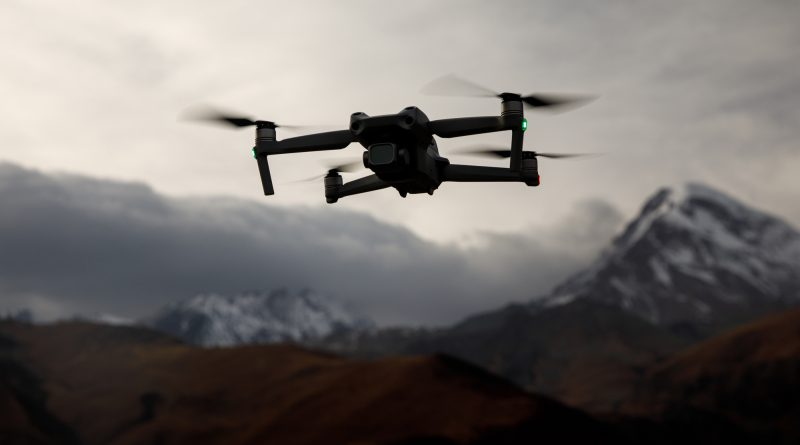
The Pentagon’s $820 million bet on America’s drone factories

Subscribe to our free newsletter today to keep up to date with the latest manufacturing news.
The US Department of War has taken an unusual step in its effort to strengthen the nation’s drone industry, offering Performance Drone Works (PDW) a conditional loan commitment worth up to $820 million through the Office of Strategic Capital. Unlike a traditional procurement contract, the financing is designed to expand domestic manufacturing capacity for critical drone components rather than purchase aircraft directly.
The distinction matters. The proposed loan, which remains subject to financial, legal and technical conditions before closing, reflects a broader shift in US defense policy. Instead of focusing solely on acquiring advanced unmanned aircraft, Washington is increasingly investing in the industrial infrastructure needed to manufacture drones and their components at scale.
The announcement also highlights an uncomfortable reality for the United States. Military planners increasingly recognize that the ability to produce thousands of affordable drones may prove just as important as developing the next generation of sophisticated autonomous systems.
The drone race is shifting from innovation to industrial capacity
For years, drone development centered on improving performance through longer endurance, greater autonomy and more capable sensors. Recent conflicts have changed that equation. Attritable unmanned systems have become consumable assets that can be deployed in large numbers, making manufacturing volume a strategic consideration alongside technical capability.
That evolution has exposed weaknesses within the US industrial base. Although American companies continue to lead in many advanced aerospace technologies, domestic production capacity for key drone components remains constrained. Electronics, propulsion systems, communications hardware and power systems frequently depend on complex international supply chains that can become vulnerable during geopolitical tension or periods of increased demand.
Defense officials have increasingly argued that supply chain resilience deserves the same level of attention as platform development. The Office of Strategic Capital was established to support that objective by using federal lending to encourage private investment in technologies considered essential to national security.
The proposed financing for PDW illustrates how that strategy is moving from policy to implementation. Rather than funding a single aircraft program, the investment seeks to increase manufacturing capacity that could support multiple drone platforms and other autonomous systems across defense and commercial markets.
The emphasis on manufacturing scale also reflects concerns about production capacity among potential adversaries. A recent Department of War memorandum argued that rival nations collectively produce unmanned systems in volumes measured in the millions each year, while industry executives have suggested US production remains significantly lower. Those estimates vary and should be treated carefully, yet they reinforce a consistent policy message emerging from Washington: production capacity has become a strategic asset.
Component manufacturing has become the industry’s critical bottleneck
Finished drones often receive the greatest public attention, but the components inside them increasingly determine how quickly manufacturers can respond to military demand.
Motors, batteries, flight controllers, communications equipment and electronic assemblies all require reliable supply chains capable of supporting sustained production. Even when final assembly takes place domestically, dependence on overseas suppliers for critical parts can create delays, increase costs and introduce strategic risk.
The proposed loan addresses that challenge directly by focusing on domestic component manufacturing. Expanding production inside the United States could shorten supply chains, reduce exposure to foreign suppliers and improve the availability of standardized components that serve multiple drone manufacturers.
The approach also reflects a wider understanding of modern manufacturing economics. Facilities capable of producing components for defense applications frequently support commercial robotics, industrial automation and other autonomous technologies. That dual-use model helps manufacturers maintain higher production volumes while reducing dependence on individual defense contracts.
For policymakers, strengthening component manufacturing may ultimately deliver greater long-term value than supporting isolated aircraft programs. A resilient supplier network gives multiple manufacturers access to domestic production, creating broader industrial capacity across the sector.
The challenge, however, lies in execution. Expanding factories, recruiting skilled workers and qualifying new production lines require significant time and capital. Success will depend not only on financing but also on sustained demand and efficient production management.
Federal lending signals a different approach to defense industrial policy
The Office of Strategic Capital represents an evolving model for supporting the defense industrial base. Rather than relying exclusively on grants or procurement contracts, the office uses lending tools intended to attract additional private investment into strategically important manufacturing sectors.
That approach recognizes a longstanding financing gap. Building advanced manufacturing facilities requires substantial upfront investment, yet traditional lenders may hesitate to finance projects tied to emerging defense markets. Government-backed lending can reduce that uncertainty while encouraging private capital to participate alongside federal support.
For PDW, the conditional commitment provides the potential to expand manufacturing capacity without depending entirely on conventional venture financing. For the Department of War, it offers an opportunity to strengthen domestic production without directly purchasing inventory before capacity exists.
Whether the strategy succeeds will depend on more than the size of the financing package. Manufacturing expansion requires disciplined execution, workforce development, supplier coordination and long-term customer demand. Meeting the conditions attached to the proposed loan represents only the first milestone.
More broadly, the announcement suggests that future competition in unmanned systems may be decided less by who develops the most advanced prototype and more by who can manufacture reliable components at consistent quality and competitive cost. As drones continue to reshape modern military operations, industrial capacity is becoming as strategically significant as technological innovation itself.
The proposed commitment to PDW should therefore be viewed as more than corporate financing. It represents a test of whether federal credit can strengthen America’s manufacturing base for autonomous systems and reduce supply chain vulnerabilities that have become increasingly difficult to ignore. If successful, the initiative could provide a template for future investments across the wider defense industrial ecosystem, where production capacity may prove every bit as decisive as engineering excellence.
Source