
The rise of robotics and Physical AI. By Sankar Natarajan

Industrial enterprises are entering a new phase of transformation. Connectivity and automation delivered significant gains during the Industry 4.0 era, but today’s challenges demand something more. Supply chain disruptions, labor shortages, increasing product complexity, and rising sustainability expectations are exposing the limitations of traditional approaches built around fixed automation and isolated digital initiatives.

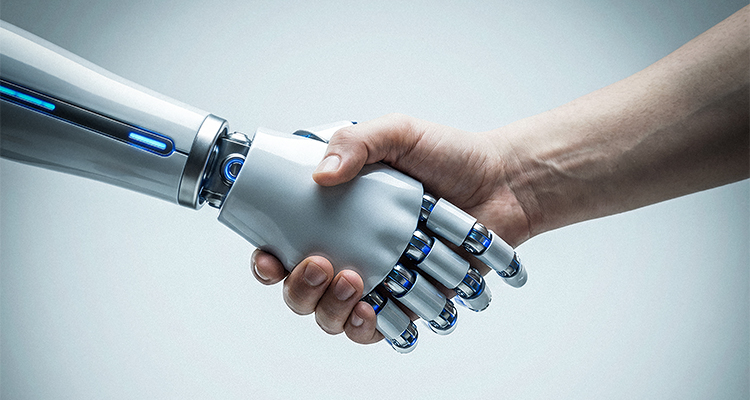
Industry 5.0 shifts the focus from automation alone to intelligent collaboration between people and machines. At the center of this evolution is the convergence of robotics and Physical AI. Advances in foundation models, intelligent sensing, simulation, and edge computing are enabling machines to perceive, reason, adapt, and interact with the physical world in ways that were previously unattainable.
The objective, however, is not fully autonomous factories or replacing human expertise. The real opportunity lies in creating more resilient, adaptive, and human-centric operations that deliver measurable business outcomes. Organizations that pursue Physical AI with a pragmatic mindset will be better positioned to unlock value and build competitive advantage.
Industry context and emerging trends
The next wave of industrial transformation is being shaped by a combination of business pressures and technological advances. While industrial automation has improved productivity and consistency, many systems remain rigid and highly dependent on predefined instructions. Dynamic environments require systems that can adapt rather than simply execute.
Several trends are accelerating this shift.
- Physical AI and embodied intelligence: Artificial intelligence is moving beyond software applications into the physical world. Intelligent systems equipped with sensors, vision technologies, and advanced AI models can interpret their environment, make contextual decisions, and continuously learn from interactions. This capability is creating a new generation of adaptive machines and robots
- Agentic AI and autonomous operations: AI agents are beginning to orchestrate tasks and co-ordinate decisions across engineering, manufacturing, and operational systems. Instead of programming every step, organizations are increasingly defining objectives while intelligent systems determine how best to achieve them under human supervision
- Vision-Language-Action models: Building upon the success of large language models, emerging Vision-Language-Action architectures enable robots to understand visual inputs, interpret natural language instructions, and execute physical actions. These capabilities have the potential to dramatically increase flexibility and reduce the effort required to deploy robotic systems
- Digital twins and simulation: Virtual environments are becoming essential for training, validating, and optimizing robotic systems before deployment. By combining digital twins with AI, organizations can reduce risk, accelerate commissioning, and improve operational performance
- Edge intelligence: Real-time decision making increasingly requires intelligence closer to the source of operations. Edge computing enables lower latency, improved reliability, and greater autonomy, particularly in mission-critical industrial environments
Together, these technologies are redefining the relationship between humans, machines, and industrial processes.
Physical AI as an enabler of Industry 5.0
Industry 5.0 emphasizes resilience, sustainability, and human-centricity. Physical AI supports these objectives by enabling intelligent collaboration between people and machines rather than automation for automation’s sake.
Key capabilities include:
- Context-aware perception through advanced sensors and machine vision.
- Intelligent decision making enabled by Industrial AI and Agentic AI
- Autonomous navigation and adaptive motion control
- Continuous learning through simulation and operational feedback
- Safe collaboration between workers and intelligent robotic systems
These capabilities are already enabling practical applications across industries:
- AI-powered visual inspection systems improving quality and traceability
- Autonomous mobile robots streamlining material movement and intralogistics
- Collaborative robots supporting assembly, packaging, and machine tending
- Intelligent maintenance systems combining robotics with predictive analytics
- Digital twins enabling virtual commissioning and robotic cell optimization
- Remote operations and immersive collaboration enhancing workforce productivity
The greatest value emerges when robotics and Physical AI are integrated with engineering technologies, enterprise systems, and operational technologies to create connected and intelligent ecosystems.
A pragmatic path to adoption
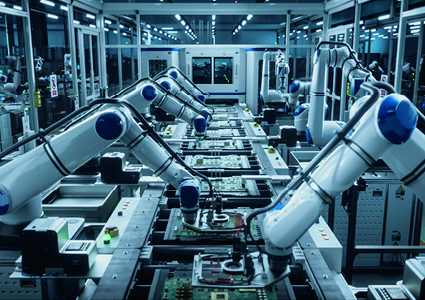
Despite the excitement surrounding humanoid robots and fully autonomous factories, successful organizations remain focused on business outcomes rather than technology hype.
Transformation should be phased, scalable, and value driven.
- Identify high-value use cases where intelligent automation can improve safety, quality, throughput, or operational flexibility
- Establish digital foundations through ET-IT-OT convergence, industrial connectivity, and real-time data architectures
- Leverage digital twins and simulation to reduce deployment risks and accelerate scale
- Introduce AI incrementally, beginning with predictive maintenance, machine vision, and anomaly detection before progressing toward adaptive autonomy
- Empower the workforce through intuitive interfaces, collaborative technologies, and continuous upskilling
- Embed sustainability into operations by optimizing energy consumption, reducing waste, and improving asset utilization
Organizations that follow this approach can create momentum while ensuring that technology investments translate into measurable value.
Outcomes and value realization
Early adopters are already demonstrating tangible benefits. Intelligent robotics and Physical AI are improving asset reliability, enhancing quality performance, increasing operational flexibility, and reducing safety risks. Digital twins and simulation are shortening deployment cycles and reducing engineering effort. AI-driven optimization is enabling more efficient use of energy and resources while supporting sustainability objectives.
More importantly, these technologies are strengthening resilience. In an environment characterized by uncertainty and rapid change, adaptability is becoming as important as efficiency.
Conclusion
The rise of Physical AI represents a significant milestone in the evolution from automation to autonomy. Its importance extends beyond robotics to the creation of intelligent and human-centric enterprises aligned with the principles of Industry 5.0.
The future does not belong to fully autonomous factories operating without people. It belongs to collaborative ecosystems where human ingenuity is amplified by intelligent machines.
The path forward is pragmatic. Build strong digital foundations. Focus on high-value use cases. Scale intelligence where it delivers measurable outcomes. Sustain progress through continuous innovation and workforce empowerment.
Industry 5.0 is ultimately not about replacing people with machines. It is about enabling people and intelligent systems to work together to create more resilient, sustainable, and adaptive operations. Organizations that embrace this balance will be best positioned to thrive in the next era of industrial transformation.
Sankar Natarajan
www.hitachids.com
Sankar Natarajan is Global Head for Smart Manufacturing and Digital PLM at Hitachi Digital Services. He leads the global strategy, solutions, go-to-market initiatives, and delivery of integrated digital transformations across products, factories, operations, and sustainability.
Hitachi Digital Services, a wholly owned subsidiary of Hitachi, Ltd., is a global systems integrator powering mission-critical platforms with people and technology. It helps enterprises build, integrate, and run physical and digital systems with tailored solutions in cloud, data, IoT, and ERP modernization, underpinned by advanced AI.
