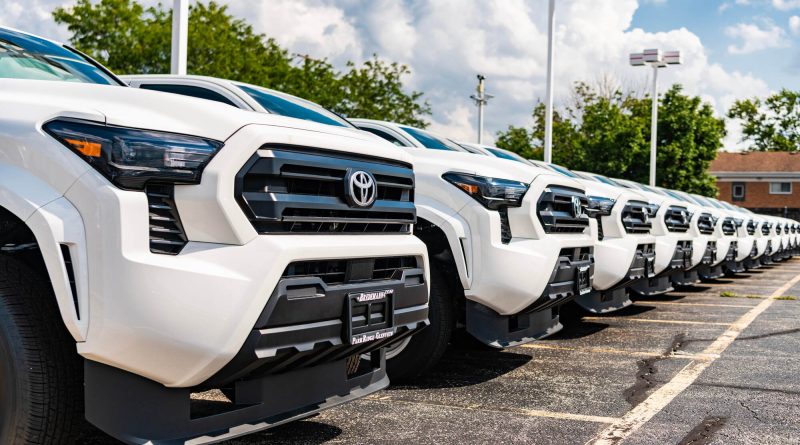
Toyota announces $3.6 billion expansion of Texas manufacturing plant

Subscribe to our free newsletter today to keep up to date with the latest manufacturing news.
Toyota’s decision to invest $3.6 billion to expand its San Antonio manufacturing campus is one of the largest automotive manufacturing announcements of the year. While the addition of Tacoma production is the headline, the investment signals a broader change in how global automakers are positioning production across North America.
The project will add approximately 2.5 million square feet to Toyota Motor Manufacturing Texas, including a second vehicle assembly line, expanded logistics capabilities and additional supplier operations. Toyota expects the project to create about 2,000 jobs by 2030, strengthening one of its largest manufacturing facilities in the US.
The investment strengthens Toyota’s truck manufacturing strategy
Toyota’s San Antonio plant has produced the Tundra pickup and Sequoia SUV for nearly two decades. Adding Tacoma production expands the site’s role within Toyota’s North American manufacturing network and places production closer to one of the world’s largest pickup truck markets.
The expansion builds on earlier investments in Texas, including a $531 million project to increase drivetrain component production. Together, these investments create a more integrated manufacturing operation that reduces transportation requirements and improves production flexibility.
The impact extends well beyond Toyota’s assembly lines. Major vehicle programs typically attract Tier 1 and Tier 2 suppliers, increasing demand for metal stamping, plastics, electronics, logistics and precision manufacturing throughout the region.
Automakers continue to rethink regional production
Toyota’s announcement comes as vehicle manufacturers continue reviewing production strategies across North America. Rising logistics costs, changing trade policies and supply chain disruption have encouraged companies to place greater emphasis on regional manufacturing capacity.
Producing vehicles closer to customers can shorten delivery times, reduce transportation costs and improve responsiveness to market demand. Manufacturers continue balancing production across the US, Canada and Mexico while adapting to evolving economic and regulatory conditions.
Supply chain resilience has also become a larger priority. Since the pandemic, manufacturers have invested in production networks that reduce dependence on long international supply chains while strengthening relationships with suppliers located near assembly facilities.
Texas remains an attractive manufacturing location because of its transportation infrastructure, experienced industrial workforce and access to suppliers throughout the southern US and northern Mexico.
The wider impact reaches suppliers and the regional economy
Large automotive investments typically generate economic activity beyond the vehicle manufacturer. Additional assembly capacity increases demand for automation equipment, industrial services, packaging, maintenance, transportation and component manufacturing.
Supplier clusters frequently grow around major assembly plants because shorter transportation distances improve efficiency and lower operating costs. Companies involved in welding, machining, plastics, electronics and material handling are among those that could benefit as Toyota expands its operations.
The investment also highlights the growing importance of workforce development. Modern automotive plants depend on technicians with expertise in robotics, automation, quality systems and digital manufacturing technologies. Partnerships between manufacturers, educational institutions and workforce organizations will remain important as new capacity comes online.
Toyota’s latest investment demonstrates how automotive manufacturers are continuing to build larger, more integrated regional production networks. While Tacoma production is the immediate focus, the broader significance lies in long-term investment, supply chain localization and manufacturing strategies designed to support future vehicle demand across North America.
Source