
TSMC invests another $100 billion in Arizona as AI demand grows

Subscribe to our free newsletter today to keep up to date with the latest manufacturing news.
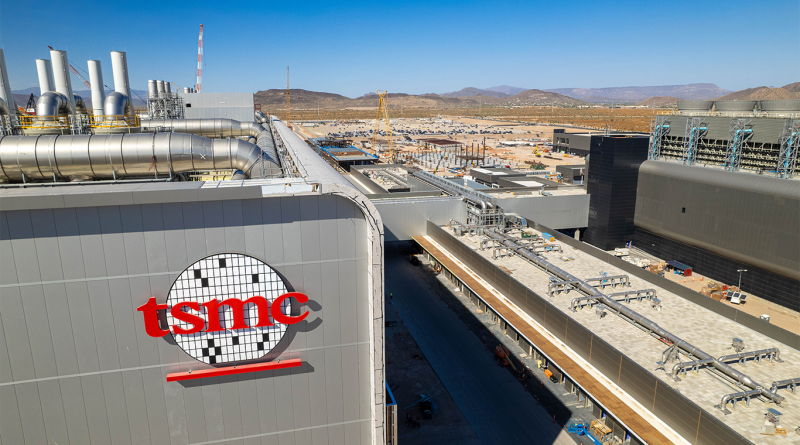
Taiwan Semiconductor Manufacturing Co. is making another substantial wager on the future of artificial intelligence, committing an additional $100 billion to expand its operations in Arizona. The investment lifts the company’s planned spending in the state to roughly $265 billion, making it one of the largest manufacturing projects in US history.
The announcement reaches far beyond a single factory expansion. It signals growing confidence that demand for AI processors will remain strong even as questions continue over the pace of data center investment and the long-term commercial value of generative AI.
For TSMC, the world’s largest contract chipmaker, the decision reflects a broader shift in semiconductor manufacturing. Customers increasingly want advanced production closer to their operations, governments are investing heavily in domestic supply chains and advanced chip packaging has become almost as important as wafer fabrication.
The Arizona expansion points to an industry where resilience and geographic diversification are becoming competitive advantages alongside manufacturing efficiency.
AI demand continues to reshape semiconductor investment
TSMC’s latest investment follows another quarter of strong financial performance. Revenue increased sharply as demand for AI processors continued to exceed expectations, with high-performance computing accounting for most of the company’s sales. Customers including Nvidia, AMD and Apple continue relying on TSMC’s advanced manufacturing technologies for increasingly sophisticated processors.
Unlike previous technology investment cycles, today’s demand is being driven by long-term infrastructure spending rather than consumer hardware upgrades. Cloud providers are investing billions of dollars in AI infrastructure, while enterprises continue expanding their AI capabilities. Every new generation of large language models requires greater computing performance, creating sustained demand for advanced semiconductors.
That trend is influencing investment decisions across the semiconductor industry. Chip designers need additional manufacturing capacity, while foundries must expand both fabrication facilities and the advanced packaging operations needed to assemble increasingly complex processors.
TSMC’s decision to raise capital expenditure alongside record financial performance indicates management expects AI demand to remain a long-term growth driver rather than a short-lived surge.
Arizona is becoming a complete semiconductor manufacturing ecosystem
The Arizona campus is evolving beyond a collection of fabrication plants. TSMC’s long-term plans now include multiple advanced fabs, advanced packaging facilities and research operations that together create a more comprehensive semiconductor manufacturing hub.
This expansion reflects the growing importance of advanced packaging. Modern AI accelerators combine multiple chiplets, high-bandwidth memory and sophisticated interconnect technologies into a single package. Manufacturing the silicon remains critical, but integrating those components efficiently has become another point of competitive differentiation.
Locating packaging alongside fabrication simplifies production while allowing customers to source more of the manufacturing process from one location. It also strengthens US semiconductor capabilities as governments continue prioritizing supply chain resilience.
TSMC has also reported that production yields at its first Arizona fab are comparable with those achieved in Taiwan. Reaching similar manufacturing performance reduces concerns that advanced semiconductor production outside Taiwan would compromise quality or efficiency.
Higher production costs are no longer the deciding factor
Manufacturing advanced semiconductors in the United States remains considerably more expensive than producing them in Taiwan. Labor, construction and operating expenses all contribute to higher costs, with TSMC acknowledging that US production can cost several times more than comparable facilities in Asia.
Even so, the company continues expanding.
The decision reflects changing priorities throughout the semiconductor industry. Customers increasingly value supply chain resilience alongside manufacturing costs. Producing chips closer to major technology companies reduces logistical complexity, limits exposure to geopolitical disruption and strengthens domestic access to strategically important technologies.
The investment also highlights how semiconductor manufacturing has become part of broader industrial policy. Governments across North America, Europe and Asia continue supporting domestic production through incentives aimed at reducing dependence on concentrated manufacturing regions.
TSMC’s Arizona expansion illustrates how these forces are converging. Artificial intelligence continues driving demand for advanced semiconductors while governments and customers seek greater regional diversification. Manufacturers are responding by investing in fabrication capacity, advanced packaging and more resilient supply chains.
Demand will continue to fluctuate from quarter to quarter, but the scale of TSMC’s commitment suggests the company expects AI to remain a defining force in semiconductor manufacturing for years to come. The investment represents more than additional capacity. It reflects a long-term view of where the global semiconductor industry is heading.
Source:
Quartz
