
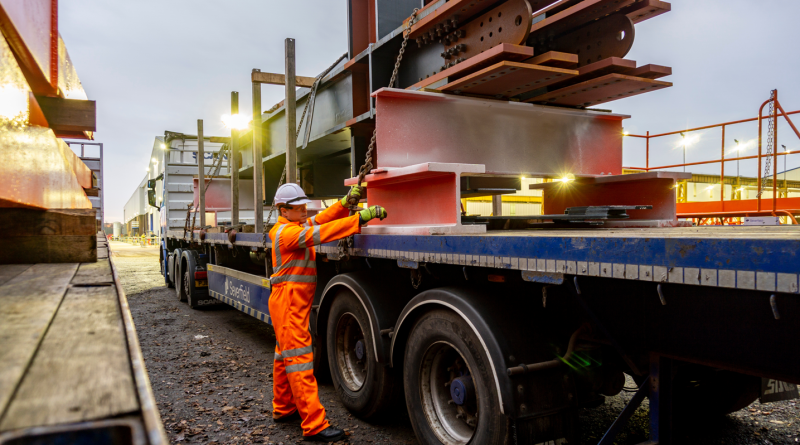
US Steel invests $1.9 billion in DRI production capacity

Subscribe to our free newsletter today to keep up to date with the latest manufacturing news.
U.S. Steel’s decision to invest $1.9 billion in a direct reduced iron facility in Arkansas reads as a straightforward expansion story at first glance. In practice, it reflects a deeper shift in how steelmakers in the US are approaching raw materials, production control and long-term competitiveness.
The planned facility will sit alongside the company’s Big River Steel operations in Osceola, Ark., a site that has become central to its transition toward electric arc furnace production. The addition of a DRI plant strengthens that ecosystem by introducing a steady, internally controlled source of iron units. That matters in a market where scrap availability fluctuates and quality varies.
The move also aligns with broader structural changes in US steelmaking. About 70% of domestic crude steel already comes from electric arc furnaces, a system that relies heavily on scrap metal but increasingly requires supplemental inputs to meet higher-grade steel specifications. By investing in DRI, U.S. Steel is positioning itself to operate with more consistency across product lines, particularly in automotive and infrastructure segments where metallurgical precision matters.
This is not only about scale. It is about tightening control over inputs in a sector where margins can shift quickly based on raw material costs and availability.
Why DRI is becoming central to modern steelmaking
Direct reduced iron is gaining traction because it bridges a gap in electric arc furnace production. While scrap remains the dominant feedstock, it cannot always deliver the purity or consistency required for advanced steel grades. DRI provides a cleaner iron source, allowing producers to fine-tune chemical composition and improve output quality.
The technical appeal is matched by environmental considerations. Traditional blast furnace routes can generate about 2.2 tons of carbon dioxide per ton of crude steel. By comparison, DRI paired with electric arc furnaces can reduce that figure to roughly 1.4 tons, depending on the energy mix. In an industry responsible for between 7% and 9% of global emissions, even incremental gains carry weight.
This dynamic is reshaping investment patterns. Producers are not abandoning existing infrastructure overnight, but they are adding flexibility through hybrid models that combine scrap and DRI. That flexibility allows companies to respond to both market conditions and regulatory pressures without committing fully to unproven technologies.
In the US, the shift is more pronounced because the electric arc furnace model is already dominant. DRI becomes less of a disruptive change and more of an enhancement to an established system.
Supply chain control and the economics of domestic iron
One of the less visible drivers behind U.S. Steel’s investment is the desire to reduce exposure to external raw material markets. Scrap prices in the US can be volatile, influenced by construction cycles, export demand and regional supply constraints. Quality is another concern, as recycled materials often contain residual elements that limit their use in certain applications.
By producing its own DRI, the company gains a more predictable input stream. That predictability can translate into tighter cost management and more consistent product quality. It also reduces reliance on third-party suppliers, which has become a priority across industrial sectors following recent supply chain disruptions.
Competitors are moving in a similar direction. Cleveland-Cliffs has pursued DRI capacity as part of its vertically integrated model, aiming to secure iron units internally while reducing dependence on prime scrap. The logic is consistent across the industry. Control over inputs is increasingly seen as a competitive advantage rather than a legacy model.
This trend intersects with broader reshoring efforts in US manufacturing. Domestic production of key materials is gaining political and economic support, particularly in sectors tied to infrastructure, defense and energy transition projects.
Arkansas as a strategic manufacturing hub
The choice of Arkansas is not incidental. The Big River Steel site has evolved into a focal point for U.S. Steel’s modern production strategy, combining electric arc furnaces with advanced finishing capabilities. Adding a DRI facility reinforces that positioning.
Osceola offers logistical advantages, including access to river transport and proximity to key industrial markets in the Midwest and Southeast. Energy access is another factor, as DRI production requires a reliable and cost-effective power supply.
The project is expected to create about 200 permanent jobs, but its broader impact lies in strengthening the regional industrial base. Clustering related operations in a single location can improve efficiency, reduce transportation costs and support a more integrated production model.
States like Arkansas have become increasingly attractive for heavy industry due to favorable regulatory environments and investment incentives. That trend is likely to continue as companies look for locations that support both operational efficiency and long-term expansion.
Decarbonization pressures meet industrial reality
Steel producers are under growing pressure to reduce emissions, but the path forward remains complex. While DRI offers a lower-carbon alternative to traditional methods, it is not a complete solution. Much depends on the source of energy used in production, particularly for electric arc furnaces.
There is also growing interest in hydrogen-based DRI, which could further reduce emissions if scaled effectively. The cost and infrastructure requirements for hydrogen remain significant barriers. For now, most projects rely on natural gas as a reducing agent, delivering incremental improvements rather than transformative change.
This creates a balancing act for companies like U.S. Steel. Investments must align with current market realities while leaving room for future technological shifts. The Arkansas project reflects that approach, combining immediate operational benefits with the potential for adaptation as cleaner energy sources become more viable.
What this investment signals for the future of US steel
The $1.9 billion DRI plant is part of a broader recalibration within the US steel industry. Producers are moving toward models that emphasize flexibility, input control and gradual emissions reduction. The combination of scrap and DRI is emerging as a practical standard, particularly in a market already oriented around electric arc furnaces.
Capital intensity remains a defining feature of the sector. Large-scale investments like this require confidence in long-term demand from construction, automotive and energy markets. They also carry risks tied to economic cycles and policy changes.
Still, the direction is becoming clearer. Steelmakers are not waiting for a single breakthrough technology to reshape the industry. Instead, they are building systems that can evolve over time, integrating new processes as they become commercially viable.
U.S. Steel’s Arkansas project fits within that framework. It is less about a single facility and more about constructing a production model designed to handle uncertainty while maintaining competitiveness in a changing industrial landscape.
Source
