U.S. Steel’s $3 billion Mon Valley mill tests Nippon Steel’s pledge

Subscribe to our free newsletter today to keep up to date with the latest manufacturing news.
U.S. Steel’s board has approved nearly $3 billion for a new hot strip mill at the Edgar Thomson Plant in Braddock, Pennsylvania, part of the company’s Mon Valley Works near Pittsburgh. The company announced the decision on Oct. 22, and parent company Nippon Steel followed with its own release on Oct. 23.
The mill will replace aging equipment and lift annual production capacity from about 2.2 million tons to about 3.5 million tons, an increase of roughly 59%. Construction will start once the necessary environmental and administrative permits are in place, with initial production targeted for late 2029.
Nippon Steel calls the project one of the concrete steps toward the $11 billion it has committed to invest across U.S. Steel’s operations.
That gives the announcement weight beyond a single plant. It is one of the clearest signs yet of how the investment commitments behind Nippon Steel’s ownership of U.S. Steel are turning into physical capacity.
The Mon Valley mill gives Nippon Steel’s $11 billion commitment a concrete form
U.S. Steel has operated as a wholly owned subsidiary of Nippon Steel since the Japanese steelmaker completed its takeover in 2025. Nippon Steel describes U.S. Steel as a core hub in its North American strategy, and its $11 billion investment plan has been closely watched since the deal closed.
At roughly $3 billion, the Edgar Thomson mill represents more than a quarter of that commitment in a single project.
“For generations, the Mon Valley has built America and steel has built lives here,” said David Burritt, president and CEO of U.S. Steel. “This nearly $3 billion investment is about making sure that story doesn’t just continue but gets even stronger.”
Political leaders have welcomed the decision. US Senator Dave McCormick said the approval was “exactly what we fought for,” while Pennsylvania Governor Josh Shapiro said the investment would keep thousands of jobs in the state.
The company also pointed to an economic impact study by Parker Strategy Group. It projects that building and running the mill will support 5100 to 6300 jobs across Pennsylvania and generate $46 million to $58 million in state and local tax revenue over 3 years, with up to $1.7 billion in total economic impact. U.S. Steel says it currently supports 13,687 jobs in the state.
Those numbers are projections cited by the company, so they are best read as estimates rather than guarantees.
New rolling equipment targets energy use, yield, and product range
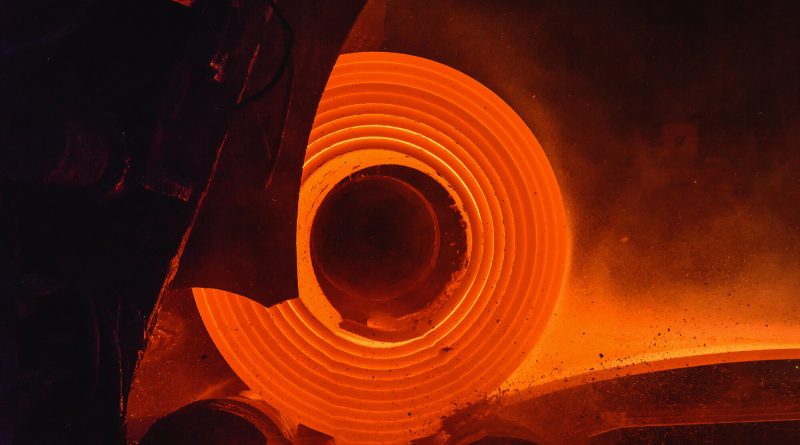
A hot strip mill is the stage of steelmaking where cast slabs are reheated and rolled into thin coils. Those coils become the raw material for vehicles, appliances, construction products, and energy equipment.
The Edgar Thomson mill will introduce new walking beam furnaces and an in-line slab sizing press. Walking beam furnaces carry slabs through the reheating stage on moving beams rather than pushing them along the furnace floor. The sizing press adjusts slab width within the production line, which the company says removes a separate cutting step.
U.S. Steel expects the new setup to cut energy and fuel use, improve yield, reduce scrap, and make product quality more consistent. Nippon Steel says the mill will also widen the range of products available to customers in the automotive, home appliance, and energy sectors.
For manufacturers that buy flat-rolled steel, a larger and more modern domestic mill could mean more supply options closer to home. Automakers and appliance makers planning their sourcing around US trade policy on imported steel will be watching how much of the new capacity reaches the market.
The project sits alongside another investment at the same site. U.S. Steel is building a slag granulator worth about $100 million at Edgar Thomson, which will process blast furnace slag into material for cement and construction.
Permits and timing will decide when the Mon Valley sees the payoff
The board approval moves the hot strip mill from a plan to a funded project, but construction cannot start until permits are secured. U.S. Steel says it is working with regulators through the process.
Even on schedule, first production is about 3 years away. Construction costs, steel prices, and demand from automotive and appliance customers can all shift in that time.
Several questions remain open. How quickly can permitting be completed? Will the mill reach its full 3.5 million tons as planned? And how much more of the $11 billion commitment will turn into announced projects before the Edgar Thomson mill rolls its first coil?
The answers will show whether the Mon Valley mill marks the start of a broad rebuild of U.S. Steel’s operations or remains one large project in a longer wait.
Source:
Nippon Steel
WPXI