
Walkinshaw Group has transformed itself from a single-client operation into an engineering and manufacturing powerhouse

To fully appreciate the transformation story of Walkinshaw Group, some history is required. The business was established in 1987 by Scottish racing driver Tom Walkinshaw as a partnership with General Motors Holden to create Holden Special Vehicles (HSV). When Holden ceased manufacturing in Australia in 2017, the CEO Ryan Walkinshaw (Tom’s son) faced a choice: evolve or exit. With Ford and Toyota also having recently ceased Australian manufacturing, Walkinshaw recognized an opportunity. The company pivoted to offer its engineering and manufacturing expertise to multiple Original Equipment Manufacturers (OEMs).
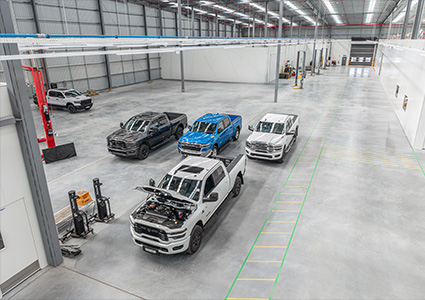
Ryan Walkinshaw explains that since the pivot, the business has grown significantly. “We’ve gone from primarily working with one manufacturer, General Motors Holden, to publicly working with six of the major global automotive manufacturers – Toyota, General Motors, RAM, Volkswagen, Mitsubishi and Isuzu, plus others that we don’t publicize,” he begins. “We’re now producing over 12,000 vehicles per year, with around 1000 employees.”
Business model
Its turnkey approach sets Walkinshaw apart. “We can provide everything from the earliest design concepts all the way through to aftersales,” Ryan confirms. “Usually, the OEM will come to us with a program where they need our support and we will work with them through all the different stages. In general, we will provide design and engineering, before moving on to manufacture, ultimately passing the vehicle back to the OEM to be sold in the dealer network, warrantied and fully approved. The customer wouldn’t have any idea that we re-manufactured the vehicle.
“Another differentiator for us is the ability to perform our programs exactly as the OEM would do themselves, except we can do this in a faster time frame and at a lot lower cost than the manufacturer can do internally. We could reduce a timescale from years to months, and a cost of $100 million to a fraction of that.”
Ryan stresses that Walkinshaw is not an ‘aftermarket business’. “We do have a small aftermarket division, but in terms of our main business, all our programs are very close OEM partnerships.” One of the main areas of leadership for Walkinshaw is in left-to-right-hand drive conversion, where it has partnerships with General Motors, Toyota and Ateco, the distributor for RAM trucks.
“A slightly smaller, but still very important division for us is our ‘upfitting’ segment,” adds Ryan. “That provides upfitter work for automotive manufacturers such as Isuzu, Volkswagen and recently Mitsubishi as well. This is like what we traditionally did with General Motors Holden, so it’s a nod back to the traditional side of the business and where we started.”
Consolidation
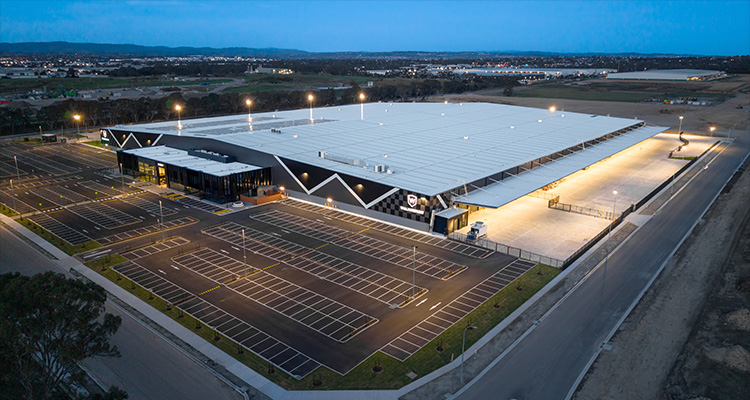
As Walkinshaw continued to expand its offering, it faced a new challenge. “Looking back a couple of years, we were operating from 13 different sites and the inefficiency of that is obviously massive,” says Ryan. The answer was a bold move – a brand-new headquarters, covering 115,000 square meters. Located in South Dandenong, this state-of-the-art, purpose-built facility is one of the top five manufacturing facilities in Australia and opened its doors in November 2025. “We felt it was important to bring everything under one roof and benefit from the synergies across the different brands that we work on,” Ryan explains. “This ensures that we can continue adding value and developing the engineering side of the business, to keep up with the increasing complexity of the vehicles, as the market matures. The new facility will also deliver efficiency gains and cost reduction benefits for our clients.”
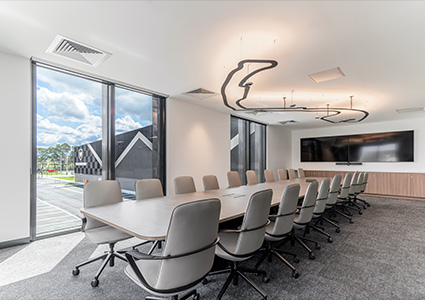
“It is fantastic to have a bespoke facility designed especially for our needs. For example, we created very long production line links and can ensure our engineers are close to the lines,” adds Oliver Lukeis, Commercial Director.
The new manufacturing facility also mirrors Walkinshaw’s sustainability credentials, by delivering net-zero energy through a rooftop solar installation. “This is very important to us, and we’re quite proud of it,” adds Ryan.
In fact, Walkinshaw regards the right technology and equipment as a unique selling point. “If we bring a customer in here on a tour, they say, ‘wow, you’re just a smaller version of us.’ For them, it makes it an easy decision to choose us as their partner,” says Oliver. The investment in solutions is ongoing. “We’re now starting to introduce a bit of AI in our facility as well. As we’re importing vehicles from various global locations, they go through many hands before they get to us. So, we’re adapting AI camera inspection systems, which can capture any damage on the vehicle on arrival, generate automatic reports and send those straight to our OEM customers so they know the status of the vehicle when we receive it.”
Another valuable element of the consolidation has been the cultural effect. While the business was already dedicated to building culture across its previous 13 sites, Ryan notes that having everyone together under one roof delivers small wins that are going to be valuable in the long run.
He also shares that from the employees’ perspective, Walkinshaw stands as Australia’s only real opportunity to work in automotive manufacturing. “That makes us very attractive, and it’s something that has allowed us to grow,” he elaborates. The availability of skilled staff also contributed to the chosen location of the new facility. “We stayed in Melbourne because of the large, skilled automotive workforce available here. This allows us to leverage our traditional strengths while continuing to grow.”
Diversification
For any business involved in automotive manufacturing, the transition to electric vehicles (EV) is a major development. Walkinshaw is already working with several EV manufacturers, particularly with opportunities for left/right hand drive conversions. “These are often engineering programs that aren’t necessarily in the public eye. The OEM will ask us to apply engineering work in the background, and it’s not publicized that we touched it. EVs are something we have full capabilities to support, based on the manufacturer’s requirements and where we can add value to support them in a program.”
Beyond EVs, the company is targeting hydrogen technologies, defense, and mining. “We’re working on hydrogen buses, powertrains, and ICE-to-hydrogen conversions,” Ryan reveals. “Multiple manufacturers have shown interest. Now that we’ve added businesses like Toyota to our portfolio, our reputation has made us attractive to these industries. Defense, mining and hydrogen fuel cells are three big targets where we already have momentum.”
Global growth and innovation
Walkinshaw’s plans to grow internationally are equally ambitious. “This is something on which we’re now working hard. We’ve had a lot of interest from various areas to start with, and we are exploring options to build manufacturing facilities in other markets. We really want to try and lock down a Walkinshaw site in one international market this year to replicate our Australian model in new markets. It is a big priority for 2026.”
Australia’s demanding conditions provide a competitive advantage, according to Oliver. “Given we work to Australia’s severe conditions, our standard validation is usually higher than you might need for a domestic market in the US or other regions, which can be a major benefit to OEMs.” Walkinshaw can use this strong validation program to assist its OEM partners. “We have found faults in existing products we were given from manufacturers during our own validation processes on many occasions,” Ryan discloses. “We’ve been able to provide that information to our client so their engineering departments could create the necessary fixes, and we’re proud to help them in this way.
“We work hand in glove so we often propose improvements to the OEM, and we work on our own research and development (R&D), as we can identify opportunities and demonstrate how we could improve components or reduce costs. Often, they’ll accept our recommendations if the business case makes sense. We are always working to bring the cost down for our OEM customers.”
“We’re investing in new R&D capabilities and bringing some outsourced work in-house. This will strengthen our existing programs and attract new customers, making us an even stronger business partner,” adds Oliver.
Expanding the brand portfolio is on the agenda as well. “We are quite fastidious about our partnerships, maintaining a premium level of work with long-term relationships, not just quick turnarounds. So, whilst we do want to expand, and I think that there’s some opportunity to expand, diversify or enlarge the portfolio in Australia, we don’t want to dilute the value that we add to our existing customers.”
With most of the world’s largest automotive OEMs now as partners, Walkinshaw’s 30-year reputation speaks for itself. “We’re probably the best in the world now at what we do,” Ryan states. For 2026, priorities are clear: optimize the new facility for maximum efficiency, lock down at least one international site, and expand into defense, mining and hydrogen. “We’re always focused on minimizing costs and remaining competitive,” he ends. “That will be the foundation for growth, both locally and internationally.”
