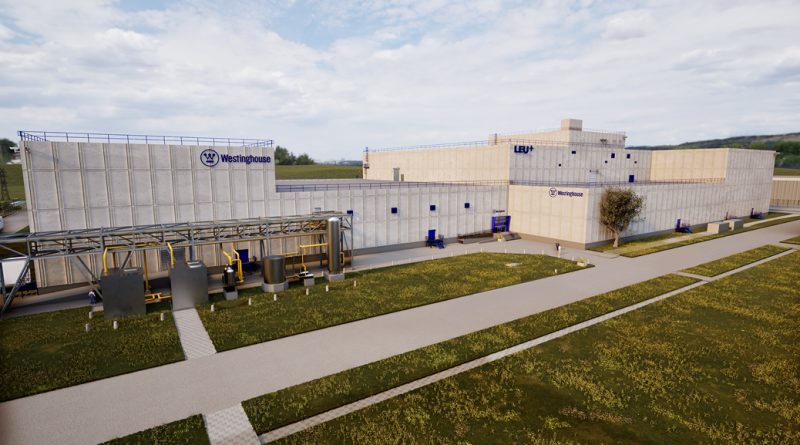
Westinghouse bets $1 billion on the future of US nuclear fuel

Subscribe to our free newsletter today to keep up to date with the latest manufacturing news.
Westinghouse Electric Company is investing approximately $1 billion in a new nuclear fuel factory at its Columbia Fuel Fabrication Facility in Hopkins, South Carolina, to make Low Enriched Uranium Plus (LEU+) fuel at commercial scale.
The company announced the project on Oct. 21. Construction is already underway, and the factory is on track to begin operations in 2030. Westinghouse says it is the first fleet-scale nuclear fuel factory built in the US in more than 50 years.
Dan Sumner, Westinghouse’s president and CEO, described the plant as the company’s largest single manufacturing investment to support the operating fleet.
The scale of the spending matters. The timing matters more.
Demand for baseload power is growing, and new reactors take years to build. Westinghouse is positioning the factory as a way to get more electricity out of the reactors already operating in the meantime.
LEU+ fuel is designed to get more power from existing reactors
Most commercial reactors run on fuel enriched to up to 5% uranium-235. LEU+ fuel uses a higher enrichment level, between 5% and 8%.
That difference gives plant operators 2 options. They can extend operating cycles, which means fewer refueling outages and lower operating costs. Or they can pursue power uprates, which raise the electricity output of a reactor that is already licensed and running.
Westinghouse says LEU+ fuel is aligned with the US UPRISE program and is expected to support uprates that would expand nuclear output nationwide in the near term. The company completed the first successful deployment of LEU+ fuel in the US in 2025.
The new factory is meant to move that fuel from first deployment to industrial production.
Westinghouse also expects the plant to support the industrialization of its AP1000 reactors worldwide, linking the investment to new-build demand as well as to the current fleet.
The fuel supply chain is becoming a manufacturing priority
The Hopkins site already has a long record. The Columbia Fuel Fabrication Facility was built in 1968 and is one of the largest nuclear fuel plants in the world. It produces fuel pellets, rods, assemblies, and components for other Westinghouse plants and for customers worldwide, and it employs more than 1200 people.
South Carolina Governor Henry McMaster said the state’s Westinghouse operations already produce the fuel that powers approximately 10% of the US.
The new investment sits within a wider federal push to rebuild domestic nuclear fuel capacity. Ted Garrish, the Department of Energy’s assistant secretary for nuclear energy, said the department is investing billions to restore American uranium enrichment capabilities.
Fabrication is the step that follows enrichment. Enriched uranium has to be turned into pellets, sealed into rods, and assembled into finished fuel before a reactor can use it. Without enough fabrication capacity, investment upstream in enrichment cannot reach the reactors that need it.
Public support helped close the deal. Westinghouse credited the DOE’s tax credit program, along with backing from South Carolina and Richland County, as key to reaching the investment decision.
The economic case rests on Westinghouse’s own projections
Westinghouse says the investment is projected to contribute $4.9 billion in economic impact across South Carolina over the next 10 years, including approximately $3.8 billion in Richland County.
Those figures come from an economic impact study commissioned by Westinghouse in partnership with researchers at the University of South Carolina’s Darla Moore School of Business. They should be read as company projections rather than independent estimates.
The announcement also leaves some questions open. Westinghouse has not said how many new jobs the factory will create, or how much LEU+ fuel it will be able to produce each year.
Demand is the bigger unknown. The factory’s value depends on utilities choosing to adopt LEU+ fuel and on regulators approving the uprates and longer operating cycles that make it worthwhile.
With operations scheduled for 2030, Westinghouse is building capacity ahead of that demand. Whether the reactor fleet is ready to use the new fuel when the factory comes online will decide how quickly this investment turns into additional nuclear power.
Source:
Westinghouse Electric Company
Photo credit:
Westinghouse Electric Company