What Hikma’s Ohio expansion reveals about pharma’s priorities

Subscribe to our free newsletter today to keep up to date with the latest manufacturing news.
For much of the past two decades, pharmaceutical manufacturing followed the same trajectory as many other industrial sectors. Production increasingly moved to lower-cost regions, supply chains became more global and efficiency often outweighed resilience in investment decisions.
That approach is now under review.
Hikma Pharmaceuticals’ decision to invest $267 million across two Ohio manufacturing facilities highlights a growing industry focus on domestic production capacity, supply chain security and long-term operational flexibility. The expansion will create 350 jobs and forms part of a broader $1 billion commitment announced by the company in 2025 to strengthen its US manufacturing and research footprint.
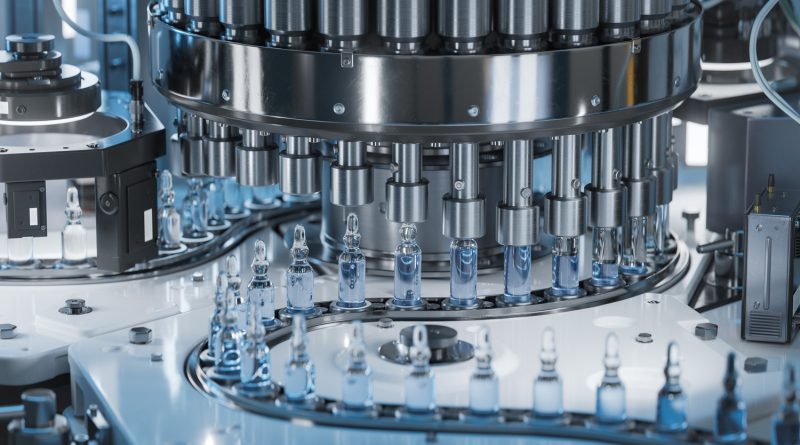
The investment covers two separate operations. In Columbus, Hikma will allocate $216 million to expand oral solid-dose and nasal inhalation manufacturing. In Bedford, $51 million will support additional sterile injectable capacity through new aseptic vial-filling and lyophilization capabilities. Together, the projects represent a substantial increase in US-based production capacity for essential medicines.
The industry is placing greater value on manufacturing resilience
The pharmaceutical sector entered the decade confronting a challenge that extended well beyond research and development. Global supply chains that had been optimized for cost proved vulnerable to disruption. Drug shortages, transportation delays and geopolitical tensions exposed weaknesses across manufacturing networks.
In response, pharmaceutical companies have begun investing in additional capacity closer to key markets. The objective is not simply to manufacture more products but to reduce risk and improve continuity of supply.
Hikma’s latest investment reflects this shift. The company produces a range of medicines included on federal essential drug lists and has worked with regulators to help address shortages in the US market. Expanding production capabilities in Ohio increases its ability to meet demand while reducing exposure to external manufacturing disruptions.
This trend extends beyond branded pharmaceutical companies. Generic drug manufacturers are also investing heavily in domestic facilities as healthcare providers, regulators and policymakers seek more reliable access to critical medicines.
As a result, resilience is becoming an increasingly important measure of manufacturing performance alongside efficiency and cost control.
Ohio continues to strengthen its position as a pharmaceutical manufacturing center
Ohio has emerged as a significant destination for life sciences and advanced manufacturing investment. Established infrastructure, a skilled workforce and supportive economic development programs have helped attract pharmaceutical companies seeking long-term growth opportunities.
Hikma’s Columbus operation already employs more than 1,200 people and serves as one of the company’s three global research and development hubs. The facility is also the largest manufacturing employer in the city. The latest investment deepens the connection between research, development and commercial-scale production, helping accelerate the path from product development to market supply.
The Bedford expansion reflects growing demand for sterile injectable medicines, one of the most technically complex segments of pharmaceutical manufacturing. New aseptic filling and lyophilization capabilities will allow Hikma to increase production volumes while supporting future manufacturing opportunities.
The scale of Hikma’s existing operations illustrates the significance of the investment. Across Ohio and New Jersey, the company’s facilities already have the capacity to produce more than 12 billion finished doses each year. The Ohio expansion builds on that foundation rather than creating an entirely new manufacturing footprint.
Manufacturing capacity is becoming a strategic asset
For many years, conversations about pharmaceutical competitiveness focused primarily on innovation and product pipelines. Manufacturing was often viewed as a supporting function.
That perception is changing.
Companies with reliable, scalable and geographically diversified production networks are increasingly positioned to respond more effectively to market demand, supply chain disruptions and regulatory requirements.
Hikma’s Ohio investment reflects this reality. The project is not solely about increasing output or expanding headcount. It is designed to strengthen the company’s ability to deliver medicines consistently, manage operational risk and support healthcare systems that depend on uninterrupted supply.
The expansion also highlights a broader change in how pharmaceutical executives evaluate growth opportunities. Access to skilled labor, proximity to research ecosystems and the ability to manufacture essential medicines at scale are becoming central considerations in long-term investment planning.
As pharmaceutical manufacturers continue expanding domestic operations, projects such as Hikma’s Ohio investment provide a clear indication of where the sector is heading. The priority is no longer limited to producing medicines efficiently. The objective is to produce them reliably, at scale and closer to the patients who depend on them.
Source