
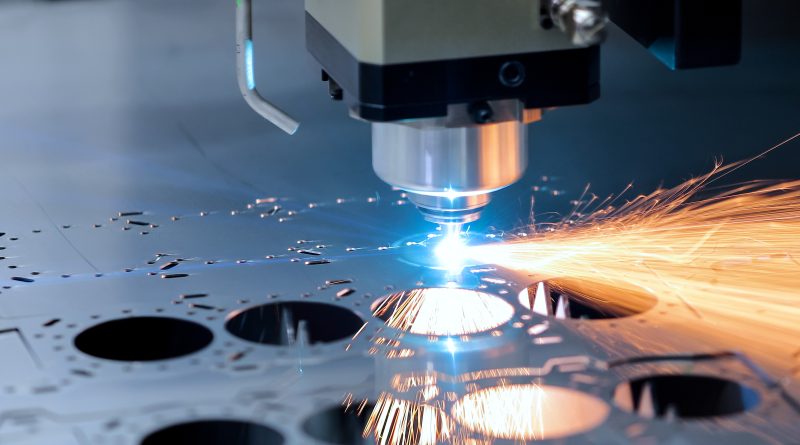
What Makes OEM Replacement Parts Essential for Industrial Laser Cutter Longevity

Industrial laser cutters represent a major capital investment, and the parts that keep them running carry lasting consequences for performance and uptime. Operations managers and purchasing agents often weigh lower up-front costs against long-term reliability, since substandard components can trigger premature failures.
This article draws on insights from Alternative Parts, Inc. (API), a trusted industrial parts manufacturer and distributor since 1994, specializing in OEM-standard replacement parts and expert sourcing support.
Weighing the True Cost of OEM Replacement Parts
Purchasing agents often balk at the sticker price of parts that come directly from original manufacturers, but up-front cost alone leaves out a key variable. Total cost of ownership, meaning combined maintenance, downtime and replacement expenses, factors in the full financial picture over a machine’s lifespan.
In fact, consistent preventive maintenance can drive a 5% to 10% productivity improvement and cut costs by up to 20%, according to a study by the Metal Forming Equipment Council. The most reliable providers offer alternative, OEM-standard parts at a fraction of direct-manufacturer pricing.
Sourcing Industrial Laser Cutter Replacement Parts That Meet OEM Standards
Uncertainty about whether aftermarket components meet OEM performance standards keeps many purchasing agents sourcing exclusively from original manufacturers, even at a premium.
The original equipment manufacturer builds OEM parts to its machine’s exact specifications, while a third-party manufacturer designs aftermarket parts to fit a specific brand. Quality varies across the aftermarket category, so vetting a supplier matters.
According to API, choosing an inferior aftermarket component to save money up front can backfire if it breaks down early, since the resulting downtime and a second purchase often outweigh the original savings.
Simplifying Compatibility Across Multiple Laser Cutter Brands
Operations managers running multiple laser cutter brands often struggle to identify which replacement parts fit each machine. API recommends weighing equipment age, the role a given part plays and an operation’s risk tolerance, instead of defaulting to either OEM or aftermarket as a blanket rule.
Parts engineered to OEM specifications and suitable for a given brand’s lasers can deliver dependable results in sheet metal manufacturing as a distinct alternative to original components. The aftermarket parts industry reflects this trend, with an estimated valuation of $653,072 million in 2026.
Reducing Downtime Through Reliable Parts Availability
Long lead times for replacement parts can turn a routine repair into an expensive production halt. Data from Fluke shows 61% of manufacturers experienced unplanned downtime in the past year, with outages lasting up to 72 hours and costing an average of $1.7 million per hour.
Quality solutions focus on fast turnaround, so parts reach the floor before a brief interruption turns into a major loss.
Frequently Asked Questions on Industrial Laser Cutter Replacement Parts
Operations managers and purchasing agents raise these questions when evaluating OEM and aftermarket options for industrial laser cutters.
What is the difference between OEM and aftermarket laser cutter parts?
OEM parts are tailored to that specific machine’s exact specifications, while reliable aftermarket parts offer OEM-standard at competitive pricing. Those options offer an alternative sourcing path often at a fraction of OEM cost.
Can aftermarket parts meet OEM performance standards?
Yes, a reputable supplier can manufacture aftermarket parts to precise specifications that meet OEM performance standards, giving operations managers a new dependable option.
Protecting Laser Cutter Performance for the Long Term
Industrial laser cutter longevity ultimately depends on sourcing the best parts to meet OEM standards, whether from the original manufacturer or a qualified alternative supplier.
Manufacturing professionals who regularly evaluate their sourcing strategy can better balance cost, compatibility and availability as equipment ages.

*Please note that this list includes sponsored content. Some of the companies, products, or services featured have entered into commercial agreements for placement. Sponsored placements do not necessarily reflect an endorsement and should be considered alongside other options in the marketplace.