
What Manufacturers Should Know About PCE Contamination and Cleanup

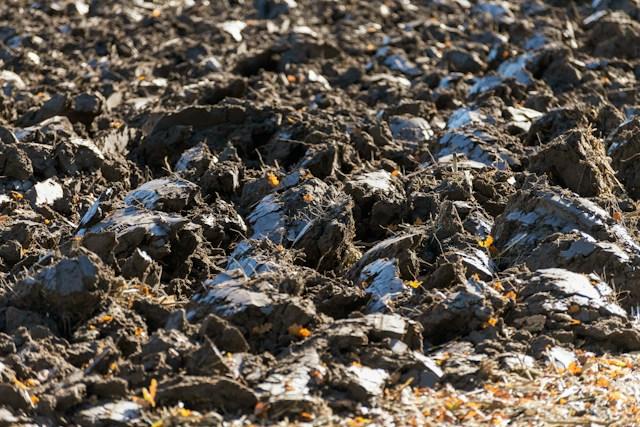
Perchloroethylene (PCE) has been a workhorse solvent in manufacturing for decades, with many facilities still operating on sites where this chemical was once heavily used. When PCE accumulates in subsurface soil and groundwater, it creates compliance challenges that disrupt daily activities. Managing this risk means evaluating the presence of pollutants, comparing treatment options and scheduling restoration work without halting production.
Assessing PCE Contamination in Soil and Groundwater
Accurate initial testing does more than satisfy regulatory checkbox requirements. How thoroughly manufacturers document contaminant concentrations during this early stage determines which treatment approaches will even be viable later. Most operations use soil borings, groundwater monitoring wells and conceptual site model development to establish baseline conditions across the affected area.
Health risks associated with PCE exposure make prompt evaluation even more urgent. Researchers have documented sufficient evidence that occupational or environmental contact is linked to bladder cancer in exposed populations. The evidence also demonstrates a strong correlation with non-Hodgkin lymphoma and end-stage renal disease.
These health findings explain why plant managers at active or occupied operations should prioritize thorough testing rather than treating it as mere paperwork. Subsurface data gathered during this phase becomes the foundation for every subsequent decision, from selecting appropriate technologies to mapping implementation schedules.
Evaluating Cleanup Approaches for PCE-Contaminated Sites

Because subsurface conditions vary so dramatically from one property to another, no universal cleanup method exists for PCE-contaminated sites. Treatment options range from in situ technologies to extraction-based systems, with effectiveness hinging on lithology, hydrology and contaminant distribution patterns unique to each location.
While standard evaluation confirms the presence of pollutants, remedial design characterization (RDC) involves gathering information specifically structured to support treatment planning. Operations that collect extensive data on sites before finalizing their approach sidestep the most common cause of underperforming or failed restoration efforts.
When in situ interventions disappoint, the shortfall typically traces back to an inadequate conceptual site model (CSM). A properly developed CSM integrates lithology and stratigraphy, subsurface material interactions with water and contaminants, plus geochemistry factors and microbial community characteristics. Underestimating any of these elements can compromise the entire remediation strategy.
Planning Remediation With Minimal Operational Disruption
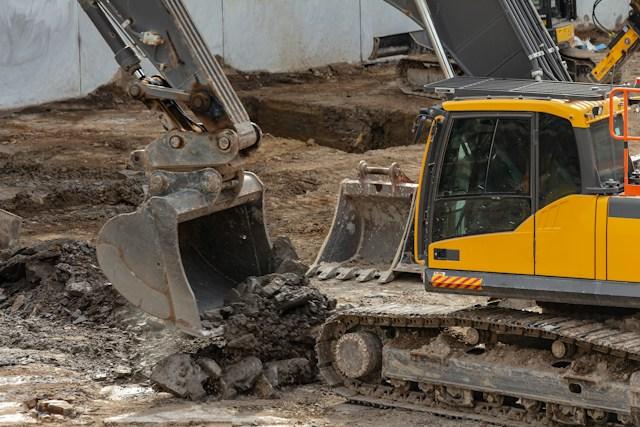
Production shutdowns aren’t an option for most manufacturers confronting pollutant concerns, which makes scheduling a careful balance between regulatory obligations and operational continuity. Compliance deadlines serve as strategy considerations that directly affect resource allocation and project timelines, rather than as arbitrary milestones.
The Environmental Protection Agency (EPA) finalized a risk management rule that reshapes how many industrial operations handle PCE, phasing down its manufacturing, processing and use across numerous commercial applications. Following public comment, most workplaces were given 30 months to implement the required Workplace Chemical Protection Programs, instead of the originally proposed 12-month window.
Certain applications can continue under strict controls, including petrochemical manufacturing, vapor degreasing and utilization in adhesives or sealants. The rule also strengthened monitoring requirements while guaranteeing that employee-designated representatives have access to occupational exposure records. Facility operators need to build these timelines into their cleanup strategy from the outset.
Providers That Support PCE Assessment and Cleanup
Effective response to pollutant challenges requires specialized expertise across three distinct functions. Environmental consultants handle evaluation and engineering, technology providers supply and install treatment systems, and cleanup contractors manage field execution. Building the right team means matching each provider type to its appropriate role.
Remediation Products Inc.
Remediation Products Inc. (RPI®) takes a differentiated approach to in situ intervention by focusing on soil saturation measurements rather than groundwater data alone. Because the company emphasizes subsurface conditions in this way, injections can be placed and targeted with surgical precision. Its remedial design characterization process translates location-specific findings into strategies tailored to each property’s lithology and contaminant distribution.
Field teams working with RPI receive overnight turnaround on quality assurance and quality control results. Since analytical findings reach personnel the same day samples arrive at the lab, injection strategies can be adjusted in real time during active implementation. Crews can respond to subsurface variability as they encounter it, rather than discovering issues after work is complete.
Key Features
- RDC process centered on soil saturation data
- Surgical precision injection placement
- Overnight field quality assurance and quality control turnaround
- Real-time adjustments to injection strategy
- In situ treatment technology and installation provider
Mundell & Associates
Mundell & Associates has built its consulting practice around PCE projects since the mid-1980s, accumulating experience across more than 40 dry cleaning properties nationwide. Its capabilities span groundwater testing, contaminant transport modeling and remediation system engineering for pump-and-treat, soil vapor extraction and in situ chemical oxidation applications.
The company’s regulatory and risk evaluation support includes achieving the first Indiana Tier II risk assessment approval at a dry cleaning site. They specifically target PCE and its breakdown products, including trichloroethylene (TCE), dichloroethylene (DCE) and vinyl chloride, because degradation products from PCE can create their own pollutant issues even after the parent compound has been addressed.
Key Features
- Dry cleaning site experience since the mid-1980s
- Over 40 dry cleaning sites nationwide
- Groundwater assessment and contaminant transport modeling
- Remediation system design, including pump-and-treat, soil vapor extraction and in situ chemical oxidation
- First Indiana Tier II risk assessment approval at a dry cleaner site
Arrowhead Contracting
As part of the KEMRON-Arrowhead joint venture, Arrowhead Contracting delivers field execution capabilities for PCE restoration work. The team secured a performance-based contract for the PCE Carriage Cleaners Superfund Site, a former dry-cleaning facility in Bellevue, Nebraska, under the administration of EPA Region VII. This project tackles pollutants beneath occupied buildings, city streets and public areas in a congested downtown district.
Its methodology combines in situ thermal remediation to address contaminants in the vadose zone with soil vapor extraction to recover vapor and steam at the surface. The target area spans roughly 9,750 square feet and extends to a depth of 60 feet. Performance standards call for reducing PCE to 1 milligram per kilogram in soil over 36 months.
Key Features
- PCE Carriage Cleaners Superfund Site, Bellevue, Nebraska
- In situ thermal remediation for vadose zone soil
- Soil vapor extraction for vapor/steam recovery
- Treatment zone approximately 9,750 square feet to 60 feet deep
- Federal/EPA-administered project experience
Turning PCE Awareness Into a Clear Action Plan
Industrial operators confronting pollutants can follow a logical progression from evaluation through technology selection, scheduling and execution. Thorough up-front measurements shape every choice that follows. Approaching restoration as proactive preparation, rather than crisis response, enables facilities to meet compliance requirements while preserving operational continuity.

*Please note that this list includes sponsored content. Some of the companies, products, or services featured have entered into commercial agreements for placement. Sponsored placements do not necessarily reflect an endorsement and should be considered alongside other options in the marketplace.