
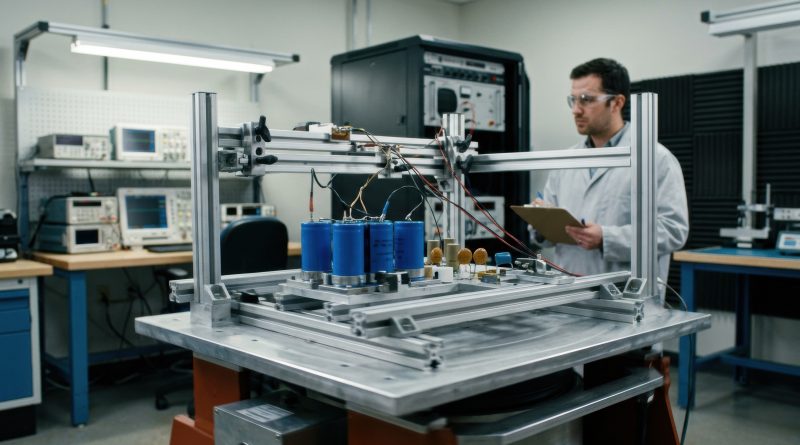
What’s the Best Way to Buy Multi-Axis Vibration Testing Equipment?

As products become more complex, accurately simulating operational conditions is essential for ensuring performance and durability.
Multi-axis vibration testing equipment validates product reliability, helps you meet stringent industry standards, and ensures your designs withstand dynamic environments in manufacturing fields such as aerospace, defense, electronics, and civil engineering.
Why Single-Axis Testing Can Fall Short
Real-world environments expose products to vibrations along multiple axes simultaneously, which means sequential single-axis testing can miss critical failure modes that only emerge under true multi-axial stress.
A 2023 study highlighted that single-axis testing leads to errors in durability estimates because actual operating dynamics activate multiple modes simultaneously. These inaccurate predictions can translate into costly breakdowns and product recalls.
Essential Considerations When Choosing Equipment
Selecting qualified suppliers for specialized multi-axis vibration testing equipment requires understanding the system specifications relevant to your application. Key factors include payload capacity, frequency range, and acceleration capabilities, while controller performance remains important for coordinating multiple exciters through sophisticated control algorithms.
The updated IEC standards provide procedures specifically for multi-exciter and multi-axis vibration test systems to better simulate dynamic environments throughout an equipment life cycle. Your chosen platform should support these protocols to help meet applicable testing standards and customer requirements across industries.
Top Suppliers of Multi-Axis Vibration Testing Equipment
The featured companies demonstrate multi-axis capability, system reliability, payload capacity ranges, and established industry reputation. Each supplier offers multi-axis solutions designed to meet the demanding requirements of engineers validating product durability under realistic operating conditions.
1. Team Corporation
Team Corporation creates high-performance vibration test systems and related components. The Cube, Tensor and MANTIS provide high accuracy and performance that deliver reliable, repeatable test results across diverse applications. The equipment’s robust construction and components enable it to operate in demanding test environments.
Key features:
- Payload capacity: Flexible configurations accommodate a wide range of specimen sizes and weights.
- Multi-axis capability: Simultaneous multi-axis excitation more accurately replicates field conditions than sequential testing.
- Frequency range: Broad frequency coverage allows testing across multiple industry standards.
2. eMpulse Test Systems
eMpulse Test Systems offers innovative equipment for multi-axis vibration testing, including multi-axis systems, road simulators, load frames, and vibration testing platforms. Its advanced technologies can meet the evolving needs of engineers and provide reliable performance for precise multi-axis control.
Key features:
- Servoelectric solutions: SEA technology offers clean, precise control for exacting requirements.
- Modular scalable platforms: Configuration flexibility through the eMtest platform matches specific needs.
- Simultaneous dual-axis capability: Electrodynamic shakers enable concurrent multi-axis excitation.
3. MB Dynamics
MB Dynamics can provide trusted multi-axis capabilities for automotive, aerospace and industrial work. Specific categories include shaker systems, modal exciters, amplifiers, calibration systems, and squeak-and-rattle testing solutions. The solutions combine proven performance with advanced control technology.
Key features:
- Millennium MIMO/MISO controllers: Manage complex multi-input, multi-output test conditions effectively.
- 6 DOF durability testing: Specialized systems for Durability Squeak & Rattle testing serve automotive and aerospace requirements.
- Industry expertise: A long-standing reputation provides confidence in system performance and support.
Securing the Right Equipment for Your Needs
Selecting the right multi-axis vibration testing equipment involves choosing solutions that could accurately reproduce real-world operating conditions, support applicable testing standards, and provide the reliability needed throughout the manufacturing development process.
As products continue to face increasingly complex operating environments, evaluating your current testing capabilities and considering modern multi-axis solutions can help improve product quality, reduce failure risks, and support long-term engineering success.

*Please note that this list includes sponsored content. Some of the companies, products, or services featured have entered into commercial agreements for placement. Sponsored placements do not necessarily reflect an endorsement and should be considered alongside other options in the marketplace.