Why Apple is lobbying Washington over Chinese memory chips

Subscribe to our free newsletter today to keep up to date with the latest manufacturing news.
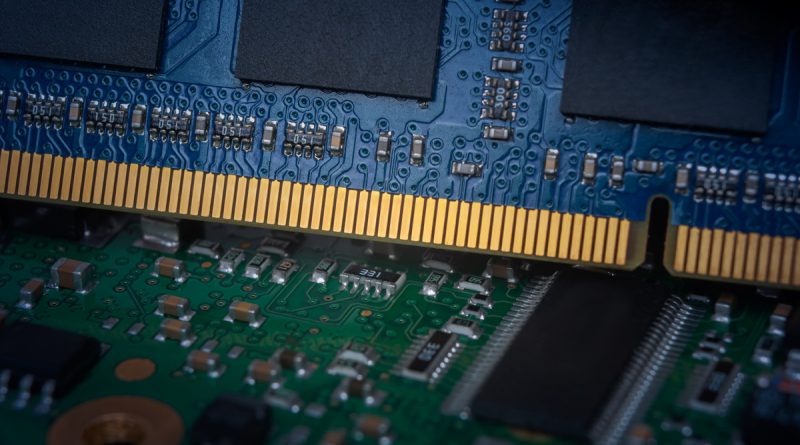
Apple’s reported effort to secure US approval to buy memory chips from China’s ChangXin Memory Technologies is more than another supplier story. It highlights how AI infrastructure is reshaping the economics of consumer electronics.
Reuters reported that Apple is seeking permission from the Trump administration to source memory chips from CXMT, a Chinese manufacturer identified by the Pentagon as a Chinese military company. The request comes as rising memory prices increase pressure on hardware makers that depend on stable component costs and diversified supply chains.
For Apple, the business case is straightforward. Memory is a critical component across the iPhone, iPad and Mac product lines. As prices climb, the company can absorb higher costs, pass them to consumers or secure additional suppliers. None of those choices is ideal. Even Apple’s scale cannot fully offset a market where AI customers are consuming an increasing share of global memory production.
CXMT represents another potential source of supply at a time when manufacturers have gained pricing power. The challenge is political. The US government increasingly views China’s semiconductor industry through a national security lens, meaning any approval involving CXMT would carry implications well beyond procurement.
AI has turned memory into one of the industry’s most valuable resources
Apple’s position reflects a broader shift across the semiconductor market.
Gartner forecasts worldwide semiconductor revenue will exceed $1.3 trillion in 2026, driven largely by AI investment. The research firm also expects DRAM prices to rise sharply as demand outpaces supply.
Memory manufacturers are also changing production priorities. TrendForce says suppliers continue shifting capacity toward high-bandwidth memory used in AI servers, reducing availability for conventional DRAM found in consumer devices.
The result is growing competition between AI infrastructure and consumer electronics.
Cloud providers, hyperscalers and server manufacturers are locking in long-term memory supply to support AI expansion. Companies producing smartphones, tablets and PCs must compete for what remains, often at higher prices.
For Apple, the timing is significant. The company is expanding on-device AI capabilities while trying to maintain the premium margins that have long defined its hardware business. Higher memory costs complicate that balance.
The CXMT story illustrates how AI has reordered semiconductor demand. For much of the past decade, smartphones drove investment across the memory market. Today, AI data centers are attracting more manufacturing capacity, capital investment and supplier attention.
Apple’s next competitive advantage may depend on geopolitical flexibility
Apple has spent years reducing supply chain concentration by expanding manufacturing beyond China. Even so, China remains central to global electronics production because of its supplier network, engineering expertise and manufacturing scale.
That leaves Apple balancing competing priorities. Customers expect reliable product launches and leading hardware. Investors expect disciplined margins. Policymakers expect US technology companies to reduce dependence on Chinese suppliers viewed as security risks.
Those objectives increasingly collide.
The likely outcome is not a complete separation between US and Chinese technology supply chains. A more selective system is emerging, where companies seek regulatory approvals, governments assess national security concerns and suppliers are evaluated on political acceptability alongside cost and quality.
If Apple receives approval, it gains another option in an increasingly constrained memory market. If the request is denied, it reinforces how geopolitical policy now influences decisions that were once driven almost entirely by commercial considerations.
The broader lesson extends beyond Apple. As AI transforms semiconductor demand, supply chain flexibility is becoming both more valuable and more difficult to achieve. Companies able to secure manufacturing capacity across multiple regions and suppliers will be better positioned to manage future disruptions, regardless of whether they stem from economics or geopolitics.
Source