
Why D6’s mechanical recycling processes are the quiet catalyst for the circular economy

Since its founding in 2014, D6 Inc. (D6) has grown into a leader in sustainable packaging and domestic mechanical recycling with an expanding operational footprint across North America. Often described as ‘the quiet catalyst of sustainable innovation’, D6 focuses on closing the loop for food packaging by receiving, cleaning, and upcycling post-consumer materials into high-quality, food-grade packaging products, while maintaining transparency and environmental stewardship throughout the process.
While food packaging recycling is frequently overshadowed by the recovery of aluminum cans and plastic bottles, the opportunity to redirect billions of pounds of plastic away from landfills remains significant. Materials such as thermoformed PET containers, polypropylene packaging and flexible plastics represent a substantial portion of the waste stream yet historically have lacked the infrastructure necessary for true circularity. D6 works to address this gap by collecting and processing materials including polyethylene terephthalate (PET #1), polypropylene (PP), low-density polyethylene (LDPE), high-density polyethylene (HDPE), aluminum, and thermoformed containers. As a Responsible End Market (REM) re-collector, the company partners with major retailers, consumer packaged goods companies (CPGs), and private brand co-packers to ensure these materials are responsibly recovered and returned to productive use within the packaging supply chain.
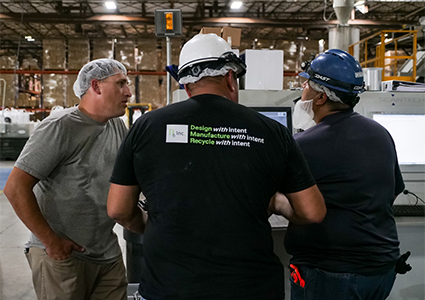
Everything the company does is built with intent. Its vertically integrated model operates across three key pillars: design, manufacture, and recycle. From a design perspective, D6 was founded with a vision of becoming the fastest design-to-prototype company in the world. Its state-of-the-art prototype lab continues to produce millions of parts annually in-house, allowing the company to rapidly develop packaging solutions tailored to customer needs. By working closely with brand partners, D6 ensures packaging is engineered not only for performance but also for recyclability and long-term circularity. In manufacturing, D6 maintains rigorous standards of quality and operational precision. From PET and polypropylene thermoforming to aluminum packaging production, the company’s advanced manufacturing infrastructure allows it to bring innovative packaging solutions to market quickly, while maintaining strict control over material performance and regulatory compliance.
Recycling is where its vertically integrated approach truly distinguishes the company within the industry. Through domestic mechanical recycling infrastructure, D6 collects, sorts, and upcycles waste materials into new packaging feedstocks. These services include material recovery, sortation, fabrication, customized recycling units, strategic placement planning, and tailored material stream management.
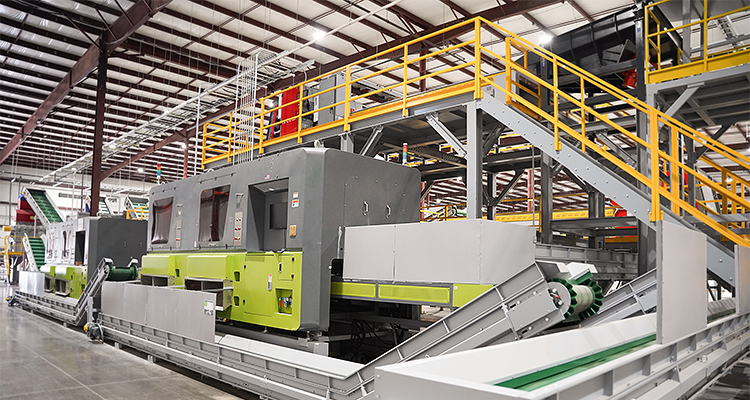
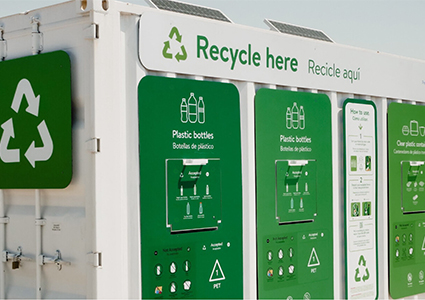
A cornerstone of this recovery system is D6’s Community Recycling Units (CRUs), self-service recycling containers strategically placed through retail partnerships with companies such as Walmart and Sam’s Club. These units provide consumers with convenient access points to return recyclable packaging materials, helping capture valuable resources before they enter the waste stream. The recovered materials are consolidated and transported to processing facilities where they undergo advanced optical sorting to eliminate contamination and ensure material purity. Once sorted, materials are compressed into bales and prepared for cleaning and processing. Through D6’s wash and recycling capabilities through the Omni Recycling Center (ORC), recovered plastics are converted into Thermoform Clean Wash Flake (TCWF). This material is then fed into extrusion systems that produce recycled plastic sheet roll stock capable of containing up to 100 percent post-consumer recycled content. Through thermoforming processes, the material is transformed into new packaging products that reenter the marketplace, creating a circular loop in which packaging can be recovered, reprocessed, and used again.
Partnerships play a critical role in enabling this system. D6 collaborates closely with leading retailers, brand owners, and packaging manufacturers to ensure recycled materials meet both performance and regulatory requirements. Through strategic partnerships with the Association of Plastic Recyclers (APR), Circular Action Alliance (CAA), Green Circle Certified, D6 can design packaging solutions that support sustainability goals while maintaining product integrity and supply chain reliability. At the same time, the packaging industry is experiencing a profound regulatory shift. The expansion of Extended Producer Responsibility (EPR) legislation across the US is reshaping how packaging materials are designed, collected, and reported. Under these frameworks, producers are increasingly responsible for funding and supporting recycling systems while ensuring materials are directed to verified responsible end markets. Programs administered by Producer Responsibility Organizations (PROs) such as the Circular Action Alliance (CAA) are introducing new standards for transparency, data reporting, and end-market verification. These developments require companies throughout the packaging value chain to demonstrate not only recycled content but also traceable and auditable recycling outcomes.
D6 has aligned its operations with these emerging frameworks from the beginning. Built on four foundational principles – transparency, traceability, accountability, and auditability – the company has invested heavily in domestic recycling infrastructure and data systems that allow materials to be tracked from recovery to final packaging production. Technologies such as RFID-enabled tracking and standardized material reporting systems help ensure accurate verification of recycling outcomes and support the reporting requirements associated with EPR programs. Domestic recycling infrastructure also strengthens supply chain resilience. Many packaging suppliers continue to rely on imported recycled materials sourced from offshore processors, which can introduce uncertainty in both material quality and chain-of-custody verification. By sourcing material directly from US material recovery facilities (MRFs) and recovering post-consumer packaging through its own collection systems, D6 helps reinforce the domestic recycling ecosystem while reducing reliance on global supply chains.
Beyond its operational footprint, D6’s long-term sustainability strategy is guided by a broader vision. The company has committed to becoming the world’s first carbon-negative packaging company by 2035, with initiatives aligned with the United Nations Sustainable Development Goals, particularly SDGs 9, 12, and 13. Through investments in recycling infrastructure, strategic partnerships across the packaging value chain, and a focus on measurable sustainability outcomes, D6 continues to demonstrate that a circular economy is both achievable and scalable.
As sustainability commitments evolve into enforceable regulatory frameworks, the packaging industry will increasingly rely on systems capable of delivering verifiable environmental outcomes. Through its vertically integrated model, from design and manufacturing to recycling and material recovery, D6 helps build the infrastructure necessary to support the next generation of sustainable packaging systems. In doing so, the company is proving that sustainability, performance, and accountability are not competing priorities.
