
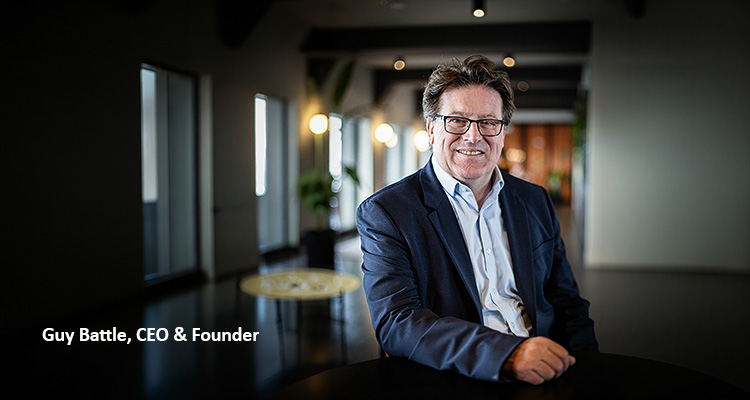
Why Social Value is the missing link in global manufacturing sustainability. By Guy Battle

Manufacturing leaders are currently navigating a perfect storm. ESG expectations are high, supply chains are under strain and communities are demanding greater accountability from the businesses operating in their midst.
Against this backdrop, a critical question keeps surfacing in boardrooms: How do we move beyond simply doing less harm, to actively doing more good, and all in a way that strengthens resilience, competitiveness and trust?
For many manufacturers, sustainability has become synonymous with compliance. Emissions reporting, audits, codes of conduct and disclosures all matter, but they are rarely sufficient on their own. They tell us what risks are being managed, not what value is being created. And increasingly, stakeholders from employees and customers to investors and regulators want to see evidence of the latter.
This is where Social Value comes in. Not as another layer of reporting, but as the missing link between sustainability ambition and tangible outcomes for people, places and long-term business performance.
From ESG compliance to value creation
ESG has played an important role in pushing sustainability up the corporate agenda. But in manufacturing, its limitations are becoming clear. Too often, ESG becomes a tick-box exercise, focused on policies rather than outcomes, inputs rather than impact. The ‘S’ in ESG, in particular, is frequently the last to be defined, and the least consistently measured.
Social Value takes a different approach. It asks a more fundamental question: what positive difference does this business make to society beyond its core commercial activity? And crucially, how can that difference be measured, compared and improved over time?

For manufacturers, this is not abstract theory. If you are creating skilled jobs in areas of low employment, investing in apprenticeships, paying fair wages, sourcing locally, improving worker wellbeing or reducing environmental harm, you are already delivering Social Value. The challenge has always been proving it credibly, consistently and at scale.
The global-local paradox
Manufacturing is deeply rooted in place. Plants, factories and distribution centers are embedded in local economies, reliant on local labor markets and local supply networks. Yet many manufacturers operate across dozens of countries, each with its own social priorities, cultural contexts and regulatory frameworks.
This creates a familiar tension. How do you maintain a unified global sustainability strategy while responding meaningfully to the needs of a community in say, the UK’s Midlands, Mexico or Southeast Asia?
Historically, the result has been fragmentation. Well-intentioned local initiatives sit alongside one another, measured in different ways, reported inconsistently and difficult to aggregate. Leadership teams know good work is happening but struggle to articulate its full value or compare progress across regions.
A common language changes this dynamic. When local impact can be measured using shared principles and methodologies, it becomes possible to respect local nuance while still achieving global comparability. Local relevance is not lost, it is amplified and understood in context.
Measuring what matters
This is precisely the gap that the Global TOM SystemTM (Themes, Outcomes and Measures) was designed to address. Built on more than a decade of practical application in the UK and now adapted for multinational organizations, it provides a structured way to translate social impact into quantifiable, auditable data.
By organizing activity around its core themes of Work (opportunity for all), Economy (inclusive growth), Community (empowering communities) and Planet (safeguarding and restoring our world), manufacturers can define clear outcomes and measure progress in a way that makes sense locally, but is comparable globally. Importantly, this approach draws on internationally recognized data sources, while still reflecting national and regional realities.
The result is not more reporting for reporting’s sake. It is better decision making. When social impact is expressed in financial terms, both in local currency and in globally comparable units, it becomes intelligible in the boardroom and meaningful to external stakeholders. It allows leaders to see where investment is working hardest and where course correction is needed.
Strengthening supply chain resilience
Manufacturers are acutely aware of how fragile global supply networks can be. Labor shortages, geopolitical shocks, reputational crises and climate events all have the power to disrupt operations overnight.
Prioritizing Social Value is one of the most effective ways to build resilience against this volatility. Fair wages, safe working conditions, local skills development and inclusive procurement are not just ethical choices, they are risk mitigation strategies. Suppliers that are embedded in strong local communities, with a skilled and stable workforce, are more reliable partners over the long term.
Equally, manufacturers that can evidence responsible sourcing and positive social impact are better placed to meet customer expectations and secure long-term contracts. Transparency is fast becoming a competitive differentiator.
Building community support and customer loyalty
There is a strong link between ethical brands and customer loyalty, and it starts with how manufacturers are supporting their communities to flourish. Retailers that can show a link between where and how their goods are manufactured and community engagement will build their brand capital. No one wants to be buying products from makers that pay poor wages or pollute our environment. Community matters, alongside authenticity, and Social Value is core to proving this and impacting the bottom line for the better.
Looking ahead
As we move into 2026, Social Value maturity is accelerating. What was once seen as a public-sector concept and a ‘nice to have’ is now being recognized as a strategic lever for growth and customer loyalty.
For manufacturing leaders, the opportunity is clear: move beyond compliance, adopt a standardized language for impact, and use Social Value to strengthen community support, customer growth and business resilience.
Sustainability in manufacturing is much more than having an approach to net-zero and cannot be delivered through environmental metrics alone. It requires a holistic understanding of how businesses interact with people, places AND planet (the triple bottom line) supported by an ability to measure that interaction with the same rigor applied to financial performance.
The manufacturers that succeed in the next decade will be those who understand that creating value for society is not at odds with commercial success. It is, increasingly, a prerequisite for it.
Download the Global Social Value guide: https://www.socialvalueportal.com/news-and-insights/global-social-value-a-new-approach-to-social-impact-in-business
Guy Battle
www.socialvalueportal.com/measurement
www.nationalsocialvaluetaskforce.org
Guy Battle is co-chair of the Global Social Value Taskforce and CEO of Social Value Portal. Social Value Portal is an online solution that provides precise, standardized reporting to enable organizations to quantify and maximize the Social Value generated – making good go further. It provides the tools to measure, manage and report both financial and non-financial data in a meaningful, robust and transparent way for all stakeholders.
Social Value Portal launched the National TOMs Framework in 2017, alongside the independent National Social Value Taskforce. The Framework provides a minimum reporting standard for measuring Social Value, integrating the standards into their measurement approach as a minimum.
Social Value Portal’s aim is to promote better business and community wellbeing through the integration of Social Value into day-to-day business across all sectors.
