Why Toyota’s manufacturing expertise could determine the future of air taxis

Subscribe to our free newsletter today to keep up to date with the latest manufacturing news.
Electric vertical takeoff and landing aircraft have long been promoted as the future of urban mobility. Aircraft designs continue to mature, demonstration flights are becoming more common and regulators are making steady progress toward certification. Yet one challenge still separates promising prototypes from commercial reality: manufacturing.
That challenge sits at the center of Joby Aviation’s latest agreement with Toyota. Rather than announcing another investment or technology partnership, the companies have established a manufacturing joint venture dedicated to producing Joby’s S4 electric aircraft. Toyota will hold a majority stake while applying decades of production expertise to one of aviation’s newest industries.
The announcement reflects a wider shift across advanced air mobility. Success is becoming less dependent on designing an aircraft that can fly and more dependent on producing large numbers of aircraft safely, consistently and economically.
Manufacturing has become the industry’s biggest competitive advantage
Advanced air mobility has attracted billions of dollars in investment during the past decade. Companies have demonstrated increasingly capable aircraft, secured strategic partnerships and advanced through certification programs. The next stage demands an entirely different set of capabilities.
Aircraft manufacturing differs significantly from automotive production because of strict regulatory oversight, minimal tolerance for defects and highly complex supply chains. Even so, many of the principles that transformed automotive manufacturing remain relevant. Standardized processes, quality management, supplier coordination and continuous improvement become increasingly valuable as production volumes rise.
Toyota has spent decades refining these disciplines through the Toyota Production System. Commercial aircraft production operates under different regulatory requirements, yet the philosophy of reducing waste, improving quality and creating repeatable processes could give Joby a meaningful advantage as manufacturing expands.
The joint venture provides Joby with industrial expertise that few competitors can match. It also signals confidence that commercial demand will eventually require manufacturing capacity well beyond today’s prototype facilities.
Building aircraft at scale may prove harder than designing them
The air taxi industry has reached a stage where engineering excellence alone is no longer enough. Manufacturers must demonstrate they can build aircraft consistently while meeting rigorous certification standards and controlling production costs.
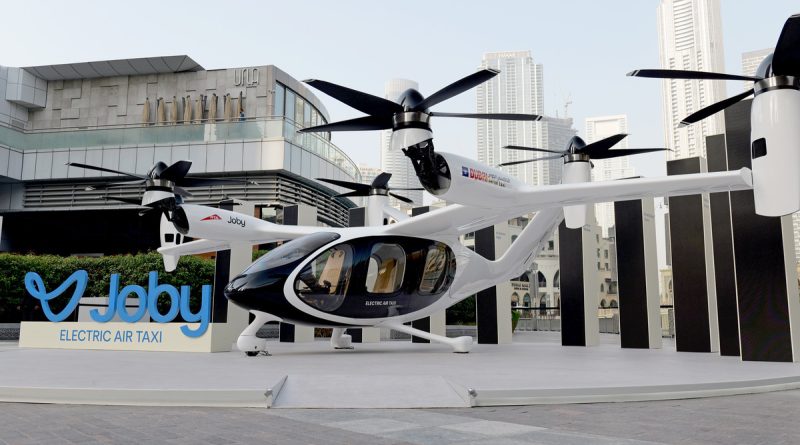
Joby’s S4 aircraft is designed to carry one pilot and four passengers using six electric propellers. The company continues progressing toward certification while conducting demonstration flights that showcase operational readiness. Turning those demonstrations into commercial fleets requires a manufacturing system capable of producing identical aircraft repeatedly without compromising safety.
This is where Toyota’s role becomes particularly significant.
Automotive manufacturers routinely coordinate thousands of suppliers, manage sophisticated production schedules and maintain quality across large-scale assembly operations. Although aviation production volumes remain lower, many of the same disciplines become increasingly valuable as manufacturers prepare for commercial deployment.
The new venture also highlights growing convergence between the automotive and aerospace sectors. Electric propulsion, battery technology, software integration and advanced manufacturing have blurred traditional industry boundaries. Carmakers increasingly view advanced air mobility as part of a broader mobility strategy rather than a separate market.
For Joby, manufacturing readiness may become just as valuable as technological innovation. Investors, regulators and future operators all need confidence that aircraft can be produced reliably for many years.
Industrial capability could separate future market leaders
The advanced air mobility sector remains highly competitive, with multiple manufacturers pursuing certification and commercial launch. Aircraft performance will continue to attract attention, but industrial capability may become the defining factor over the long term.
History offers many examples of innovative technologies that struggled because production failed to keep pace with ambition. Aerospace programs often encounter delays caused by manufacturing complexity, supplier constraints or certification requirements rather than engineering shortcomings.
Toyota’s expanded role suggests Joby understands this reality. Building an efficient manufacturing ecosystem before commercial demand accelerates could reduce future bottlenecks while strengthening the company’s competitive position.
The agreement also reflects a more mature phase for advanced air mobility. Industry discussion is shifting away from futuristic concepts toward factory planning, workforce development, quality assurance and production efficiency. These subjects rarely receive the same attention as flight demonstrations, yet they often determine whether emerging technologies become commercially successful.
As electric aviation moves closer to commercial operations, the companies that master manufacturing may shape the industry’s future. Toyota’s greatest contribution to air taxis may ultimately be its ability to build complex products at scale with consistency, efficiency and quality.
Source