
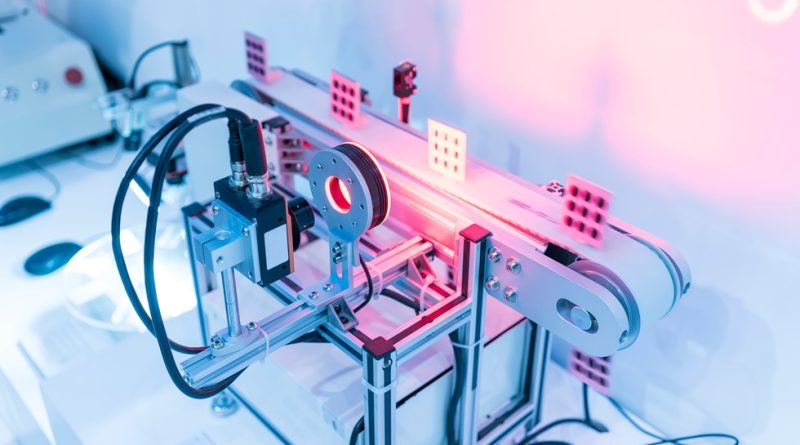
Ten machine vision companies transforming manufacturing

Machine vision has been part of manufacturing automation for decades, but its role is changing rapidly. Advances in artificial intelligence, deep learning, 3D imaging and edge computing are allowing vision systems to tackle applications that were previously too variable or complex to automate reliably. Manufacturers are using these technologies not only to identify defects but also to verify assembly, guide robots, improve traceability and detect process problems before they result in waste or rework.
This evolution is turning machine vision into an increasingly important source of manufacturing intelligence. Traditional rule-based systems remain essential for many high-speed inspection tasks, while AI is extending automated vision into applications that once depended on human judgment. At the same time, smarter cameras and edge processing are bringing more intelligence directly onto the production line. The companies featured here span established industrial vision leaders, imaging specialists and AI-native innovators, each helping manufacturers see, understand and respond to what is happening across increasingly automated production environments.
Cognex
Quality inspection has traditionally depended on manufacturers defining exactly what a vision system should look for. Artificial intelligence is changing that model by enabling machines to recognize defects, variations and anomalies that are difficult to capture through fixed rules alone. Cognex has become one of the most influential companies driving this transition from conventional machine vision toward AI-enabled visual inspection.
Its portfolio combines industrial cameras, vision systems, barcode readers and deep learning software used across applications including defect detection, assembly verification, measurement and traceability. Cognex’s strength lies in bringing advanced vision capabilities into production environments where inspection must operate at line speed and with consistent accuracy. AI-based tools also make it possible to address variable or visually complex products that have traditionally challenged rule-based inspection. As manufacturers seek to automate more quality decisions while reducing inspection errors and waste, Cognex remains one of the defining companies in industrial machine vision.
Keyence
Machine vision delivers the greatest value when sophisticated inspection can be deployed without creating another layer of engineering complexity. Keyence has built a strong position in manufacturing by combining high-performance imaging with integrated vision systems designed to make automated inspection practical across a wide range of production environments.
Its portfolio spans vision sensors, smart cameras, 3D vision systems, measurement technologies and AI-enabled inspection tools used for applications including defect detection, dimensional verification, assembly checking and identification. Keyence’s integrated approach allows manufacturers to combine cameras, lighting, processing and software within systems designed for rapid deployment on the production line. This is particularly valuable where manufacturers need to inspect high volumes of products while maintaining consistent quality and traceability. As visual inspection becomes more intelligent and automated, Keyence remains one of the industry’s most established providers of machine vision technology.
MVTec
Not every machine vision challenge can be solved with a preconfigured inspection system. Manufacturers increasingly need flexible software capable of supporting highly specialized applications, from precision measurement and surface inspection to object recognition and robotic guidance. MVTec has established itself as one of the leading machine vision software specialists by providing the tools needed to build these customized industrial applications.
Its HALCON and MERLIC platforms combine conventional image processing with deep learning and AI-based vision capabilities, enabling manufacturers and machine builders to develop inspection systems tailored to specific production requirements. Applications span defect detection, classification, 3D vision, optical character recognition and positioning, with software that can work across a broad range of camera and hardware environments. This hardware-independent approach differentiates MVTec from integrated vision suppliers and provides manufacturers with greater flexibility when designing automated inspection. As AI expands what industrial vision systems can recognize and interpret, MVTec remains an important technology provider behind increasingly sophisticated manufacturing applications.
Zebra Technologies
Machine vision is increasingly moving beyond standalone quality inspection and becoming part of a broader system for understanding what is happening across production. Zebra Technologies has expanded from its established position in barcode scanning and industrial identification into machine vision, combining visual inspection with the traceability technologies already widely used across manufacturing.
Its portfolio includes smart cameras, fixed industrial scanners and machine vision software supporting applications such as defect detection, assembly verification, measurement and product identification. This combination gives Zebra a distinctive position for manufacturers seeking to connect inspection results with individual products, components and production records. By linking machine vision with barcode and data capture capabilities, organizations can improve quality while strengthening traceability throughout the manufacturing process. As manufacturers seek greater visibility into both product quality and product movement, Zebra Technologies is becoming an increasingly important player in industrial machine vision.
Solomon
Some visual inspection problems are difficult to solve because products do not always appear exactly the same. Changes in orientation, lighting, surface finish or presentation can make conventional rule-based vision unreliable, particularly where manufacturers need to inspect complex or highly variable products. Solomon has built its machine vision proposition around applying AI to these less predictable industrial environments.
The company combines AI-powered vision software with 3D imaging and robotic vision technologies to support applications including defect inspection, object recognition, positioning, picking and assembly verification. Its systems are designed to help manufacturers automate tasks that traditionally required human visual judgment or extensive vision programming. Solomon’s emphasis on combining machine vision with intelligent robotics also makes it particularly relevant as manufacturers explore more adaptive forms of automation and Physical AI. As production becomes more flexible and product variation increases, Solomon is helping extend automated vision into applications that conventional inspection systems can struggle to address.
Basler
Image quality is the foundation of any machine vision system. If the camera cannot capture reliable information at production speed, even the most advanced analytics or AI models will struggle to deliver consistent results. Basler has built its position around providing industrial imaging technologies designed for demanding manufacturing environments.
The company’s portfolio includes area scan and line scan cameras, 3D vision systems, embedded vision components and supporting software used across applications such as quality inspection, measurement, robotics and process monitoring. Basler’s strength lies in offering a broad range of industrial-grade imaging options that can be integrated into both standard and highly customized systems. This makes the company particularly relevant for manufacturers and machine builders developing vision applications that require precise control over hardware, performance and integration. As machine vision becomes more central to automated quality and intelligent manufacturing, Basler remains one of the industry’s most important imaging specialists.
Teledyne FLIR
Not every manufacturing vision task depends on visible light. Temperature variation can reveal defects, equipment problems and process instability long before they become apparent through conventional inspection. Teledyne FLIR has built a distinctive position by combining thermal imaging with industrial vision technologies used across quality, maintenance and process monitoring applications.
Its cameras and imaging systems enable manufacturers to detect heat patterns, identify abnormal operating conditions and monitor processes where temperature is a critical indicator of performance. These capabilities are particularly valuable in sectors such as electronics, automotive, energy and process manufacturing, where thermal anomalies can signal defects, electrical issues or equipment degradation. By extending machine vision beyond standard optical inspection, Teledyne FLIR helps manufacturers gain another layer of operational insight. As visual intelligence expands across the factory, thermal imaging is becoming an increasingly important part of automated inspection and condition monitoring strategies.
IDS Imaging
As machine vision moves closer to the edge, manufacturers increasingly need compact imaging systems capable of performing more intelligence locally rather than sending every image to a separate processing system. IDS Imaging has built a strong position by combining industrial cameras with embedded vision and AI capabilities designed for flexible deployment across manufacturing environments.
The company’s portfolio includes 2D and 3D industrial cameras, embedded vision systems and AI-enabled technologies supporting applications such as quality inspection, object recognition, robotic guidance and process monitoring. Its approach allows manufacturers and machine builders to integrate vision directly into equipment while selecting the processing architecture best suited to the application. This flexibility is particularly valuable as AI-based inspection expands beyond traditional centralized vision systems. By combining industrial imaging expertise with edge AI capabilities, IDS Imaging is helping manufacturers deploy more compact, adaptable and intelligent vision applications directly where production takes place.
Omron
Machine vision becomes particularly powerful when inspection is integrated directly with the automation systems responsible for controlling production. Omron has built a distinctive position by combining vision technology with sensors, robotics and factory automation, allowing manufacturers to use visual information not simply to identify defects but also to influence production decisions in real time.
Its portfolio spans smart cameras, vision sensors, 2D and 3D inspection systems and AI-enabled technologies used for applications including quality inspection, measurement, identification, assembly verification and robotic guidance. Because these capabilities sit within Omron’s broader automation ecosystem, manufacturers can connect inspection results directly with machines and control systems, enabling faster responses when quality problems occur. This integration is particularly valuable as manufacturers pursue more adaptive and autonomous production. By connecting machine vision with automation and robotics, Omron is helping turn visual inspection from a final quality check into an active part of the manufacturing process.
Landing AI
Many manufacturers want the benefits of AI-powered visual inspection without building large in-house data science teams. Landing AI has positioned itself around making computer vision easier to deploy in industrial environments, particularly for manufacturers dealing with limited training data or highly specialized inspection requirements.
Its platform enables teams to build and deploy visual inspection applications for defect detection, classification and quality control using relatively small datasets. This is particularly useful in manufacturing, where examples of certain defects may be rare and collecting thousands of labeled images can be impractical. Landing AI’s focus on data-centric AI also helps manufacturers improve model performance by refining the quality of training data rather than simply increasing volume. As manufacturers look for practical ways to extend AI-based inspection beyond pilot projects, Landing AI is helping lower the technical barriers to adopting machine vision across a wider range of production environments.
