
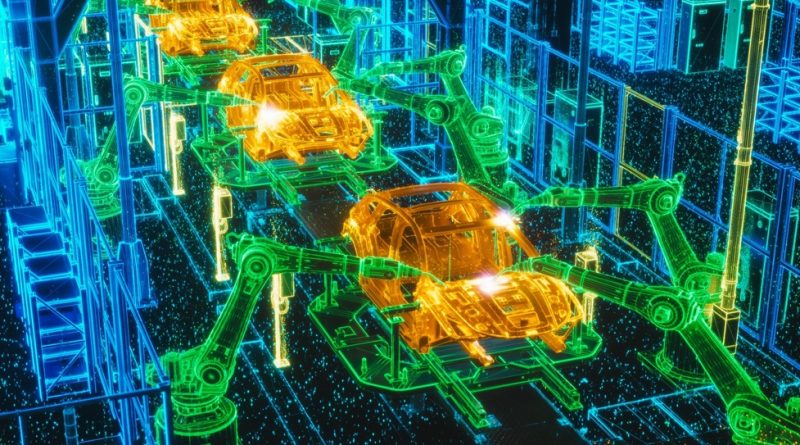
Ten companies shaping digital twins in manufacturing

Digital twins have evolved far beyond their origins as engineering and design tools. What began as virtual models used to test products before production has expanded into a technology capable of representing factories, production systems, industrial assets and entire manufacturing facilities. Increasingly connected to real-time operational data, digital twins are helping manufacturers simulate scenarios, optimize performance and make more informed decisions across the lifecycle of products and operations.
As manufacturers pursue greater efficiency, resilience and operational visibility, digital twins are becoming an important part of smart manufacturing strategies. Some organizations use them to improve engineering and product development, while others focus on production optimization, predictive maintenance or operational planning. The companies featured here represent some of the most influential players helping manufacturers turn digital twins from static models into dynamic tools that support better business and operational outcomes.
Dassault Systèmes
Dassault Systèmes has been one of the most influential companies in the development of digital twin technology. Through its long-standing focus on virtual twins, the company has helped manufacturers move beyond traditional design models toward digital environments that support engineering, simulation and lifecycle management.
Its platform allows manufacturers to create virtual representations of products and processes that can be used to test design decisions, improve collaboration and identify potential issues before they affect physical operations. This ability to connect design, engineering and manufacturing activities within a single environment has made Dassault a key player in industries where innovation speed and product complexity are critical. The company’s virtual twin approach is widely used across sectors such as aerospace, automotive and industrial manufacturing, where organizations need to manage increasingly sophisticated products and production environments. As manufacturers seek closer alignment between engineering and operational performance, Dassault continues to play a leading role in digital twin adoption.
NVIDIA
Digital twins are increasingly becoming platforms for simulation, optimization and AI development rather than simple visual models. NVIDIA has emerged as a major force in this transformation through its combination of accelerated computing, AI and simulation technologies.
Through platforms such as Omniverse, manufacturers can create highly realistic virtual environments where factories, robots, production lines and supply chains can be modeled and analyzed before changes are made in the real world. This allows organizations to test scenarios, optimize performance and reduce operational risk without disrupting production. NVIDIA is also helping manufacturers use digital twins to generate synthetic data, train robotics systems and develop AI models in virtual environments before deployment. Its growing influence reflects the convergence of digital twins, artificial intelligence and advanced automation. As manufacturers pursue more autonomous and intelligent operations, NVIDIA continues to provide much of the infrastructure supporting next-generation digital twin strategies.
Siemens
A digital twin delivers the greatest value when it remains connected to the systems responsible for designing, building and operating products throughout their lifecycle. Siemens has become one of the most influential companies in this area through its ability to connect engineering, simulation, production planning and factory operations.
Its portfolio spans industrial software, automation technologies and digital twin platforms that allow manufacturers to model products, production systems and manufacturing processes before they are implemented. Organizations can test alternatives, identify inefficiencies and reduce risk before making physical changes. Siemens also plays an important role in linking digital twins with operational technology and real-time production data. Its broader digital thread strategy helps manufacturers connect information from design through production and into ongoing operations, creating a more continuous flow of information across the manufacturing lifecycle. This ability to connect the physical and digital worlds continues to make Siemens a major force in smart manufacturing.
PTC
Manufacturers increasingly want digital twins that provide visibility not only into how products were designed but also how they perform throughout their operational lives. PTC has built a strong position by focusing on this connection between engineering information and real-world operational data.
Through platforms such as Windchill and ThingWorx, manufacturers can connect product lifecycle management, industrial IoT and operational performance data within a single environment. This enables organizations to better understand product behavior, improve maintenance strategies and support continuous improvement efforts. PTC’s approach is particularly valuable for manufacturers seeking to improve service performance and asset reliability throughout the lifecycle of equipment. The company’s integration of augmented reality capabilities further enhances how digital twin information can be delivered to engineers, operators and maintenance teams. By connecting design intent with operational reality, PTC continues to help manufacturers gain greater value from digital twin initiatives.
AVEVA
Creating a digital twin is relatively straightforward. Ensuring that it accurately reflects the realities of complex industrial operations is far more challenging. AVEVA has become a major player by focusing on operational digital twins designed to support industrial performance and decision-making.
The company combines engineering information, operational data and visualization technologies to create digital representations that support monitoring, predictive maintenance and process optimization. AVEVA remains particularly influential in process industries where operational continuity, reliability and asset performance are critical priorities. Many of the world’s largest energy, chemicals and industrial manufacturing organizations use AVEVA technologies to improve visibility across large, asset-intensive operations. By connecting live industrial data with virtual representations of facilities and assets, the company enables manufacturers to improve visibility and make more informed decisions. This operational focus has helped establish AVEVA as one of the most important digital twin providers in manufacturing.
Rockwell Automation
Many manufacturers increasingly judge digital twins by their ability to improve real-world production performance. Rockwell Automation has built its digital twin strategy around this operational reality, focusing on how virtual environments can support manufacturing execution, commissioning and continuous improvement.
The company has gained significant attention through technologies such as Emulate3D, which allow manufacturers to model and test production systems before deployment. By creating virtual representations of equipment, automation systems and production processes, organizations can identify bottlenecks, validate designs and optimize workflows without affecting live operations. Virtual commissioning capabilities allow teams to test automation systems and production logic before installation, reducing project risk and accelerating start-up activities. This can shorten the time required to move from installation to production while improving confidence in system performance. As manufacturers seek stronger links between simulation and production performance, Rockwell Automation continues to strengthen its position within the digital twin market.
Hexagon
Digital twins depend on accurate representations of the physical world. Hexagon has established a strong position by combining measurement technologies, reality capture capabilities and industrial software to create highly detailed digital representations of assets and facilities.
Its approach centers on ensuring that digital twins accurately reflect real-world conditions. Through technologies such as metrology, laser scanning and advanced sensors, manufacturers can build digital models grounded in reliable engineering and operational data. This supports activities ranging from quality management and asset performance monitoring to facility planning and operational optimization. Hexagon’s expertise in reality capture is particularly valuable when creating digital twins of existing facilities where accurate physical information is essential. As manufacturers increasingly require digital twins that mirror operational reality rather than theoretical models, Hexagon continues to play an important role in bridging the gap between physical assets and digital environments.
Cognite
A digital twin is only as valuable as the quality and accessibility of the data supporting it. Cognite has become increasingly influential by helping manufacturers address one of the biggest challenges in digital twin deployment: fragmented industrial information.
The company focuses on industrial data contextualization, connecting information from historians, SCADA systems, engineering databases, ERP platforms and operational assets. This creates the data foundation needed for effective digital twins and operational decision-making. Rather than concentrating primarily on simulation or visualization, Cognite helps manufacturers establish a unified industrial data layer that keeps digital twins connected to real-world conditions. As organizations seek to scale digital twin initiatives across increasingly complex environments, Cognite’s role in creating trusted industrial data foundations continues to grow.
Ansys
Simulation remains one of the most important foundations of digital twin technology. Ansys has become a leading player by combining advanced physics-based simulation with operational data to create highly predictive virtual environments.
Its software enables manufacturers to model how products, systems and processes will behave under real-world conditions before resources are committed. This capability is particularly valuable in industries where safety, reliability and performance are critical and where physical testing can be expensive or time-consuming. By helping organizations predict future behavior rather than simply visualize current conditions, Ansys supports more informed engineering and operational decisions. The company’s focus on predictive simulation continues to make it one of the most important contributors to digital twin innovation.
Bentley Systems
Digital twin strategies are increasingly expanding beyond products and production systems to encompass entire facilities and industrial ecosystems. Bentley Systems has become an important player by helping manufacturers create digital representations of large-scale industrial environments.
Its approach focuses on infrastructure and asset-centric digital twins that support planning, operations and lifecycle management. By combining engineering information, operational data and visualization technologies, Bentley enables manufacturers to gain greater visibility into facility performance and asset health. This is particularly valuable for organizations operating large industrial sites, process plants and energy-intensive manufacturing facilities where maintenance planning, reliability and operational efficiency are closely connected. As manufacturers seek a more holistic view of operations, Bentley continues to help extend digital twin technology beyond the factory floor and into the wider industrial environment. Its growing relevance reflects the increasing scope of digital twin initiatives across modern industry.
