
Physical AI is turning the factory into an intelligent system

Physical AI is rapidly becoming one of the most prominent ideas in industrial technology, but the images used to illustrate it can be misleading. Humanoid robots dominate conference stages and promotional material, yet the bigger manufacturing story is not about replacing every existing machine with something that walks and talks. It is about giving industrial systems a greater ability to perceive what is happening around them, interpret changing conditions and respond with more flexibility than traditional automation allows.
That broader view is central to how Timo Kistner, EMEA Regional Industry Lead for Manufacturing and Industrial at NVIDIA, describes the opportunity. Rather than seeing physical AI as a single class of robot, he places it across the manufacturing value chain, from engineering and individual machines through logistics, robotics and, eventually, the factory itself.
“When we look at physical AI, we are enabling any kind of embodied AI,” Kistner says. “Traditional industrial automation is fixed. You can change it, but it does not have the same flexibility to react to a task expressed in language or to a much wider range of changing conditions.”
The difference lies in the combination of intent, perception and action. A physical AI system can receive a task, gather information from sensors, interpret the environment and use that combination to determine what should happen next. For manufacturers accustomed to automation built around predetermined sequences and tightly defined parameters, that introduces a different level of adaptability.
Beyond the humanoid robot
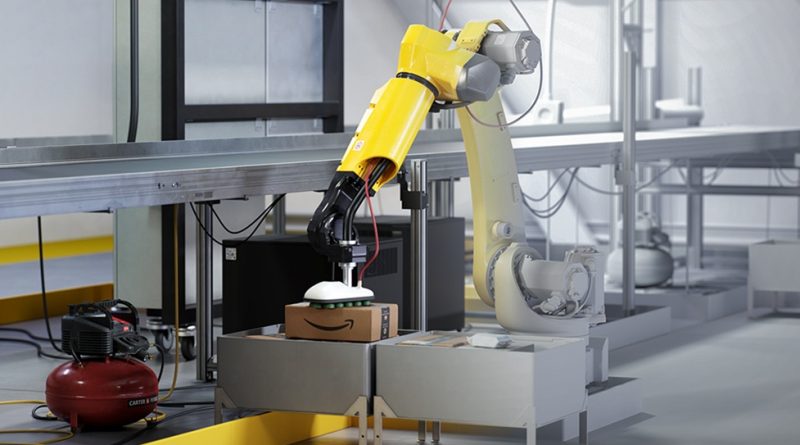
The manufacturing value of physical AI is likely to emerge first through improvements to systems companies already use rather than through a wholesale switch to humanoid robots. Industrial robots, cobots, autonomous mobile robots and machine tools will continue to perform the roles for which they were designed, but AI can make those assets more responsive to variation in the surrounding process.
For manufacturers, the practical question is not whether a robot looks human, but whether its form factor is appropriate for the work it needs to perform. Payload, speed, precision and the physical demands of a task will continue to shape where different robotic systems make sense.
“I do not believe that everything will change,” Kistner says. “We will have more humanoids in these environments, but they are going to work alongside the existing infrastructure. Ultimately, we are going to see more intelligent robots, but that does not mean the classical robot will simply go away.”
Humanoids do, however, provide a useful development platform because of their complexity. A system that must coordinate perception, movement, balance and manipulation across a changing environment creates technical challenges that are relevant well beyond the humanoid itself. Progress in solving those problems can filter into other forms of robotics and automation.
Greater product variation and shorter production runs are increasing the value of machines that can adapt without extensive reprogramming. Equipment designed around fixed tasks can become harder to justify when the product mix changes frequently, while more intelligent systems could respond to a broader range of instructions and production conditions.
For Kistner, this is where physical AI begins to connect with the long-standing manufacturing ambition of greater flexibility. “The discussion around bringing more customization into production is where these machines will ultimately help,” he says. “They give you the capability to move closer toward lot-size-one production.”
From intelligent machines to an intelligent factory
The more significant change begins when manufacturers stop looking at intelligence only at the level of an individual asset. A machine may have sensors and an AI agent that understands its own condition, but the production environment contains many interdependent systems whose performance cannot be optimized independently.
As intelligence spreads across individual assets, the bigger opportunity is to connect local decisions with a wider understanding of factory performance. Information that begins at tool or machine level can become more valuable when it contributes to decisions about throughput, maintenance and production priorities across the plant.
“You have a layer of agents working together and collaborating,” Kistner says. “At one point, you have an agent of agents of agents controlling the factory as a robotic system. This is what we believe will happen, and we are already seeing the beginnings of it in some machines and robotic implementations.”
The idea of a factory behaving like a robotic system does not mean a single AI takes control of every production decision. It is closer to an architecture in which intelligence is distributed across assets, with information moving between different levels so that local actions can be understood in the context of wider factory performance.
That could change what manufacturers are able to see. A tool-level agent may know whether performance is deteriorating, while a machine-level system could understand whether the issue threatens output. At a higher level, the factory could determine whether the disruption matters to overall throughput or whether another part of the production system can compensate.
Once intelligence moves beyond individual assets, manufacturers can start asking whether insights generated at one point in production can improve decisions elsewhere in the plant, rather than remaining trapped within the machine or system that produced them.
“Physical AI can be a robot or a humanoid robot, but it can also be the factory,” Kistner says. “The factory can integrate each component into an industrial AI layer that acts as the binding glue and provides further insight.”
Flexibility must work in the real factory
Manufacturers are already beginning to explore practical applications without waiting for the fully intelligent factory to arrive. Warehousing and logistics provide one entry point because autonomous movement, perception and changing traffic conditions make flexibility valuable. Robot cells provide another, particularly where commissioning remains time consuming and changes to the task or layout can require significant engineering work.
NVIDIA is working with robotics and industrial partners on approaches that allow those environments to be represented and tested virtually before equipment is commissioned physically. The detailed role of simulation becomes a separate discussion, but its importance grows as machines gain more autonomy because manufacturers need confidence that intelligent behavior will remain safe and predictable before it reaches live production.
Physical AI therefore introduces a different challenge from conventional automation. A fixed system can be validated against the operating conditions it was designed to handle, while an intelligent machine may be expected to respond to situations that were not explicitly programmed one by one.
The factory environment also makes that challenge harder. Production lines contain people, moving assets, changing materials and equipment that may behave differently over time. Any system able to adapt to those conditions must still operate within strict requirements for safety, quality and reliability.
Kistner argues that manufacturers should therefore avoid treating physical AI as another isolated pilot. The technology will depend on how well individual use cases connect with engineering data, existing automation and the wider industrial environment.
The most immediate opportunity is not to make the factory autonomous overnight, but to identify where additional perception and adaptability can remove existing constraints. A robot that adjusts more easily to product variation, a machine that understands more about its own operating state or a warehouse system that can respond dynamically to changing conditions all represent steps toward that wider model.
Existing automation will remain an important part of that future. What changes is the intelligence surrounding it and the ability of different systems to collaborate rather than execute independent instructions.
For manufacturers, physical AI may therefore be less about choosing a new category of machine than reconsidering how intelligence is distributed across the factory. Humanoid robots will be one highly visible part of the transition, but the deeper change will happen as ordinary machines, robots and production systems become more aware of their environment and of each other.
The factory becomes more intelligent not when every asset is replaced, but when the systems already responsible for making products can perceive more, understand more and respond with greater flexibility to what is actually happening around them.
