
Physical AI needs a repeatable path to production

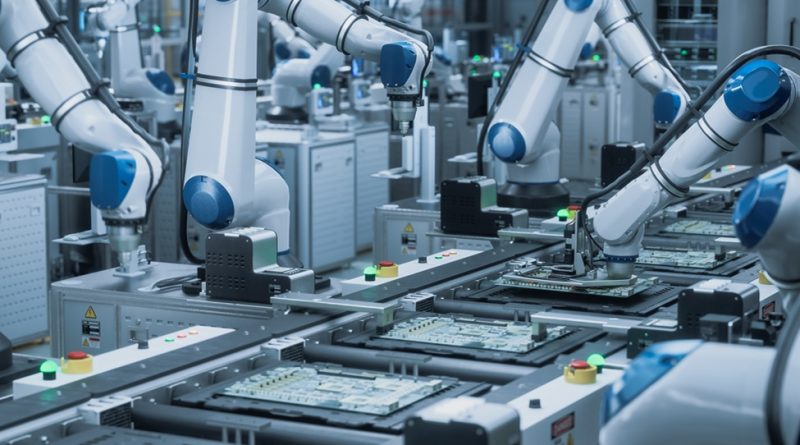
Robots that can respond to what they encounter on the factory floor are opening tasks that conventional automation has struggled to handle. Bin picking, kitting and machine tending have often remained dependent on people because parts do not always arrive in predictable positions or conditions. Physical AI can give robotic systems the perception and adaptability to deal with that variation, but the engineering process surrounding each application can still make deployment slow and expensive.
Brendan Sterne, Chief Product Officer at Vention, a manufacturing automation company that combines hardware, software and digital design tools on a single platform, describes the difference in simple terms. “Traditional robotics was basically blind and without feeling,” he says. “It moved from position to position and required things to be in a perfect position. Physical AI means robots can see and feel, so they can adapt and work in less structured environments.”
Better vision, more capable models and increased computing power are already changing what is practical. Locating a metallic component in a bin once required a custom-trained model, for example, whereas Sterne says newer general models can work across a much broader set of inputs. A manufacturer can provide a CAD model or scan a part and allow the robotic system to identify and pick it without the same level of bespoke model development.
Greater intelligence does not remove the engineering decisions around the application. Manufacturers still need to select suitable hardware, establish the safety architecture and confirm that the proposed cell will achieve the required production performance. Physical AI becomes much easier to scale when those choices can be made and tested before hardware reaches the factory floor.
Design the cell before building it
Mechanical design, simulation, controls, programming and commissioning have traditionally involved different specialist skills and, frequently, different suppliers. The model works, but late changes can send a project back through several engineering disciplines and increase both cost and deployment time.
“You need to pick a camera and decide whether it is on the wrist or above the cell. You need to choose the gripper and the robot, make sure it has the reach and decide where it is positioned,” Sterne says. “You do not want to assemble all of that in the physical world and then discover it is non-optimal or needs re-engineering. If you can design the whole cell, program it and run it in a digital environment, you can validate the engineering earlier and make the adjustments before you get to factory acceptance testing.”
Designing and validating the application digitally can change the economics of automation as well as reduce engineering risk. Solestial, a manufacturer of space-grade solar technology, used Vention’s digital environment and physics-based simulation as it moved from largely manual production toward automated wafer handling and wet-etch processing. Motion paths and throughput could be assessed before equipment was ordered, while a custom gantry-based wafer-handling system was delivered in four weeks. Solestial reports that automated wafer loading increased throughput by 50 percent.
On the factory floor, physical AI introduces additional requirements that conventional robotic cells may not have needed. Cameras provide perception, while GPUs or other edge computing hardware run the models that interpret what the robot sees and determine how it should respond. Sterne expects much of that processing to remain close to the machine rather than depend on continuous cloud connectivity.
“You want the brain and the AI models running on the edge because manufacturers cannot tolerate a network disconnection that prevents the machine from seeing, deciding and acting in the real world,” he says. “The cloud still has an important role for troubleshooting and model improvement, but the machine itself needs to keep operating.”
Sensory data can still return to the cloud for analysis and retraining. If a component occasionally arrives in an unexpected orientation and the robot slows down or requires intervention, that event can help improve a later version of the model. Unlike fixed automation, a physical AI application can therefore become more capable after it has entered production.
Reuse engineering instead of starting over
Custom engineering remains one of the largest barriers to deploying robotics repeatedly across a plant or manufacturing network. Even where the underlying task is familiar, companies can find themselves paying to solve essentially the same automation problem several times.
“You do not want to put good engineering into a one-off,” Sterne says. “Once you have done something, you learn lessons and build patterns. We see patterns in bin picking, kitting, machine tending and depalletizing. If one project becomes a template for another, you can strip down the custom engineering by having a platform and repeatable templates, and that brings the cost down.”
Automation platforms become particularly valuable when physical AI is applied to processes that contain variation without being fundamentally unique. Parts may arrive in different orientations or require different tooling, but manufacturers are repeatedly solving recognizable problems around picking, placement and machine loading. Retaining proven mechanical and software architectures allows the local variation to be handled without rebuilding the entire application.
One recent Vention project for a global security equipment manufacturer involved automating PCBA testing where unstructured part presentation had to be combined with highly precise insertion into test equipment. The cell used 3D AI vision to locate boards and force-torque feedback to normalize their alignment before testing, while barcode identification and pass/fail sorting were incorporated into the same workflow. Vention reports cycle times below one minute 15 seconds per panel, a projected two-year ROI and a 40 percent reduction in deployment cost compared with traditional custom automation.
Programming is also becoming accessible to a wider group of manufacturing engineers. No-code environments have already reduced reliance on people with specialist ladder-logic skills, while Sterne sees agentic AI extending that approach by allowing software agents to interact directly with automation platforms.
“No-code programming meant that you did not need to be a ladder-logic specialist to construct useful robot programs,” he says. “Now agents can interact with the platform and help build robust automation programs, validate those controls and verify the safety architecture. We are entering a world where more people are capable of doing industrial automation.”
Wider participation does not remove the need for sound engineering. Safety and physical behavior still require validation, but more of the specialist knowledge can be captured within reusable tools and proven application patterns rather than recreated manually for every deployment.
The platform has to stay with the machine
Commissioning no longer necessarily marks the end of the engineering relationship with an automated cell. Connected, model-driven equipment creates opportunities to monitor performance remotely, understand failures more quickly and improve the models governing the application over time.
Vention connects deployed machines to its cloud environment while maintaining real-time operation at the edge. Machine data and remote-view cameras can help support teams investigate a problem without immediately sending a specialist to the plant. Sterne recalls one late-shift stoppage where recorded video revealed that a forklift had struck the equipment, allowing the cause to be established remotely before the operator was guided through the necessary checks.
“When a machine is connected, you can see what happened rather than asking the operator to diagnose something they may never have seen before,” Sterne says. “The operator can press the help button and start a live video call. We can help them navigate the checks, restart the robot and make sure everything is good. That kind of remote support becomes available because the machines are connected.”
The robot itself is consequently becoming only one part of the automation investment. How quickly the cell can be designed, the amount of engineering that can be proven digitally and the ability to reuse what has already worked increasingly determine whether physical AI can move beyond individual showcase projects.
“I do not think the manufacturers that scale physical AI fastest will be the ones with the most advanced robots,” Sterne says. “It is the ecosystem around them. To get the best ROI, it needs to be fast to design, program and validate, it needs to get onto the floor, and it needs efficient monitoring and troubleshooting. The success is everything around the robot hardware that makes it fast, reliable, safe and easy to troubleshoot.”
Physical AI can extend robotics into work that once depended on human perception and dexterity, but intelligence alone will not make those applications commonplace. Scale will come when manufacturers can turn automation from a succession of bespoke engineering projects into a repeatable route from initial concept to productive machinery.
