
Process intelligence must change the outcome, not explain it

Manufacturing analytics has traditionally been strongest at explaining what has already happened. Engineers pull data from historians and control systems, investigate where performance drifted and use that analysis to improve the next run. Production does not stand still while that work is being done. Materials change, equipment wears and operators respond differently from one shift to the next, so a conclusion that was valid yesterday may be less useful by the time somebody is ready to apply it.
For Peter Brand, Co-Founder and President of Oden Technologies, that gap between analysis and action is becoming the central problem manufacturers need to solve. Plants already generate huge volumes of information, but extracting value from it has often required specialists who understand both the process and the data. Those skills are also becoming harder to find as production teams are asked to deliver more with fewer experienced people. As Brand puts it, “Most processes are always changing. The environment changes, the machines change, they wear out, they get set up or maintained in different ways. Raw material changes or has variation in it, and then you’ve got humans in the loop who all kind of run things a little differently depending on the day.”
The opportunity for process AI is therefore not simply to produce better analysis. It is to compress the time between a change in the process, recognition of what that change means and the action taken in response. Intelligence must reach the people running production while there is still an opportunity to alter the result. “It’s more important than ever to turn that data into timely action that can change the process before loss happens or before big issues occur,” Brand says. “Just as importantly, those insights need to be usable by new operators, experienced frontline workers and increasingly stretched engineering teams rather than remaining accessible only to specialists.”
The real bottleneck is the decision loop
Making intelligence available in real time is only useful if it simplifies the operator’s job. Production teams already manage alarms, quality checks and the physical demands of keeping a line moving. Adding another dashboard may increase visibility without improving the decision, particularly if the operator still must work out what the alert means.
Brand sees the design challenge as reducing a complex analytical process to something that can be understood almost immediately. “If they’re not able to look at a tablet or an alert or a recommendation and make sense of that and know what to do with it within a couple of seconds, you’re not going to get the intended result,” he says. “You can’t add to their work rate. The idea must be that you’re reducing their work rate and adding value.”
That becomes particularly important where manufacturers are trying to close the gap between experienced operators and newer recruits. Veterans may have spent years learning how a process behaves and how a change in one part of the line affects another, while a new operator has none of that accumulated pattern recognition. Real-time recommendations can make some of that knowledge available when it is needed, whether through a set-point change, relevant work instruction or guidance based on the current state of the line.
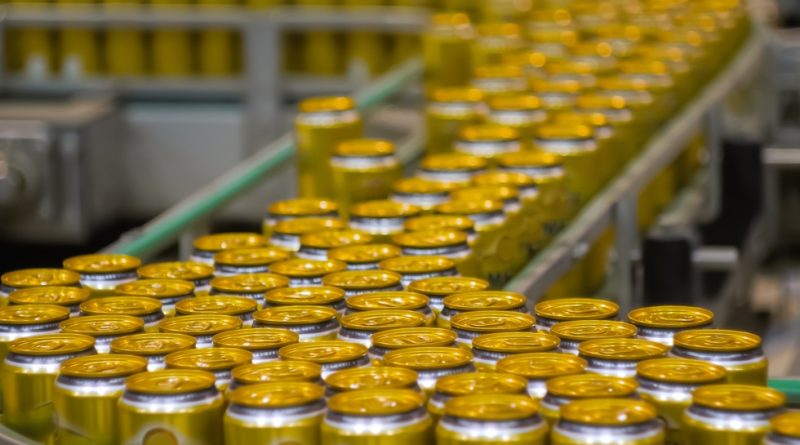
Brand points to Inks International, a manufacturer of ink used on aluminum beverage cans, where Oden deployed recommendations at its Charlotte facility. He says the site achieved an OEE improvement of more than 20 per cent, while operator retention rose sharply. Brand says operators also became more productive and engaged because they could see more clearly how their actions affected the process.
For experienced employees, better information can address a different constraint. Manufacturing has long rewarded avoiding failure, which can encourage people to run a process at a safe, familiar level rather than test whether another setting could produce more. Experienced operators may already suspect that greater performance is possible but lack enough evidence to justify taking the risk. With greater transparency around the process, Brand argues, they can use that experience differently: “Instead of focusing on just reacting to things, they can actually focus on innovation and how to gain that next ten percent of efficiency out of the line.”
A golden run cannot be static
Finding the best historical run and reproducing it sounds straightforward until the variability of a real plant is considered. Even the same product on the same asset may behave differently because the material, machine condition or surrounding process has changed. A fixed recipe can therefore be a useful reference without becoming a complete answer.
Brand is explicit that “there really is no such thing as a static golden run.” Setup sheets and recipes remain important, but experienced operators often treat them as starting points because production conditions rarely match their assumptions exactly. The more useful objective is to understand what high-performing production looks like and then adjust toward it as those conditions change.
Doing that requires more than feeding raw sensor values into an AI model. Manufacturing data is fragmented across machines, control systems, quality records, product information and operator input, and its meaning depends heavily on time and context. An upstream temperature change may matter only when connected to a later quality result, while the same reading may be acceptable for one product and problematic for another.
“You need to merge the different sources of production data that are required to give the full picture,” Brand says. “That’s the real-time data from sensors and machines, but it’s also offline quality tests, information about the product or bill of materials being run, and information coming from the operator about what happened around the line that might not be detected by sensors.”
Behind the recommendation, data must be cleaned, production states identified and each signal given enough semantic context for models to understand what it represents. Brand believes this is also where combining traditional machine learning with newer frontier AI models becomes important. ML can identify patterns in process data but can become brittle as conditions change, while large AI models are better at interpreting language and context than raw industrial data. Used together, they can support recommendations that adapt with the process rather than remaining tied to the historical conditions on which a model was built.
AI earns trust when people can challenge it
Predictive quality shows what becomes possible once that intelligence is connected directly to production. If operators only learn that a product is defective when it reaches inspection, the material and production time have already been lost. Models that recognize the conditions associated with a likely failure can move the intervention upstream, giving the operator a chance to correct drift before the outcome becomes unavoidable.
Recommendations also must recognize the trade-offs inherent in manufacturing. Increasing line speed may affect material consumption or quality, while tightening one parameter may constrain throughput elsewhere. The right optimization therefore depends on the bottleneck the manufacturer is trying to address rather than a universal definition of best performance.
Oden keeps engineers and frontline teams involved in model development and validation for that reason. Historical patterns can be surfaced automatically, but process experts confirm whether they represent the failure mode being investigated and add context that may not exist in the raw data. Operators provide another feedback loop by recording what happened and whether a recommendation was followed. The objective is a system that learns from manufacturing expertise rather than attempting to remove it.
“I see AI as a tool and not as a replacement for human knowledge and ingenuity,” Brand concludes. “The best result is always going to be how do you pair AI and make it custom to that specific domain and integrate the know-how of those people who know it best.”
Greater automation is likely as these systems become more capable and manufacturers build confidence in their recommendations, but Brand does not expect people to disappear from the loop. Instead, operators can gain access to knowledge that once sat with specialists, while engineers can apply their expertise across more assets and decisions. That matters in an industry where expertise is already scarce and waiting for every problem to reach a specialist limits how quickly the organization can respond.
The larger opportunity for real-time process intelligence is therefore not simply faster analytics. Manufacturers already have data and no shortage of opportunities to improve production. What they often lack is the ability to connect the two quickly enough for somebody on the line to change what happens next. Shortening that decision loop turns process improvement from an exercise carried out after production into something that happens as part of production itself.
