
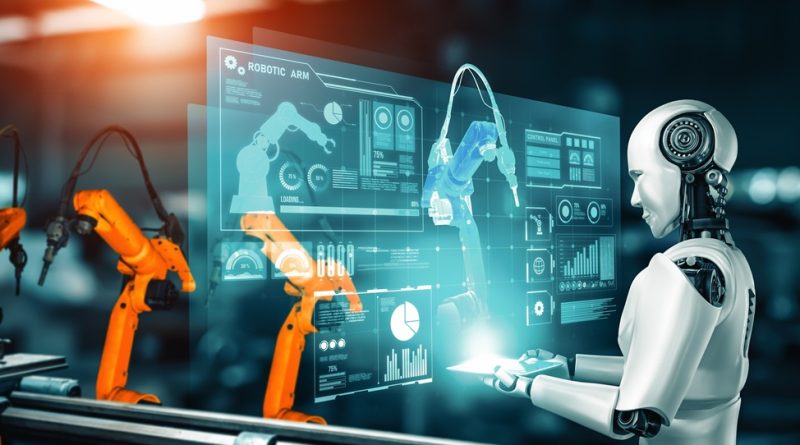
Smart manufacturing enters the execution era

Manufacturers are no longer asking whether digital transformation matters. The harder question is whether they can turn technology investment into repeatable operating performance, which is why Rockwell Automation’s 11th annual State of Smart Manufacturing Report frames the industry as entering an execution era rather than another period of experimentation.
The report, based on responses from 1,560 manufacturing leaders across 17 countries, shows how far the market has moved. Ninety per cent of manufacturers say they need digital transformation to stay competitive, only 18 per cent report being in the pilot phase with smart manufacturing technologies, and 59 per cent say those tools are now actively used to support operations. The shift is not that manufacturers have suddenly discovered digital technology. It is that more companies are expected to use it as part of how the business runs.
From pilots to operational expectation
For Mike Loughran, Director ITD – North Region at Rockwell Automation, that distinction matters. Digitalization is no longer a specialist project run by a transformation team on one line or in one plant. “Digital has become part of the business and an expectation rather than a side project,” he says. “It is now embedded in the general operational teams, and they are being asked how they can improve the business by using digitalization in everything they do.”
A controlled demonstration can still leave the hardest questions unanswered. A manufacturer may prove that AI, simulation, robotics or analytics can work in one setting, but the real test is whether the same capability can improve a defined business problem across lines, plants and teams without becoming another isolated experiment. “Anyone can adopt technology,” Loughran says. “But if it is not adopted against the business challenges or the business requirements, then it is just technology for technology’s sake.”
Data has to change the operation
The report identifies improving quality, reducing cost and reducing risk as the top outcomes targeted by transformation efforts. Those priorities are familiar because the basic pressures on manufacturers have not gone away. Rising costs, workforce shortages, cyber risk, energy prices and supply chain disruption still define the operating environment, but smart manufacturing is giving companies better ways to respond with decisions based on current production conditions rather than delayed reports.
Loughran uses the example of a dry goods process to show the change. Moisture levels in raw materials can vary with season, ambient temperature and operating conditions, while ovens, recipes and process settings all influence the finished product. In the past, experienced operators could make adjustments within a known window, but too many variables made constant recalculation difficult. Connected systems can now compare current inputs with known good recipes, golden batches and production history, then recommend or apply changes before quality drifts.
“You are not waiting for a batch to go wrong,” he says. “You are not waiting for an hour’s worth of quality to go off. You are basically saying that we know what happens when this goes wrong, so we change it before it goes wrong.” The value is not limited to defect reduction. Better consistency reduces scrap, improves energy use, makes raw material consumption more predictable and gives supply chain teams greater confidence when committing to customer orders.
Smart manufacturing moves beyond visibility when data can be understood across the full operation rather than inside one functional view. Loughran says manufacturers spent years collecting information under the banner of big data, but the ability to use it was limited by people, tools, technology and the persistence of organizational silos. “We’ve still got big data, but what we weren’t able to do was connect that big data or make meaningful decisions out of it,” he says. “Now we’ve got easier ways of making sense of that data. The silos have broken down, not fully, but there is a lot more focus on connecting the silos within a company, whether that be finance, manufacturing, logistics, R&D, quality, etc. They can then start to make sense of the big data in a holistic manner, rather than an individual part of the puzzle.” Those limitations are easing, but the report’s finding that only 43 percent of collected data is used effectively shows how much work remains.
The 43 per cent figure is less a comment on data collection than on the difficulty of turning plant-floor information into something the wider business can use. Manufacturing still generates vast amounts of raw data from machines, drives, sensors, lines and control systems, often at sub-second intervals, but value depends on whether those signals can be connected to quality, logistics, finance, R&D and supply chain rather than interpreted inside one local view. Loughran says the industry has been moving toward that point for years.
“It does take time to bring systems together,” Loughran adds. “We spoke about IT/OT convergence 10 or 12 years ago. I think now we’re starting to get where it is a given as part of the governance, but it has taken time to get different systems brought together. Even a production line can become a silo if it is disconnected from raw materials, outbound logistics, quality records and commercial consequences. “
Scale needs common rules
That is why governance has moved from an administrative concern to a scaling requirement. A pilot can appear successful even when each site defines efficiency, output or downtime differently. Scale exposes those differences quickly. “To get a scalable system, you have to have some governance in place,” Loughran says. “You must have a process in place, which is not technology driven. It is a top-down approach that says we will have data structured in a certain manner.”
Governance does not mean forcing every plant into identical systems. It means creating enough commonality for meaningful comparison and enough discipline for new equipment, applications and data sources to fit into the wider ecosystem. Without that, manufacturers do not build one scalable capability. They build multiple local pilots that cannot be compared, repeated or improved consistently.
Cybersecurity now sits inside the same execution challenge. The report found that 46 per cent of manufacturers experienced a cyber incident in the past year and identifies IT/OT integration points as one of the most vulnerable areas. Loughran says cybersecurity was once framed mainly around protecting information, intellectual property and corporate systems. In connected manufacturing, it protects the whole operating ecosystem, from production and goods movement to customer records and profitability.
That is difficult because many plants still rely on equipment installed 20 or 30 years ago. New machinery can increasingly be designed with security built in, but established infrastructure must be migrated and protected without disrupting production. Loughran expects cyber to follow the path already taken by safety, becoming part of product design, lifecycle management and operational discipline rather than a separate project added after installation.
The same foundations are required for autonomy. Rockwell’s report says one-third of operations are AI-augmented today, rising to an expected 54 per cent by 2030. Loughran does not interpret autonomy as lights-out manufacturing. He describes it as self-healing machines, self-healing processes and self-healing manufacturing, where systems recognize a developing issue and act early enough to maintain production.
Much of the current progress is around the movement of materials to and from lines. Autonomous mobile robots and connected production systems can coordinate replenishment before a line runs short, using real-time production rates and customer orders to trigger the next action. “The machine is now saying, if we run at this production rate based on that order from this customer, we will run out of widgets in 10 minutes,” Loughran says. “I am going to call for some, which will be automatically brought to me.”
People make execution stick
This does not remove people from manufacturing. It changes the work they do. The report says 93 per cent of respondents expect to reshape their workforce as smart manufacturing advances, while 40 per cent reskilled their workforce in the past year. Loughran sees operators moving from monitoring a single machine toward supervising multiple assets, supported by systems that handle routine operation and call attention to exceptions. Digital instructions can replace paper procedures, maintenance can become more condition-based and employees can spend less time on repetitive manual work.
That requires different skills and expectations. Loughran points to a need for people who are more analytical, more comfortable working across functions and more willing to challenge established processes. “No longer are you purely just the manufacturing engineer,” he says. “No longer are you the operations manager or the logistics manager. The expectation is you can all work together to improve everything, rather than just your one little part of it.”
Successful manufacturers start with high-value operational use cases rather than technology selection. They define the outcome, decide what success looks like and build the data, governance, cybersecurity and workforce foundations needed to scale. That might mean improving baseline performance on a line, increasing throughput by a defined amount, reducing energy or water use, gaining extra shifts or improving profitability by a measurable percentage.
“You have got to define what success looks like before you throw money at it,” Loughran concludes. “If the goal is to increase output by ten pallets an hour, the right answer may be AI, but it may also be a simpler automation change. The execution era rewards manufacturers that can make that distinction, apply the right technology to the right problem and keep measuring value as conditions change.”
Smart manufacturing has become a baseline requirement, but execution determines whether it improves the business. The leaders will not be the companies with the longest list of digital tools. They will be those able to connect data, people, systems and decisions around specific operational outcomes, then scale what works without losing control of quality, security or cost.
