
Why manufacturing transformation fails

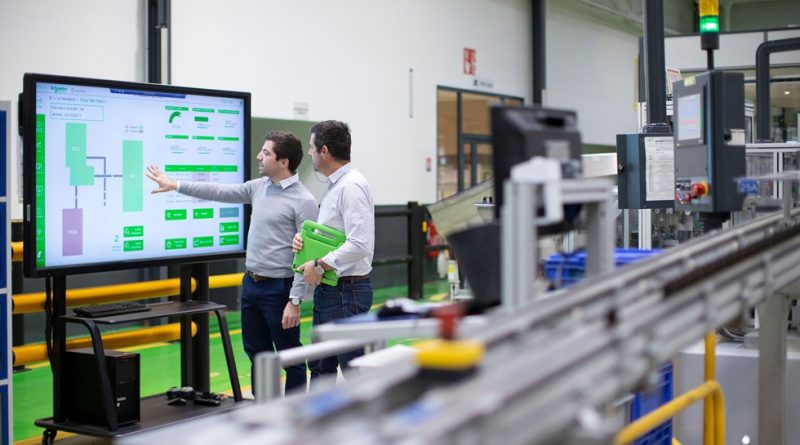
When I first visited Schneider Electric’s Le Vaudreuil factory shortly after it became one of the World Economic Forum’s (WEF) inaugural Global Lighthouse sites, what struck me most was not how futuristic it looked, but how familiar it felt. Set in the Normandy countryside, the 50-year-old factory looked much like countless manufacturing facilities across Europe. There were no vast new buildings or billion-dollar investments. Instead, the transformation had been achieved by rethinking how an existing factory operated, demonstrating that industrial digitalization was as much about people, processes and continuous improvement as it was about technology.
Seven years later, that lesson has become even more relevant. Schneider Electric has expanded from a single Lighthouse factory to eleven WEF Lighthouse sites, alongside Sustainability, Talent and Customer-Centricity Lighthouse recognitions, creating one of the industry’s most extensive portfolios of digitally transformed manufacturing operations. As Senior Vice President, IA Services & Advisory, Cécile Vercellino leads Schneider Electric’s global advisory business, helping manufacturers navigate digital, predictive and AI-enabled operational transformations. Yet despite rapid advances in technology, she believes the biggest barriers to success remain remarkably consistent.
Having worked with more than 1,000 industrial sites, Vercellino believes the same three obstacles repeatedly derail even well-funded transformation programs: organizations struggle to scale beyond successful pilot projects, valuable operational data remains inaccessible or lacks the context needed to create business value, and companies underestimate the scale of organizational and cultural change required to embed new ways of working.
“Technology is not the issue,” Vercellino says. “We will continue to improve the technology, and AI is accelerating many of the use cases we can deliver. But technology alone doesn’t transform a factory. You need access to the right data, you need to understand what that data means, and above all you need your people to come with you on the journey. This is not a technology project. It is a transformation program.”
Success at one site means very little
For Vercellino, the first test of any transformation program is not whether the initial deployment succeeds, but whether it can be replicated across an entire manufacturing network. Most organizations begin with a pilot plant, prove the business case and demonstrate a measurable return on investment. It is the point at which many transformation strategies appear to be on track. Ironically, it is also where they are most likely to stall.
“The first one or two sites generally go very well,” she explains. “We validate the return on investment, we demonstrate the expected outcomes, and everybody is happy. The problem starts when customers want to extend that success across 15 or 30 factories. Most organizations don’t have a consistent way of working across their manufacturing network. They have different processes, different systems and often different cultures because many of those sites have come through acquisitions. That’s where scaling starts to fail.”
According to Vercellino, the problem is compounded when transformation remains a plant-level initiative rather than a strategic business objective. Individual factory managers may be enthusiastic about digitalization, but unless there is clear executive commitment across the organization, each site inevitably begins to develop its own approach.
“First, it has to be a management decision,” she says. “There has to be a strategic intent at group level, not just at plant level. Then you have the practical reality that most manufacturers don’t share the same ERP systems, the same process systems or even the same ways of working across every factory. You can’t simply copy and paste what worked in one location into another. You have to accompany that transformation across every site.”
Schneider Electric’s own manufacturing network illustrates the difference. Le Vaudreuil may have been the starting point, but it was never intended to remain an isolated showcase. The company invested years in standardizing processes, governance and change management across its global operations, allowing successful approaches to be adapted and deployed repeatedly rather than reinvented for every new factory. That long-term commitment has since resulted in eleven World Economic Forum Lighthouse sites, demonstrating that scaling transformation requires organizational consistency every bit as much as technological capability.
Data only creates value when it has context
For more than a decade, manufacturers have invested heavily in sensors, automation and connectivity, creating vast volumes of operational data. Yet Vercellino believes many organizations continue to struggle because collecting information is not the same as making it useful. The issue is rarely the quantity of data available. It is whether that data can be connected, understood and applied to improve operational performance.
“We are working with one of our largest customers in Asia,” she says. “The data exists, but around 80 percent of it isn’t being used. Why? Because it isn’t accessible at the system level, it isn’t contextualized in the right way, and it isn’t available to the people who need it. To deliver digital transformation, you first have to make the data meaningful.”
That challenge reflects the way most manufacturing systems have evolved. Enterprise resource planning platforms, manufacturing execution systems, automation platforms and production equipment were often implemented independently to solve specific operational problems. Each performs its own role effectively, but few were designed to share information seamlessly across the wider business. As manufacturers increasingly look to AI-driven decision support, those disconnected data environments are becoming a significant barrier to progress.
Vercellino believes the industry’s next stage of digital transformation will depend less on generating additional information and more on creating the data architectures capable of bringing existing information together.
“Five years ago, we were mainly discussing new software capabilities,” she explains. “Today our customers are asking for help with data management. They understand they need to connect information from manufacturing, planning, orders and operations so they can make better decisions. But we also must be selective. Data is not free. We don’t need every piece of data available. We need the data that is meaningful, contextualized and capable of delivering value.”
For Schneider Electric, that represents the next phase of industrial transformation. AI may be changing how manufacturers analyze information, but its effectiveness still depends on the quality and relevance of the data beneath it. Organizations that learn to connect and contextualize existing information will be far better positioned than those continuing to accumulate data without a clear purpose.
Transformation succeeds when people believe in it
The final obstacle, and the one Vercellino believes manufacturers consistently underestimate, is people. Technology can be specified, implemented and upgraded. Changing how an organization works is considerably more difficult. Yet it is often the deciding factor between transformation programs that become embedded across the business and those that quietly fade once the implementation team has left.
“We tend to think that once the software has been implemented, the transformation is complete,” she says. “No. The real transformation is a people transformation. If you don’t involve employees from the very beginning of the journey, you invest in new solutions, but they are not used. Technology alone doesn’t change the way people work.”
That philosophy has shaped Schneider Electric’s own approach. Le Vaudreuil has continued to evolve long after achieving Lighthouse status, not simply through the introduction of new technologies, but by investing in workforce development and structured change management. Rather than treating transformation as a one-off project, Schneider has developed repeatable methodologies that it now applies across its manufacturing network and through its advisory business. The objective is not simply to deploy technology, but to create organizations capable of continuously improving long after the initial implementation is complete.
The same thinking underpins Schneider Electric’s recently announced World Economic Forum Talent Lighthouse in Wuhan, China. Faced with growing automation and an expanding product portfolio, the factory introduced digital apprenticeships, AI-driven personalized training and new approaches to workforce development, reducing onboarding time from 75 days to 15 days, upskilling more than half of its workforce and significantly reducing technician turnover. Rather than viewing technology and people as separate priorities, the site demonstrates how investment in digital capabilities and investment in employees can reinforce one another.
For Vercellino, that lesson extends well beyond Schneider Electric. The manufacturers that succeed will not necessarily be those with access to the most advanced technologies. They will be those capable of aligning leadership, data, processes and people behind a common objective. Technology may enable transformation, but organizations ultimately determine whether it delivers lasting value.
Beyond the pilot
Walking around Le Vaudreuil several years ago, it was easy to focus on the technologies that had helped transform a 50-year-old factory into one of the World’s first Global Lighthouse sites. Looking back, however, the technology was never the most important lesson. The real achievement was demonstrating that lasting transformation could be delivered within the constraints of an existing manufacturing operation, without waiting for a greenfield facility or unlimited capital investment.
That is ultimately Vercellino’s message. Manufacturers no longer need convincing that digital technologies, industrial AI and data-driven operations can deliver measurable business value. The challenge now is turning isolated successes into enterprise-wide capabilities. Organizations that align leadership, contextualize their data and invest as heavily in people as they do in technology will be best placed to make that transition. Those that continue to treat transformation as a software project are likely to discover that technology was never the obstacle in the first place.
